Get Full Government Meeting Transcripts, Videos, & Alerts Forever!
Get email alerts on the Higher Education Reciprocity topic
No spam. Unsubscribe anytime.
Assembly advances bill to let California join interstate reciprocity for online higher education after stakeholder debate
Summary
SB 790 authorizes the governor to enter interstate compacts for state authorization reciprocity in postsecondary online education; supporters said joining a compact would ease administrative burdens and protect students, while some private and for‑profit institutions asked for clarifying amendments before endorsing the bill.
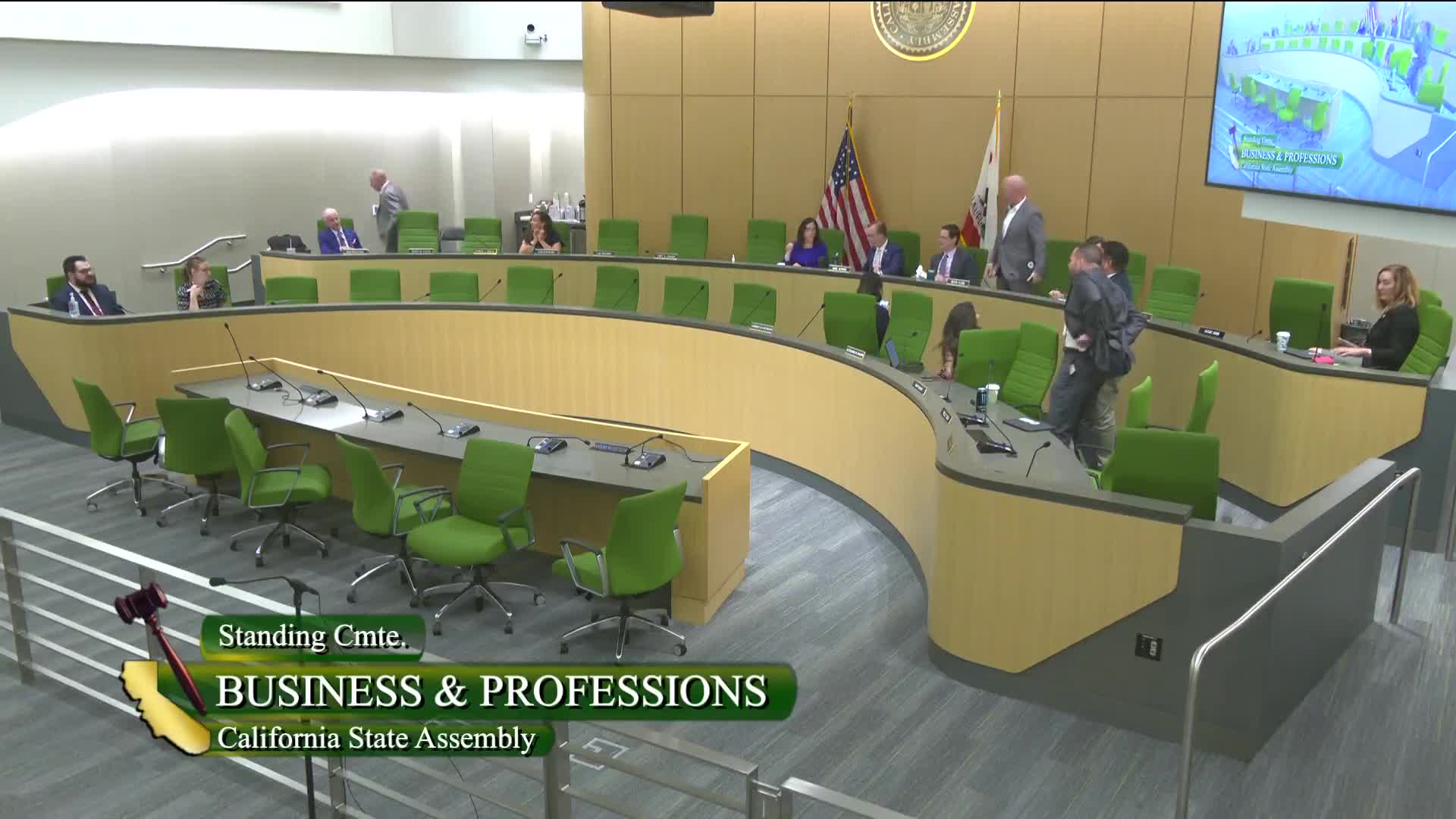
Senator Cabaldon presented SB 790 to the Assembly Business and Professions Committee on Oct. 26, 2025, asking the committee to allow the governor to enter into an interstate compact that would permit California to join national state authorization reciprocity for postsecondary online education.
The author said California currently requires out‑of‑state online providers to register with the Bureau for Private Postsecondary Education but has not joined the national reciprocity agreement (NC‑SARA). He argued that the current framework imposes administrative and financial burdens on California institutions that seek to offer online courses to students in other states and that joining a reciprocity compact would both protect California students taking out‑of‑state online courses and make California institutions more competitive nationally.
President Laurie O’Connor of Palo Alto University said the university relies on synchronous online programs to train behavioral health professionals and that the cost and administrative burden of securing unique authorizations for every state can prevent students — including military and mobile students — from continuing their programs. “Our online programs meet rigorous standards of professional accreditation,” she told the committee, and joining a compact would reduce barriers for students and institutions.
Opposition speakers, including representatives of the University of Phoenix and the California Association of Private Postsecondary Schools, said they support reciprocity in principle but raised concerns that the bill as written could require other states to accept California‑specific terms, or could conflict with NC‑SARA rules that currently allow proprietary institutions to participate. Consumer‑protection advocates also asked for further changes; the author said he had accepted many suggested amendments and would continue negotiations.
Senators from both parties praised the bill’s aim to protect students and limit administrative duplication while urging continued discussions with stakeholders about enforcement and consumer protections. The committee moved SB 790 as amended to the Committee on Appropriations.