Get Full Government Meeting Transcripts, Videos, & Alerts Forever!
Get email alerts on the Prevention Funding Policy topic
No spam. Unsubscribe anytime.
Advocates urge sustained prevention funding, improved implementation of Healthy Youth Act and reconsideration of statute timelines
Summary
At a Select Committee hearing, advocates and legislators pressed for stable funding for prevention, fuller implementation of the California Healthy Youth Act in schools, and raised concerns about statute of limitations and evidentiary timelines for abuse cases.
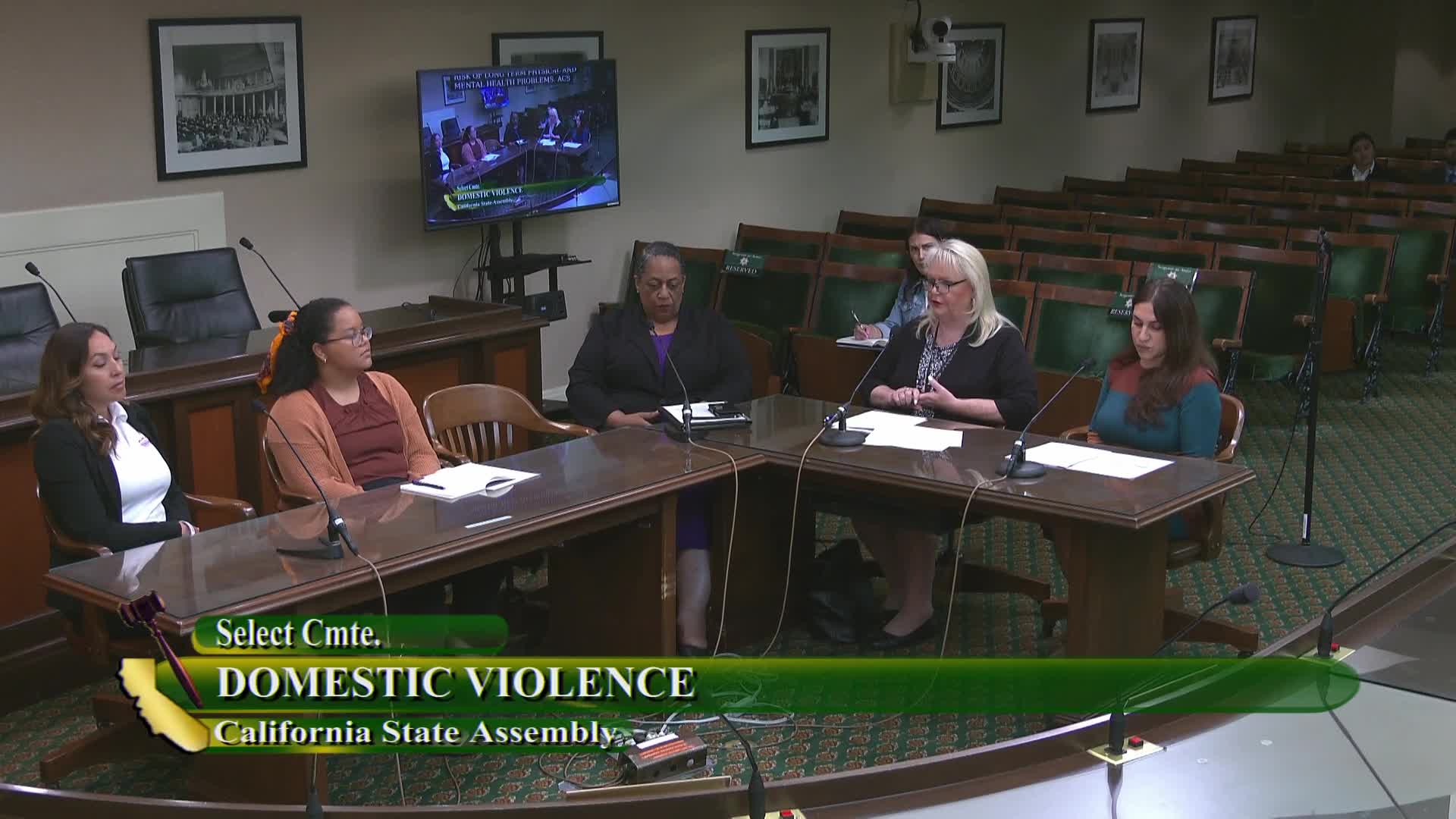
During an informational hearing of the California State Assembly Select Committee on Domestic Violence, presenters urged lawmakers to address funding, implementation and legal barriers that limit prevention and survivors’ access to services.
Taylor Stonemill told the committee that short‑term grants leave gaps in prevention work: “prevention funding can't just be something we fund for 2 years and then we stop,” she said, arguing that new cohorts of students arrive each year and require continuous programming. Several speakers asked that prevention funding be treated as an ongoing commitment rather than temporary pilot grants.
Panelists also called for more consistent implementation of the California Healthy Youth Act in middle and high schools. Janica Morin Pascual said some districts treat the law as covered by a single, perfunctory lesson instead of integrating the subject matter into recurring curriculum and student orientations (for example, athletic orientations and freshman sessions).
Legal issues were discussed at length. Committee members and advocates raised statute‑of‑limitations concerns for child and sexual abuse cases, noting that trauma and memory do not always produce prompt reporting. Susie Flores, director of a children's advocacy center, told the committee that fragmented memory can emerge years after events and argued against strict deadlines that could bar prosecution for offenses victims disclose later in life.
Why it matters: Panelists said implementation and funding choices directly shape whether students receive practical education about consent and healthy relationships and whether survivors can access timely medical, legal and therapeutic services. They urged the Assembly to consider policy options that prioritize long‑term funding, clearer guidance to school districts on the Healthy Youth Act, and statutory fixes that account for trauma and digital evidence.
No bills were introduced or voted on during the hearing; panelists requested follow‑up from legislators.