Get Full Government Meeting Transcripts, Videos, & Alerts Forever!
Get email alerts on the Child Trauma Domestic Violence topic
No spam. Unsubscribe anytime.
Panelists describe child trauma, rising strangulation reports and Family Justice Center services
Summary
Witnesses told the Assembly select committee that children exposed to domestic violence experience long‑term trauma; Family Justice Centers and children's advocacy centers offer coordinated services including danger assessments, therapy and safety planning.
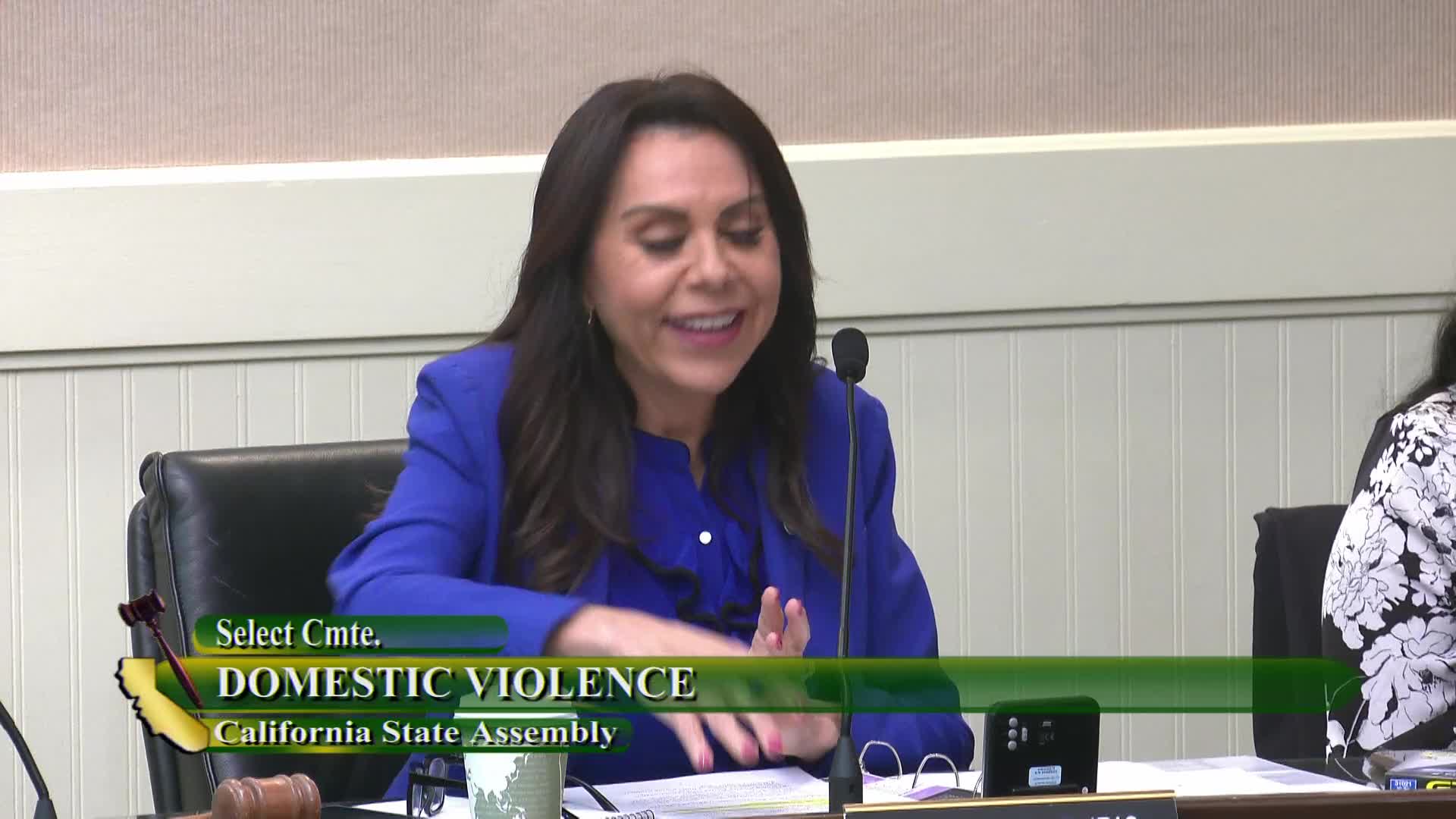
At an informational hearing of the California State Assembly Select Committee on Domestic Violence, deputies and child advocates described how exposure to domestic violence affects children and the region's coordinated response.
Joyce Blue, deputy director of the Sacramento Regional Family Justice Center, outlined services at the center — forensic interviews, legal aid, 24/7 human‑trafficking response, child therapy (CATCH, Children and Teens Creating Hope), housing case management and Camp Hope America for children. The center provides danger assessments and individualized safety plans, she said, and trains 9‑1‑1 dispatchers and medical staff to recognize high‑risk cases.
Blue emphasized strangulation as an acute risk: “strangulation is never safe. It's an act of control and dominance, not love, and there is no safe way to strangle someone,” she told the committee, noting that many strangulation cases show minimal external injury yet can cause stroke, brain injury or death. She said early screening and CTA scans may be necessary when strangulation is suspected, because more than half of strangulation cases show no visible injury.
Susie Flores, director of Inner Circle Children's Advocacy Center, described the center’s role as a multidisciplinary hub where child forensic interviews are conducted in a child‑friendly setting, coordinated with law enforcement and child protective services. Flores said the centers receive high volumes of referrals and that forensic interviewers typically conduct multiple interviews per day; she and other presenters stressed the emotional toll on interviewers and the need for limits and support for staff.
Flores also recounted that a substantial share of domestic violence cases involve child maltreatment: research cited at the hearing estimated 30 to 60 percent co‑occurrence. She emphasized front‑end services that link families to trauma‑informed therapy and specialized care, rather than waiting until adverse childhood experiences (ACEs) worsen.
Blue described Camp Hope’s use of evidence‑based measures to track hope and resilience: children take a hope index survey before, during and after camp, and counselors use ongoing activities to sustain gains. She said Family Justice Centers help reduce retraumatization by allowing survivors to tell their story once and access multiple services under one roof.
Why it matters: Witnesses argued that coordinated, trauma‑informed interventions can reduce long‑term health, educational and criminal‑justice consequences of childhood exposure to violence. They urged consistent funding for counseling, specialized medical protocols for strangulation, and wider adoption of multidisciplinary Family Justice Center and children's advocacy center models.
No formal legislative action was taken during the session; the hearing was informational.