Get Full Government Meeting Transcripts, Videos, & Alerts Forever!
Get email alerts on the Teen Dating Violence topic
No spam. Unsubscribe anytime.
Assembly hearing spotlights teen dating violence, calls for school‑based prevention and digital safeguards
Summary
Panelists at a California State Assembly select committee hearing described common warning signs of abusive teen relationships — including digital control — and urged routine, curriculum‑level education and durable funding for prevention programs.
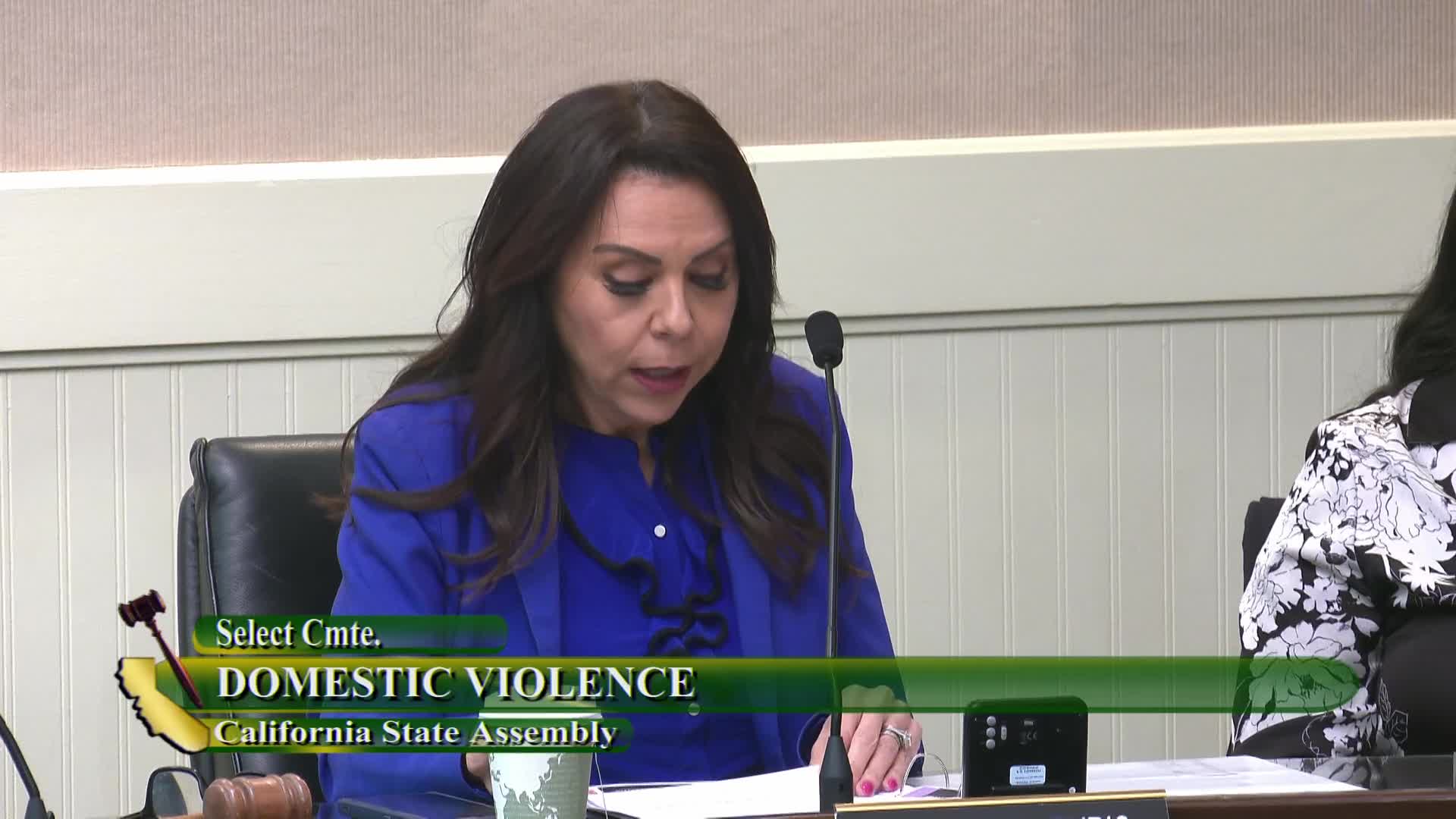
Assemblywoman Blanca Rubio, chair of the California State Assembly Select Committee on Domestic Violence, opened a committee hearing focused on teen dating violence after noting a homicide in her district: “we had a young woman, was murdered in December. A cheerleader was murdered by her boyfriend,” Rubio said, framing the meeting as a push for prevention and awareness.
Advocates who work directly with young people told the committee that technology has expanded avenues for coercive control. Janica Morin Pascual, a trainer who visits middle and high schools, said abusive partners increasingly use phones, social accounts and delivery apps to monitor and restrict teens: “it’s a way to have tracking devices,” she told the committee, describing cases in which gifts such as phones became tools for surveillance and control.
Why it matters: Panelists said early, repeated education on relationships — not a one‑time class — can help students and their peers recognize warning signs. They urged schools to integrate teachings about boundaries, consent and digital safety into classes and student activities, and to use external experts where teachers lack time or training.
Panelists and legislators discussed several practical steps. Taylor Stonemill, youth domestic violence prevention coordinator at Black Women Revolt Against Domestic Violence, recommended national and digital resources for teens and families, including Love is Respect and Take It Down (a removal tool run by the National Center for Missing and Exploited Children), and urged schools to promote those resources in students’ social feeds so young people encounter help during ordinary phone use.
Speakers also described common behavioral signals parents and educators should notice: social isolation from longstanding friends; demands for constant check‑ins; sudden gifts followed by withdrawal of privileges; and sharp changes in school attendance, dress or mood. Janica Morin Pascual said many teens do not tell adults because they fear punishment or loss of independence. She and other presenters encouraged parents and guardians to name specific red flags and to model concrete examples of healthy behavior.
Panelists said peer networks can be especially influential. Stonemill described youth ambassador programs and near‑peer outreach as effective ways to reach middle‑ and high‑school students who may distrust adults: “none of us remember resources when we are overwhelmed, but their friend might,” she told the committee.
The discussion also touched on statutory and funding barriers. Panelists urged sustained prevention funding rather than short grants and asked lawmakers to ensure the California Healthy Youth Act is implemented in practice rather than treated as a one‑time compliance checkbox.
The committee did not take any formal votes; the session was informational and aimed at shaping future policy recommendations and outreach efforts.
Sources and next steps: Panelists recommended that schools permit outside, trained presenters for curriculum components such as consent and digital safety and urged lawmakers to consider funding models that make prevention programming continuous rather than time‑limited.