Get Full Government Meeting Transcripts, Videos, & Alerts Forever!
Get email alerts on the Groundwater Management topic
No spam. Unsubscribe anytime.
Farmers, advocates urge moratorium on new agricultural wells in Hungry Hollow focus area; supervisors hear public concerns
Summary
Multiple commenters at the Yolo County supervisors' meeting urged a moratorium on new agricultural well permits in the Hungry Hollow focus area, citing measured well declines, pending permit applications, and the need for more monitoring, metering and demand-management policies.
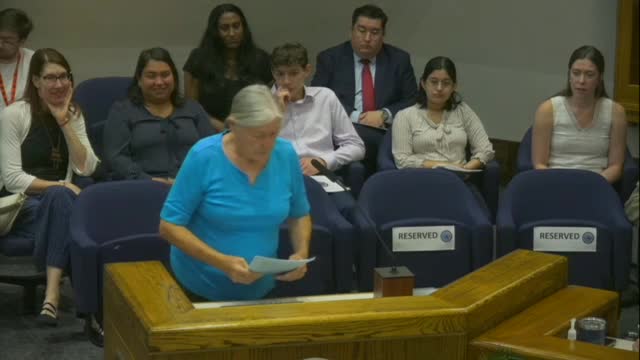
Several farmers, water professionals and community advocates used the public-comment period on July 8 to urge the Yolo County Board of Supervisors to pause approval of new agricultural wells in the Hungry Hollow focus area until further monitoring and management measures are in place.
Jackie Landy, a local resident active in groundwater issues, said four large agricultural wells were recently approved in Hungry Hollow and that 12 additional permit requests were pending. “We really need a moratorium on these agricultural wells,” Landy said, asking the board to allow time to develop sustainable permit criteria including water budgets, demand management, cumulative sustainable yield calculations and monitoring requirements.
Paul Mueller, who identified himself as a Western Yolo County farmer, said the basin appears to be overdrafted and estimated that the Hungry Hollow basin had an annual overdraft in the range of “4,000 to 6,000 acre-feet” (he also mentioned “400” as a possible transcription variant). He urged caution and recommended suspending new well permits until the Hungry Hollow Working Group completes data collection and rule development, noting the status of well drawdowns and impacts to long-standing small landowners.
Judith Redmond, a farmer and policy participant with the CAF water program, asked the supervisors to require new wells drilled during the last six months and future new wells in the focus area to be metered and recommended examining San Luis Obispo County’s agricultural offset ordinance to limit expansion of irrigation onto historically unirrigated lands.
John Fawcett, a water-resource engineer assisting farmers, reviewed the boundary-bend permit example and told the board he believed some technical analyses did not adequately consider the unique hydrogeologic setting of Hungry Hollow or representative monitoring wells. He said Yolo Subbasin GSA (YSGA) tiered analyses reached differing conclusions and that the conclusions that new wells would not impact sustainability goals should be questioned because representative wells for Hungry Hollow were lacking.
Why it matters: Commenters say existing drawdowns, pending new permits and limited monitoring risk harming long-term water access for current residents and smaller farms. They asked the supervisors, as a policy body that interacts with local GSAs and permitting processes, to press for metering, additional monitoring wells, cumulative-yield accounting and demand-management tools.
What the board did: The comments were submitted during the public-comment period; no formal moratorium or permit-change motion was taken on July 8. County staff and supervisors acknowledged the concerns and noted ongoing technical processes, including the Hungry Hollow Working Group and GSA reviews. Several speakers provided written material and suggested models from other California counties for the supervisors to review.
Next steps: Commenters requested that the board direct staff or partner agencies to consider metering requirements, additional monitoring, and pause permitting until data and rules are in place. The board did not take direct action at the July 8 meeting but the subject appears likely to return for further technical and policy review.