Get Full Government Meeting Transcripts, Videos, & Alerts Forever!
Get email alerts on the Court Funding topic
No spam. Unsubscribe anytime.
Judge tells Clay County commissioners new judges, magistrate and clerk staffing will add costs
Summary
Clay County's administrative judge asked commissioners for an additional magistrate and described recent legislative additions of judicial seats; staff warned clerks received no extra funding to support new judges.
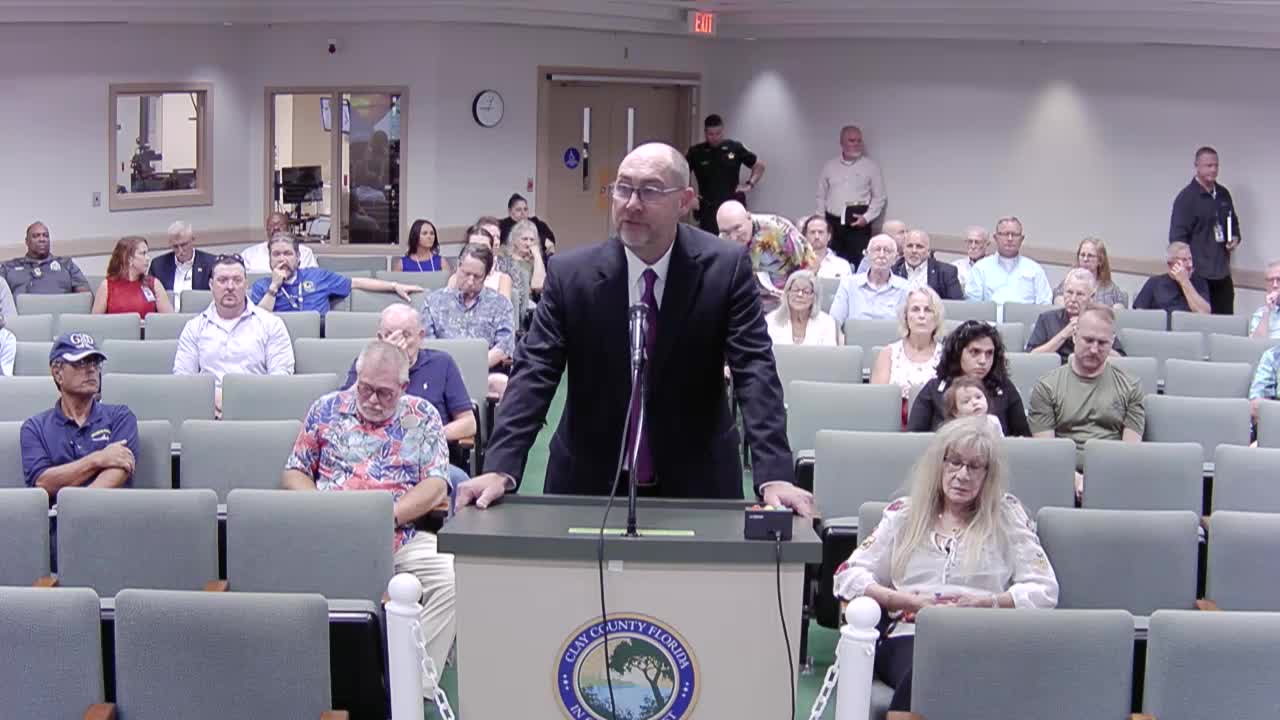
Clay County's administrative judge addressed the Board of County Commissioners at the July 8 workshop to explain a recent expansion of judicial seats and to request funding support for court operations that the judge and clerk say the state did not fully finance.
The judge said the Florida Legislature created an additional county judge seat for Clay and two new circuit seats in the Fourth Judicial Circuit (Nassau, Duval and Clay counties). The judge said a judicial nominating commission will accept applications and the governor will appoint new judges later this year. "We are requesting an additional magistrate" to help with family-law dockets, case management orders and Baker Act/Marchman Act proceedings, the judge told the board.
Clerk and Comptroller Tara Green and staff joined the judge in describing a funding gap: while the legislature appropriated money statewide for the new judges, clerk's offices received no dedicated funding to support the additional workload. Green told commissioners clerks are already drawing on operating and personnel budgets to maintain jury processes and forecast a shortfall for jury administration. Troy Nagle summarized the county's budget effect: adding the magistrate and additional court-related staffing contributed to the roughly $4.7 million of additional need staff identified after proposed cuts.
Commissioners asked whether the county would be legally required to seat the judges and who would bear recurring costs. County staff said the judgeships are created by the state; the county can request to assist with clerk staffing and courtroom support but the state appointment process and statutory funding decisions are separate. Staff and the judge discussed options for how to assign caseloads to avoid duplicating divisions and to limit additional simultaneous courtroom staff demands.
Ending: The board heard the judge's formal request for a magistrate and discussion about clerk funding and judicial needs. Staff said they would continue to quantify personnel and operating impacts and return with budget options the same day in later presentations and in upcoming budget hearings.