Get Full Government Meeting Transcripts, Videos, & Alerts Forever!
Get email alerts on the Historic Preservation topic
No spam. Unsubscribe anytime.
Council grants historic overlay for Newark Union Church and Cemetery
Summary
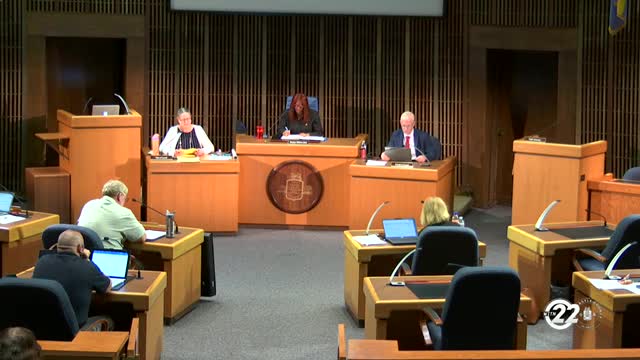
Ordinance 22-006 creating a historic overlay zone for the Newark Union Church and Cemetery in Brandywine Hundred passed after brief public remarks and council discussion; one member did not vote and cited the history of segregated cemeteries.
New Castle County Council voted to adopt Ordinance 22-006 on July 8, 2025, establishing a historic overlay zone for the Newark Union Church and Cemetery (map amendment 2100 West Side of Newark Union Public Road). The ordinance passed by poll vote with 11 members voting yes, one member not voting and one member absent.
Councilman Cartier, joined as a cosponsor by Councilwoman Durham, introduced the zoning change as a preservation measure for a site that the council record describes as approximately 2.31 acres with more than 1,100 graves and a building that began as a Quaker meeting house and later became a Methodist church. Cartier said members of the property's restoration board were present and that the site contains graves of people who served in wars from the Revolutionary War through Vietnam.
A representative of the Newark Union Church and Cemetery board addressed the council to thank members for considering the historic overlay and described recent restoration work that reopened the building and added museum displays. "We are very honored to be able to have restored the church that had been closed up for over 50 years," the representative said.
Most council members spoke in favor of the ordinance, citing positive recommendations from the Department of Land Use and the historic review board. During the poll vote, Councilman Street declined to cast a vote and explained his decision on historical grounds, saying cemeteries had been segregated in Delaware and elsewhere and that he could not "forget that." The clerk recorded the final vote as 11 yes, one not voting and one absent, and the ordinance was approved.
The ordinance confers historic-overlay zoning protections; details about required permits or future review processes were not expanded on during the full-council session beyond references to the land use department and the historic review board.