Get Full Government Meeting Transcripts, Videos, & Alerts Forever!
Get email alerts on the Gaza Humanitarian Crisis topic
No spam. Unsubscribe anytime.
UN: Gazahumanitarian space shrinking; urgent fuel deliveries, ceasefire called
Summary
At a U.N. press briefing, the U.N. spokesperson said repeated displacement orders, a near-total fuel blockade and attacks on aid operations are sharply constricting where civilians can remain in Gaza and are imperiling medical services and relief deliveries. The U.N. renewed calls for a ceasefire and for unconditional release of hostages.
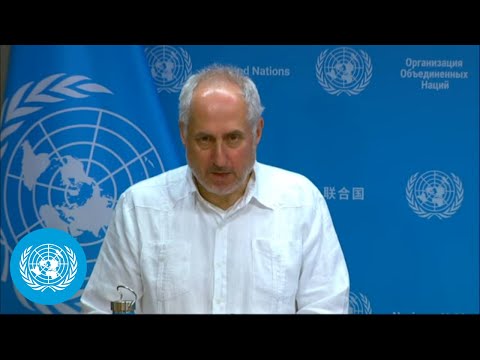
The U.N. spokesperson said the humanitarian space in Gaza is rapidly shrinking as Israeli displacement orders, limited supplies and attacks on aid operations force civilians to flee and make assistance delivery increasingly risky.
The spokesperson said Israeli orders to relocate forced nearly 30,000 people to flee in one day and that, since mid-March when the ceasefire ended, more than 50 displacement orders have been issued that together now cover about 78% of the Gaza Strip. If Israeli-designated militarized zones are added, that figure rises to about 85%, leaving roughly 15% of the territory where civilians can remain, the spokesperson said.
The situation is compounded by what the spokesperson described as a near-complete fuel blockade: "With no fuel having entered Gaza in more than 17 weeks, the secretary-general is gravely concerned that the last lifelines for survival are being cut off. Without an urgent influx of fuel, incubators will shut down. Ambulances will be unable to reach the injured and the sick, and water will not be able to be purified," the spokesperson said.
The U.N. also reported high levels of denial or disruption for coordination requests to Israeli authorities. Looking back at the month of June, out of nearly 400 coordination attempts, 44% were denied outright, about 10% were initially accepted but then impeded, approximately one-third were fully facilitated, and the remainder were canceled for logistical, operational or security reasons, the spokesperson said.
Aid-worker casualties have risen. The U.N. press office cited a recent OCHA report saying nine more aid workers were killed since last Thursday, from five different organizations, bringing the total this year to 107 and to 479 since October 2023; among those casualties, 326 were U.N. colleagues, the spokesperson said.
The U.N. highlighted protection and dignity needs beyond food and water. The U.N. Population Fund said menstruation has become a nightmare for an estimated 700,000 women and girls in Gaza; UNFPA reported it has supplies ready equivalent to almost 170 truckloads but they are not reaching Gaza, the spokesperson said.
The U.N. reiterated core legal and humanitarian demands. "Civilians must be respected. Civilians must be protected, and the needs of the population need to be met," the spokesperson said, reading parts of a statement by the secretary-general that also "renews his call for an immediate and permanent ceasefire and for the immediate and unconditional release of all hostages held by Hamas and other groups." The spokesperson added that the U.N. is calling for full, safe and sustained humanitarian access so aid can reach people "at scale" and safely.
The U.N. said the combined effect of displacement orders, damaged infrastructure and the lack of fuel means remaining areas are overcrowded and lack basic services. The spokesperson said roughly 900 families were estimated to have fled from the most recent displacement order affecting parts of Gaza City.
Ending: The U.N. urged increased facilitation of humanitarian coordination, immediate fuel access and protection for aid workers while repeating the secretary-general's call for respect for international humanitarian law and an immediate ceasefire.