Get Full Government Meeting Transcripts, Videos, & Alerts Forever!
Get email alerts on the Budget topic
No spam. Unsubscribe anytime.
Victoria City unveils $254 million preliminary FY‑26 budget, emphasizes public safety pay increases and community center financing
Summary
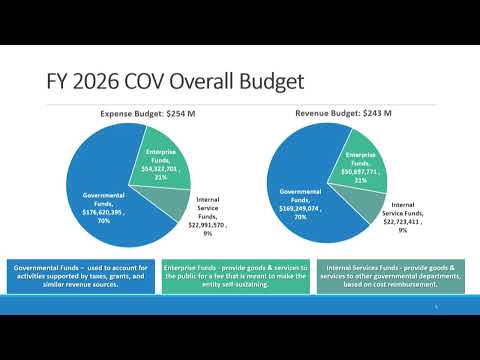
Victoria City Manager Jesus Garza presented the city—s preliminary fiscal‑year 2026 budget on Friday, proposing $254 million in expenditures and $243 million in revenue while continuing a conservative approach that draws about $11 million from excess fund balance for one‑time needs.
Victoria City Manager Jesus Garza presented the city—s preliminary fiscal‑year 2026 budget on Friday, proposing $254 million in expenditures and $243 million in revenue while continuing a conservative approach that draws about $11 million from excess fund balance for one‑time needs.
The budget package Garza previewed emphasizes pay raises for public safety, a large capital improvement program that includes a $28 million allocation for the Community Center expansion, and continued reliance on grant and bond proceeds for major projects. Garza said the plan is intentionally conservative to preserve reserves and give the city flexibility if economic conditions worsen.
Garza told the council the net taxable appraised value for property appears to be flat, and he reminded members that state law commonly referred to as SB 2 limits revenue growth from existing property values to 3.5 percent; capturing that incremental revenue would require a modest tax‑rate increase if certified values remain flat. "If we decide not to take that penny," he said, "we would have to have conversations about cutting something."
Most of the year‑to‑year expenditure increase is concentrated in three areas: capital projects, transfers for major facilities and vehicles, and a historic personnel pay program. Garza said the proposed pay program totals about $3.8 million; roughly $3.6 million would be recurring and $181,000 would be a one‑time stipend. The plan focuses increases on police, fire, public works and solid waste, and also adds tenure/ longevity adjustments for long‑service employees.
Public safety drew repeated emphasis. Garza described FY‑26 as "a year for police and fire," and both departments presented budgets that expand staffing and pay. Police Chief Chuck Young requested an added records technician and a regional, grant‑funded real‑time crime analyst and noted 27 vacancies and rising overtime. Fire Chief Mark Gomez highlighted a pending SAFER grant application that, if awarded, would fund additional firefighter positions for three years and detailed investments to increase EMS staffing and the fire prevention office.
The proposed capital improvement program (CIP) for FY‑26 is roughly $78 million, Garza said, noting a significant driver is the community center project approved by voters. The presentation breaks the center—s estimated $35 million cost into a mix of bond proceeds, hotel‑occupancy tax contributions and other sources; Garza outlined a plan that would reduce reliance on property tax by increasing one‑time hotel‑tax transfers (including a $1 million transfer proposed in FY‑26) and by issuing venue tax bonds tied to the voter‑approved new taxes.
Garza said investors and rating agencies will see the center—s financing as a mix of voter‑approved revenue, hotel tax transfers and debt. He also said the city will continue to seek grants and private contributions to lower the property‑tax share of repayment. The Sales Tax Development Corporation previously committed $10 million toward debt service for the Public Safety Headquarters, and Garza said that pledge reduces the city—s debt burden for that project through 2034.
Utility funds drew separate presentations. The combined water/wastewater preliminary budget shows revenues of roughly $27 million and funds planned infrastructure work, including continuing work at the surface‑water plant, completion of filters and well rehabilitation. Garza and Public Works staff said a water‑rate study will begin after the council gives direction, and they flagged a forthcoming wastewater screening and infiltration study. The utility presentations also noted a planned water‑system feasibility study and the potential need for rate adjustments depending on the study—s findings and on any new stormwater funding model the council adopts.
Stormwater financing was raised but not resolved: Garza and staff said a stormwater utility remains under study and is not assumed in the preliminary budget. Garza said the council will receive educational briefings and that any utility would be subject to council direction before inclusion in future budgets.
Solid waste and environmental services staff outlined operational needs and a multiyear landfill procurement process that will be advertised in coming months. Director Daryl (given name in the file) said recycling contamination remains a major operational challenge and the department is expanding public education and on‑cart labeling to reduce contaminants; the solid‑waste fund helped fund three new ambulances and other public‑safety purchases, and Garza reminded the council that the city—s garbage fee has not been raised in 30 years and that a rate study will be needed.
Garza said the city would continue a conservative budgeting approach that intentionally underestimates some recurring revenues to build a cushion; that cushion has allowed the city to transfer excess fund balance into CIP in prior years and to absorb one‑time needs without drawing reserves below policy minimums. If the council wants to be more aggressive with assumptions, Garza said, it must give direction at one‑on‑one sessions and at upcoming budget workshops. He told council members that he will meet individually with each of them in July and present the official budget on Aug. 5, with final adoption scheduled for Sept. 9.
What—s next: staff will present department‑level details during the council meeting next week and will schedule follow‑up workshops on the CIP, debt strategy and departmental requests. The council faces two policy choices with potential immediate budget effects: whether to take the 3.5 percent SB 2 increment (which would require a tiny tax‑rate increase if net taxable values are flat) and whether to adopt a stormwater utility (not in this preliminary budget). Both choices could alter FY‑26 recurring revenue and will be the subject of further meetings.
Sources: City Manager Jesus Garza; presentations by Victoria Police Chief Chuck Young and Fire Chief Mark Gomez; preliminary FY‑26 budget slides and department presentations.