Get Full Government Meeting Transcripts, Videos, & Alerts Forever!
Get email alerts on the Public Safety Technology topic
No spam. Unsubscribe anytime.
Lynchburg approves Flock Safety license agreement for license-plate readers and gunshot detection over privacy objections
Summary
Council voted 4-3 to authorize a revocable license agreement with Flock Safety to install fixed license-plate readers and a gunshot-detection system; supporters said it aids investigations, opponents raised Fourth Amendment and data-ownership concerns.
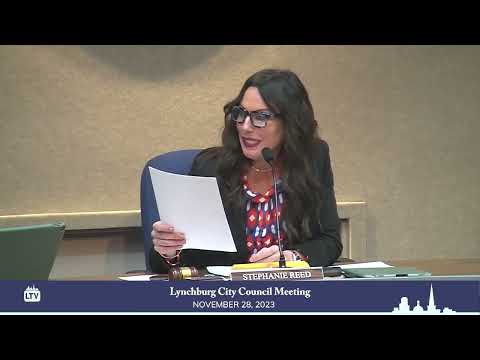
Lynchburg City Council voted 4-3 on Nov. 28 to authorize a revocable license agreement with Flock Group Inc. (Flock Safety) to install fixed license-plate reader cameras and a gunshot-detection system in the city.
Police Chief Ryan Zunema presented the proposal, saying the technology helps investigators track stolen vehicles, wanted persons and missing people and “multiply the force” when staffing is limited. Amy Cornell, a community affairs manager with Flock Safety, gave a presentation about the company’s system, explaining it records license-plate images and vehicle descriptors, does not perform facial recognition and stores data for 30 days before automatic deletion.
Cornell described privacy safeguards, including required “search reason” case numbers for queries, audit logs, encrypted cloud storage and a publicly available “transparency portal” showing policy and usage information. She said Flock does not sell footage and that data is “automatically hard deleted” after 30 days.
During public comment and council debate, residents and council members raised privacy and civil-liberties concerns. Councilman Henderson said he feared the potential for abuse and cited ongoing federal litigation and Fourth Amendment questions. Councilman Missions and others said the system had a “big brother” feel and worried about private-sector control of data. Proponents, including Councilman Helgeson and Doctor Wilder, said the cameras and gunshot detection could help solve violent crimes more quickly; Helgeson cited a recent Walnut Street shooting as an example where the system might have helped investigators.
Councilman Taylor questioned how some prior cases highlighted in the vendor’s presentation worked in practice; Cornell and Flock staff said missing-person and Amber Alert cases relied on family-provided vehicle descriptors or entries into national databases that produced real-time hits.
The approved agreement is a revocable license for Flock to install and operate the cameras; the city will also receive integrated gunshot-detection coverage as part of the project. The council debate did not include a full reading of contract terms in the meeting record and the transcript does not include final contract language or an attachment showing data-access policies. The motion to approve passed by a 4-3 vote.
Supporters said the technology is a useful investigative tool that can deter crime and help recover victims. Opponents said the city should consider alternatives that keep data under full municipal control or gather more independent evidence that the system reduces crime without damaging civil liberties.
Council members also noted the agreement is revocable and can be revisited if operational experience raises concerns.