Get Full Government Meeting Transcripts, Videos, & Alerts Forever!
Get email alerts on the Energy Microgrid topic
No spam. Unsubscribe anytime.
Developer proposes biomass microgrid, urges city to explore municipal utility
Summary
Representatives of Butte Renewable Energy (BREE) presented a phased plan to build a biomass- and solar-based microgrid for Oroville and proposed transferring distribution assets to a new publicly owned utility; council by consensus directed staff to continue working with the developer and to explore formation of a municipal utility.
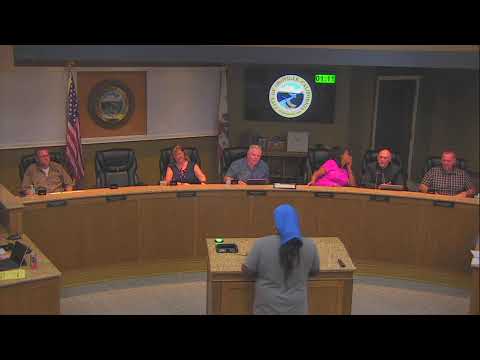
Representatives of Butte Renewable Energy Inc. told the Oroville City Council on July 1 that they can design, finance and build a phased microgrid for the city that would pair solar, battery storage and biomass conversion to lower energy costs, produce Power-to-X fuels and provide a base electrical supply.
Michael Spencer, who identified himself as representing “BRE, short for Butte Renewable Energy Inc.,” told the council the company would fund, develop and construct generation and distribution assets and then transfer the distribution microgrid from the substation to customers to the city, enabling “a new publicly owned utility, POU.” He said BREE would then sell power to that utility through a power purchase arrangement.
The proposal, presented by Spencer and partner Ben Tolbert, described a multi‑phase program intended to: give Oroville more control over local energy supply; reduce costs for industrial and household customers; preserve local industry and jobs; and create a resilient baseload to support new industry. The presenters said they expect financing sources and grants could be available to support construction, and proposed a long-term PPA term (the presentation named a 60‑year initial term).
Why it matters: Council members and public commenters said Oroville’s high electricity costs are affecting local business competitiveness and spoke in favor of options that could reduce rates and increase energy reliability. The presentation also raised environmental and community questions about emissions, local biomass supply and siting that council members said should be resolved in further review and public outreach.
What was proposed and who would do it
Spencer described BREE’s plan as a developer-led model: the company would build generation (solar, battery energy storage, biomass gasification and conversion) and the distribution microgrid to the point of customers, then convey the distribution system to the city so the city would operate a publicly owned utility. Spencer said BREE would sell power to that utility under a PPA structure.
Tolbert said the approach is scalable and phased: “We are more than happy to develop the infrastructure as you see fit,” he said. The presenters also described using oversupply in early phases to produce exportable fuels such as e‑methanol and bioethanol until local demand catches up.
Council questions and public comment
Council members pressed presenters on several practical points: the departing‑load charge they referenced (described in the presentation as an initial statutory contract charge that declines over time), how oversupply would be handled (presenters said excess energy would be converted to fuels or stored and would not be charged to city customers), and how long local biomass supplies could be sustained (presenters said there is significant local timber and agricultural biomass, and that they had secured landowner agreements and investor interest).
Vice Mayor Smith, who said she serves on the regional air‑quality board, asked whether the project would improve or worsen local air quality. Presenters responded they intend to build “best in class” combustion and gasification systems, to meet or exceed applicable emission standards and to include carbon capture for some processes. Council members and members of the public asked for more detail and for outreach to Southside residents near the named proposed site (the presenters identified the existing industrial “BREE site,” described in the presentation as the former Popeye/Cogen plant on the south side).
PG&E, unions and others
Brenda Narayan, PG&E’s government affairs representative for Butte County, told councilors PG&E is a longtime local infrastructure partner and that the utility continues to work with the city on capacity and emergency response; she said PG&E crews and assessment facilities are based locally and that PG&E is coordinating with city staff. Sean Reese of NorCal Carpenters Local 1599 urged the council to require fair jobs and apprenticeships if the project proceeds. Brian Wong, a local businessman, told the council the proposed fuels would biodegrade and that controlled processes and carbon capture reduce community risk compared with open burning.
Council direction and next steps
Council discussion ended with a consensus direction to staff to continue working with BREE and to explore the legal and operational steps needed to form a publicly owned utility or other municipal structure that could receive the conveyed distribution assets. The council did not adopt any ordinances or enter into contracts at the meeting; staff were directed to pursue due diligence, community outreach and follow‑up analysis.
What remains unresolved
Presenters repeatedly cited grant and financing opportunities (they referenced “grama funding” in the presentation) but did not provide binding commitments. Key outstanding items include: detailed air‑emissions modeling and permitting strategy, confirmed long‑term biomass supply and contract terms, the legal pathway and timeline to form any public utility, the economic model that would show expected residential and commercial rate impacts, and an explicit community engagement plan with neighbors near the proposed site. Council members asked staff to return with more specifics as part of the next steps.
By the end of the public meeting the council and the presenters agreed to continue technical work and outreach. The council’s direction to staff was recorded as a consensus instruction to pursue further review and options analysis.