Get Full Government Meeting Transcripts, Videos, & Alerts Forever!
Get email alerts on the Google Maps Address Verification topic
No spam. Unsubscribe anytime.
Board: two officers sustained for failing to verify address after wrong-house response; policy recommendation proposed
Summary
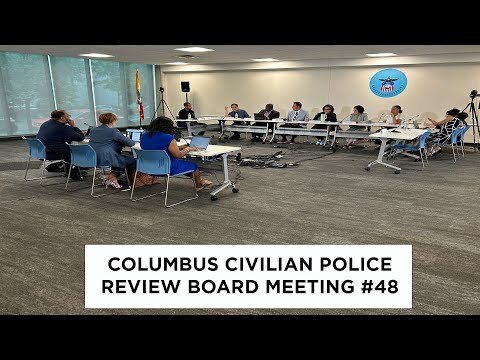
The Civilian Police Review Board reviewed case 2025-0124, in which DIG investigators sustained misconduct findings against two lead officers for failing to verify an address after responding to the wrong house.
A Civilian Police Review Board subcommittee discussed case 2025-0124, an investigation into officers who responded to the wrong house after relying on Google Maps.
The Columbus Department of the Inspector General told the board that the DIG completed its follow-up investigation and closed the case. The DIG report concluded that the officer who knocked and allegedly did not announce himself was exonerated on that allegation, but the DIG added an allegation and sustained misconduct findings against two lead officers for failing to verify the address when they arrived. The DIG said the two lead officers were responsible for ensuring the responding unit confirmed the correct house and did not do so.
Committee members raised concerns that relying on Google Maps without verifying house numbers or mailboxes can create serious safety risks. One committee member referenced recent national litigation where a federal law-enforcement entry to the wrong home, allegedly premised on an incorrect map location, led to serious consequences and a Supreme Court decision rejecting a broad immunity claim; the transcript did not provide a case name.
Committee members proposed a policy recommendation that CPD require verification of a physical address (house number or mailbox) rather than sole reliance on online mapping tools when responding to service calls. Board members discussed procedural constraints: the committee was informed the updated DIG report had been completed but not yet disseminated to the full board, and several members said best practice would be to wait for the DIG—s redistributed report before issuing a formal policy recommendation linked to the case. The DIG agreed to forward the updated report and to check CPD policy language on address verification and supply that citation to the committee.
No formal board vote to adopt a CPD policy change occurred at the meeting. The board recorded concurrence that the case was closed by the DIG with the noted sustained finding against the two lead officers; the committee also recorded an intention to await the written DIG report before advancing any formal policy recommendation to the full board.
The board asked the DIG to provide the updated report and to indicate whether existing CPD policy already requires verification of house numbers, mailboxes or other physical markers, and to return the material to the committee for review.