Get Full Government Meeting Transcripts, Videos, & Alerts Forever!
Get email alerts on the Tax Abatements Pilots Moratorium topic
No spam. Unsubscribe anytime.
Shelby County ad hoc panel trims proposed pilot moratorium to four months, sets data and timeline conditions
Summary
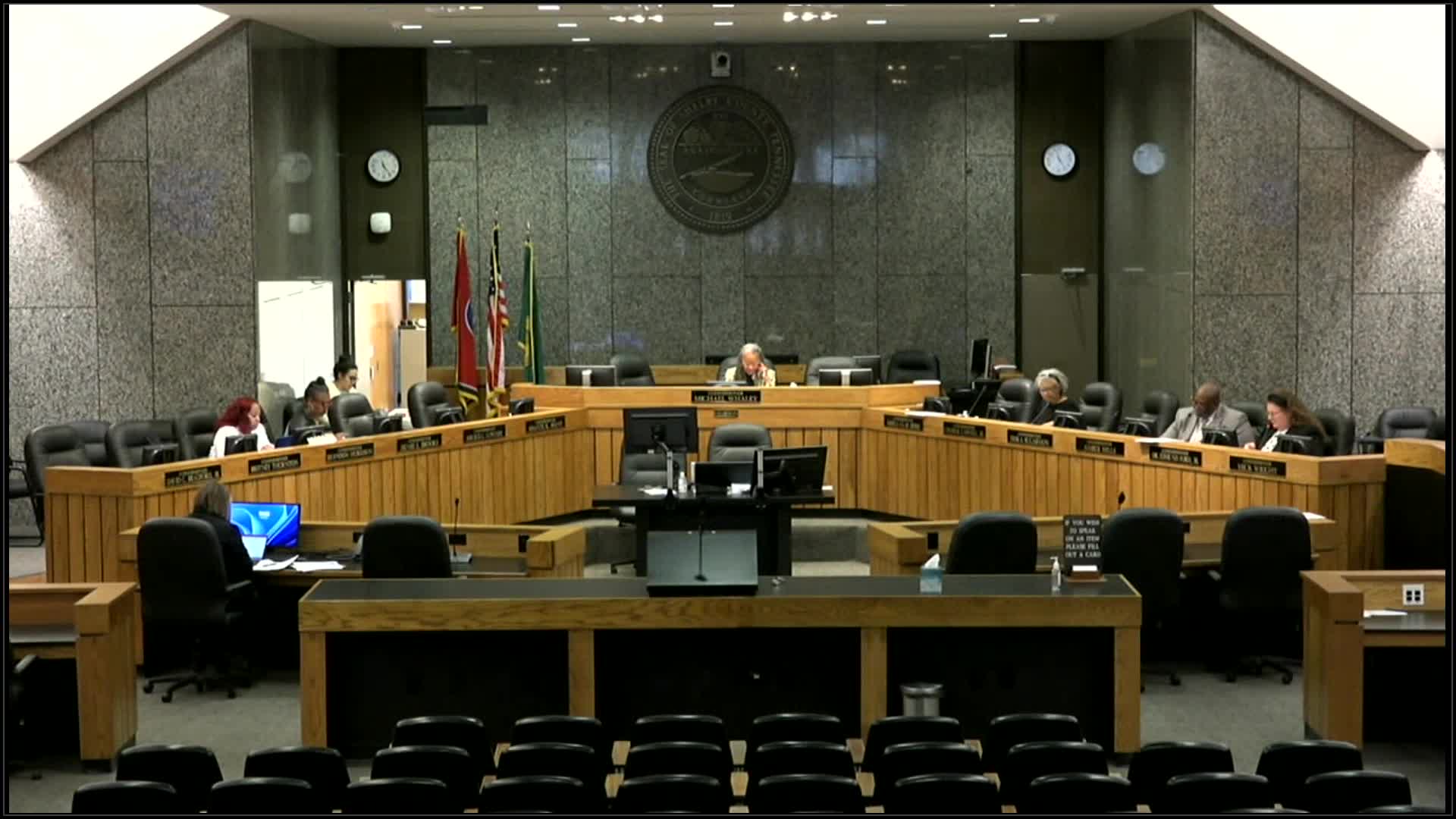
The Shelby County Board of Commissioners Pilot Ad Hoc Committee voted to shorten a proposed 180‑day moratorium on new pilot projects to four months, while requiring an agreed timeline and data access from industrial development boards and other agencies for further extensions and analysis.
The Shelby County Board of Commissioners Pilot Ad Hoc Committee voted to shorten a proposed 180‑day (six‑month) moratorium on new pilot projects to a four‑month moratorium and directed staff to produce a clear timeline and document checklist that agencies must meet for any extension.
The committee said the shorter moratorium is a compromise intended to allow the ad hoc team time to complete an economic and compliance review of existing pilots — including tax‑abatement packages — while giving affected boards an opportunity to respond and submit information.
Committee members emphasized the vote was conditional. Jay Bailey, who leads the assessor’s team assigned to the review, told the committee staff needs access to project records and consistent cooperation from the various industrial development boards and housing authorities to complete the analysis in the reduced time. "If 1 project, is abating a million dollars a year for 15 years, based on promises of certain tenant benefits, are we seeing $15,000,000 worth of tenant benefits? Or or are they 10 years in and there's only been half a million dollars worth of tenant benefits?" Bailey said during the meeting.
The motion to change the moratorium period from six months to four months was moved by Member Jay Bailey and seconded by Trustee Regina Newman. The chair called for a voice vote; "All those in favor indicate by saying aye," and later announced, "the motion carries and it passes." The committee did not record a roll‑call tally in the meeting minutes.
Members said the four‑month window must be paired with an explicit timeline and a checklist of documents that applicants and authorizing boards must supply. Natalie McKinney and Rashida Jones pressed for a formal, consistent set of document requests so the committee’s analysis would be comparable across projects and boards. Janice Banks, staff to the committee, said staff would circulate a checklist and could attach it to the drafted resolution.
Several speakers reported that most boards have been cooperative and that required documents are often publicly available — the Downtown Commission, EDGE board and the Memphis Housing Authority were cited as examples — but they identified one board in particular that has been less forthcoming and would be harder to get records from. Committee members said that lack of consistent access undercuts the review and argued the moratorium should include language preventing new pilot approvals while the committee compiles its report.
Trustee Regina Newman told the panel the county’s latest pilot report shows abatements have grown and now total about $43,000,000 for pilots, a figure she said reinforces the need for a review of whether abatements deliver the public benefits promised. "When we give a $10,000,000 abatement for a housing project and we potentially make two affordable units out of the entire project, how exactly is that a public purpose?" she said.
The committee agreed to invite industrial development boards and other authorizing bodies to provide input on the moratorium and to meet with the ad hoc committee before the resolution is finalized for the commission. Staff said those meetings should happen quickly so the committee can return a revised resolution to the full commission in May or June, ahead of the budget work the commission will undertake in June.
Megan Smith, the deputy county attorney assigned to the committee, said she would draft a revised resolution that incorporates the shortened moratorium and the agreed timeline language for circulation to committee members.
The chair wrapped the item by instructing staff to schedule the outreach to boards, prepare the draft resolution with an attached document checklist and timeline, and return the resolution to the commission for action after the committee meets with the boards.
Ending: The panel’s decision reduces the moratorium period to four months but ties that change to concrete steps: a published checklist of documents, agreed timelines for delivery, and the possibility of extension only if the committee documents a justified need. The committee will present the revised resolution and findings to the full county commission in the coming weeks.