Get Full Government Meeting Transcripts, Videos, & Alerts Forever!
Get email alerts on the Police Use Of Force topic
No spam. Unsubscribe anytime.
AB 400 would require POST canine standards statewide; supporters call for consistency, opponents seek deeper reform
Summary
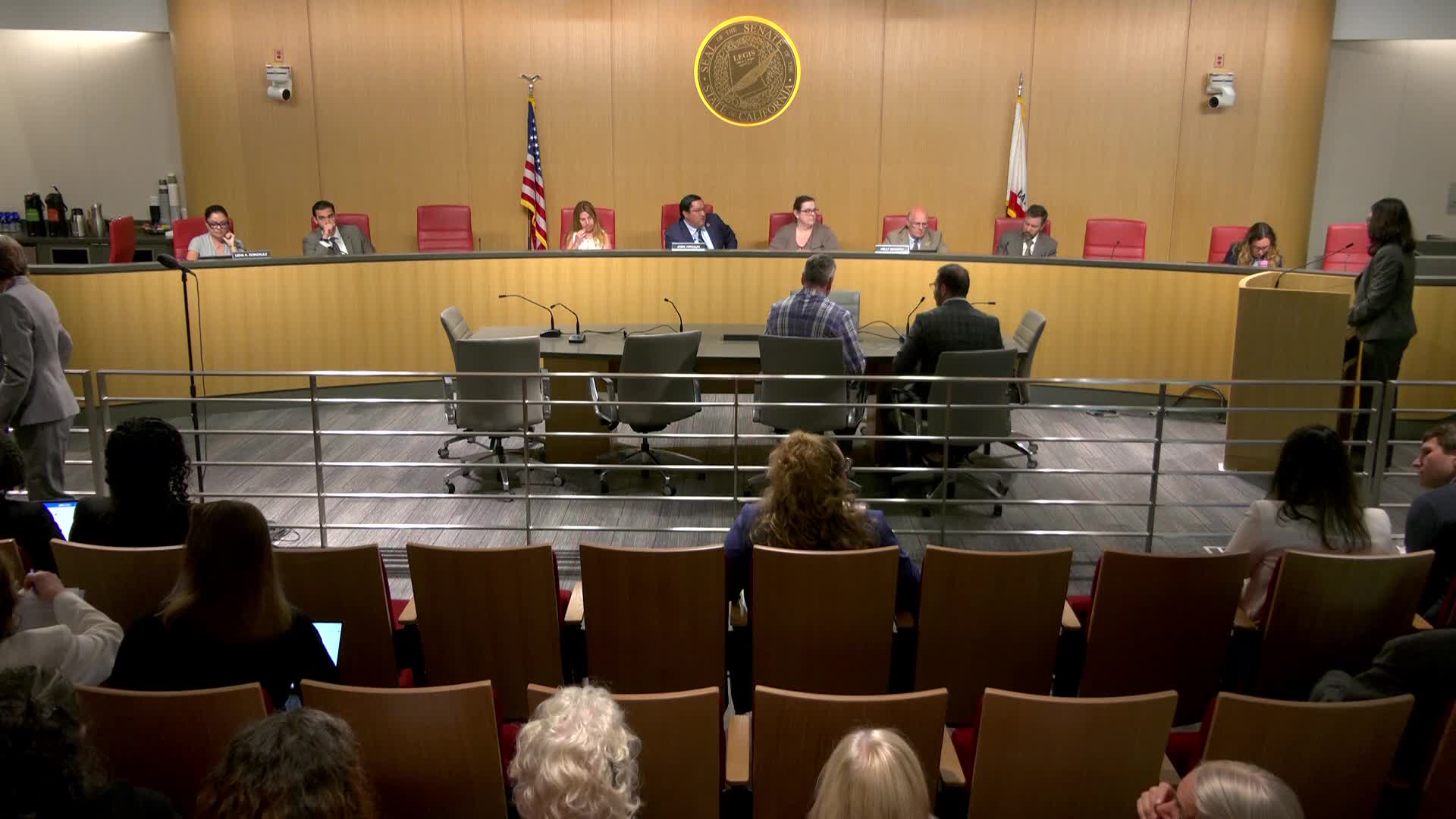
Assemblymember Pacheco presented AB 400, saying it would make POST's newly updated K‑9 guidelines mandatory minimum standards for any law‑enforcement agency in California that operates a canine unit.
Assemblymember Pacheco presented AB 400, which would require all law‑enforcement agencies with K‑9 units to meet minimum statewide standards developed by the Commission on Peace Officers' Standards and Training (POST). Supporters said the measure puts baseline training, use‑of‑force and reporting standards into state law; opponents said the POST guidelines repeat standards the legislature previously rejected and pointed to racial disparities and high‑cost settlements in jurisdictions using similar policies.
Jonathan Feldman (California Police Chiefs Association) and Randy Perry (PORAC) described a multi‑year, stakeholder process that produced revised POST K‑9 guidelines focusing on training, use of force standards and handler skills. Feldman said the guidelines are meant to sit atop existing use‑of‑force statute and policy, not replace prior reforms, and he cited deployment statistics from several large agencies indicating K‑9 deployments that result in bites are a small percentage of overall activity.
Opponents, including ACLU California Action and the California Public Defenders Association, argued the standards were developed outside the legislative process and mirror policies from agencies with abusive deployment histories. ACLU counsel cited Bakersfield and DOJ reports documenting racial disparities in K‑9 deployments and argued last year's legislative process rejected these standards; opponents urged stronger reforms such as officer liability or an effective ban.
Committee questions covered local discretion, whether agencies without K‑9 units would be affected (the bill applies only to agencies that have K‑9 units), and whether local jurisdictions can adopt more restrictive policies (the bill sets minimums; local agencies may exceed them). The author and supporters said the bill preserves local ability to be more restrictive and leaves open further legislative work. The committee did not vote at the hearing.