Get Full Government Meeting Transcripts, Videos, & Alerts Forever!
Get email alerts on the Public Transit Safety topic
No spam. Unsubscribe anytime.
AB 394 would expand penalties and clarify restraining‑order authority to protect transit workers, sponsors say
Summary
Assemblymember Wilson presented AB 394 to clarify enhanced penalties for assaults on transit employees and to make clear workplace temporary restraining orders (TROs) can be used in the public transit context, including system‑wide orders when appropriate. Transit agencies and unions supported the measure; the ACLU and others opposed,
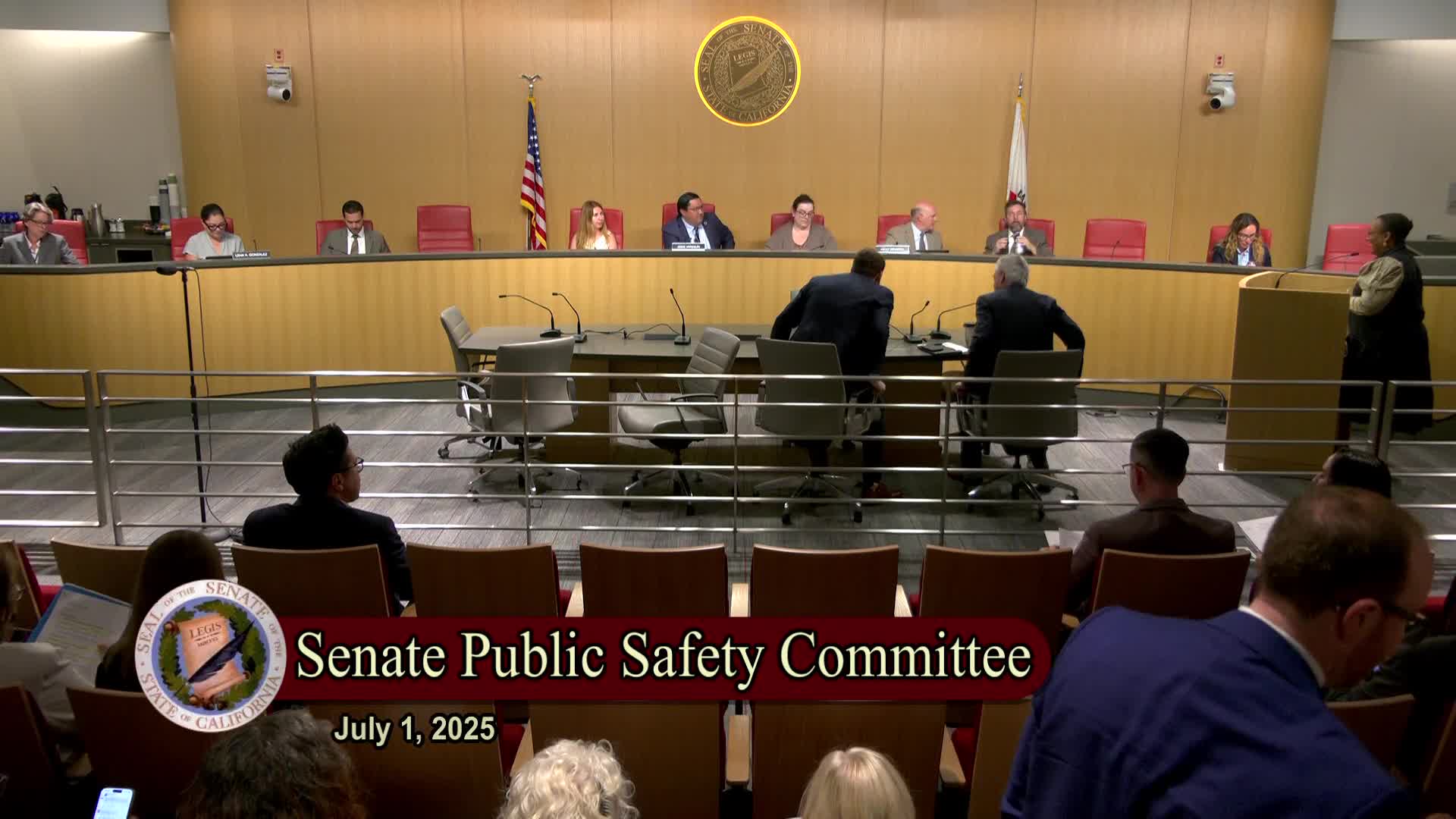
Assemblymember Wilson presented AB 394 to the committee as a bill aimed at protecting frontline transit workers and riders by clarifying application of enhanced misdemeanor/penalty statutes and the use of temporary restraining orders (TROs) in the transit context.
Wilson said assault and harassment of transit workers has risen and undermines operations and public confidence. The bill clarifies that existing enhanced penalties for battery apply to a broad range of transit employees (operators, ambassadors, mechanics, ticket agents) and confirms that employers and labor representatives may petition for TROs on behalf of employees and that TROs can be crafted to apply system‑wide across vehicles, stations and facilities where a court deems it appropriate.
Supporters included transit operators (County Connection), the Amalgamated Transit Union/Teamsters, the California Transit Association and many local transit agencies and labor groups. Bill backers said the TRO authority has helped some agencies address repeat violent behavior from a very small percentage of riders who account for a large share of disruptions. Bill supporters emphasized judges retain discretion to tailor orders; the author and cosponsors said the measure simply clarifies applicability for transit and does not automatically ban individuals everywhere without judge review.
Opposition testimony came from ACLU California Action and Western Center on Law and Poverty; ACLU attorney George Pramathu warned the bill increases base penalties and enables long system‑wide transit bans of up to six years, which he said could disproportionately affect low‑income Californians who rely on transit. The ACLU argued increased punishment and broad transit bans are not proven deterrents and could exacerbate poverty and transportation access barriers.
Committee members discussed proportionality and the impacts of system‑wide bans on people with no other travel options; the author indicated willingness to work on language to emphasize judicial tailoring and proportionality. No committee vote was taken at the hearing because the committee lacked a quorum.