Get Full Government Meeting Transcripts, Videos, & Alerts Forever!
Get email alerts on the Homelessness topic
No spam. Unsubscribe anytime.
Sacramento council passes ordinance for publication that would ban sleeping outside City Hall; debate centers on homelessness and enforcement
Summary
On July 1 the Sacramento City Council voted 6-3 to pass for publication an ordinance that would prohibit sleeping and resting outside City Hall between 9 p.m. and 6 a.m.; opponents and dozens of public commenters said the change would criminalize homelessness and urged more data, shelter options and staff surveys before final action on July 22.
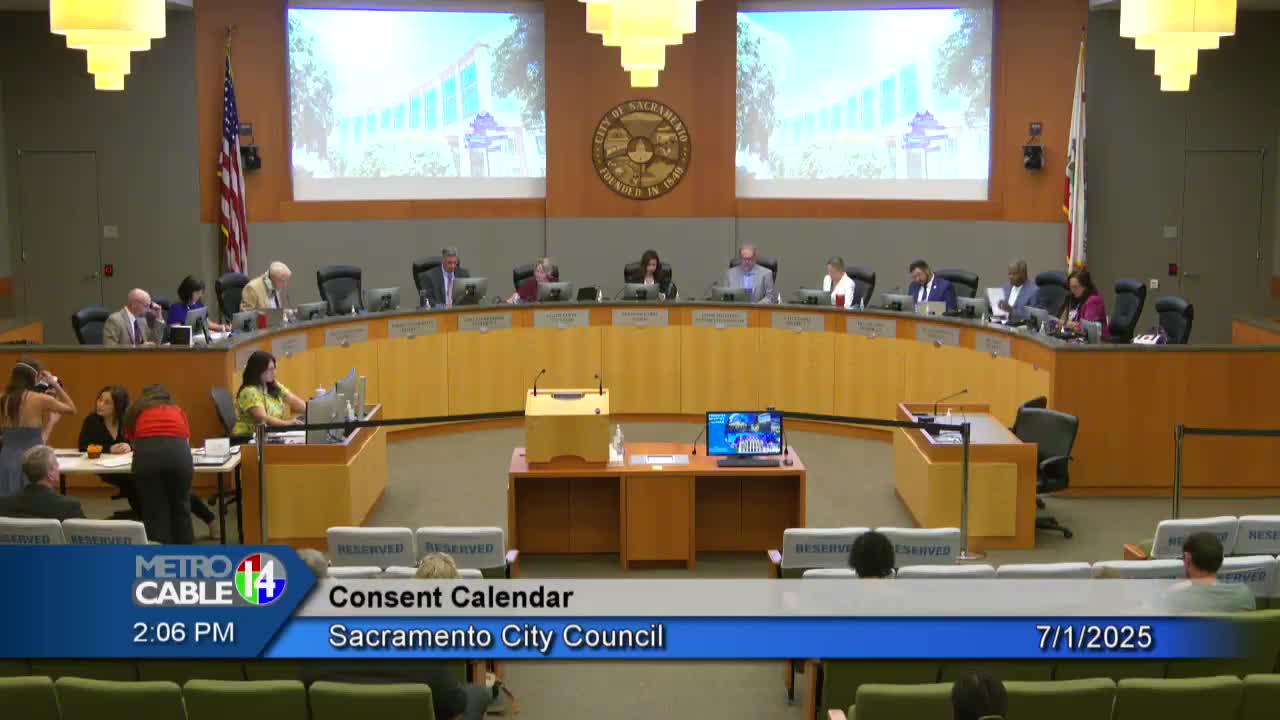
The Sacramento City Council on July 1 voted 6-3 to pass for publication an ordinance that would ban sleeping and resting outside City Hall between 9 p.m. and 6 a.m.; the ordinance is scheduled for formal consideration on July 22.
Councilmember Vang, who pulled the item for discussion, said the proposal "doesn't solve the issue of homelessness" and asked staff for additional data, including surveys of city employees about workplace safety and counts of 311/911 complaints tied to encampments. She said she would vote no on the ordinance at final consideration unless those questions are answered.
The measure prompted large public turnout: city staff and the clerk recorded 14 speakers during the item. Speakers at the dais and in public comment described competing concerns about workplace safety, public sanitation and the risks faced by people sleeping outdoors. Michael Huttnick, who identified himself as a District 5 resident and community member, urged the council not to punish people experiencing homelessness, saying, "these are people like yourselves, and the only thing that separates them and you is circumstances that led them to the places that they are." Robert Cantu, who identified himself as unhoused and as someone who sleeps near City Hall for safety, said, "I prefer to sleep here because it's safer at night. If you take this away from us, who knows where we're gonna go?"
Legal and enforcement details cited during public comment included potential penalties in the draft: Justine, a District 4 resident who spoke during public comment, said violations of the proposed sit/lie rules would carry fines "ranging from $250 to thousands of dollars and up to a year in jail," a point that prompted multiple council members to ask for clarity on citation and enforcement practices.
Councilmembers who spoke emphasized that the Council was voting only to pass the ordinance text for publication under the city charter — a procedural step that allows public review and requires a later vote to adopt. Several members said they supported debating the question in public but wanted more operational detail before final adoption. Councilmember Maple said she could not support the ordinance in its present form and listed specific information she wanted before a final decision, including: (1) whether the city had surveyed city employees about safety concerns; (2) how many complaints the city had received about encampments at City Hall through 311/911; (3) what alternate locations and transportation would be available for people asked to leave City Hall; and (4) the precise enforcement process (who would respond, timing, and penalties).
Advocates and service providers urged the council to prioritize housing and services over enforcement. Ron Hochbaum, an associate clinical professor of law at the University of the Pacific McGeorge School of Law, summarized evidence he said was relevant to the policy debate: "Study after study concludes that finding and arresting people for experiencing homelessness puts them in danger, obstructs pathways out of homelessness, and frustrates the work of service providers." Representatives of Sunrise Movement Sacramento, the Sacramento Homeless Union and legal clinics said City Hall currently serves as one of the safest places for some unhoused people because of lighting, cameras and proximity to services.
At the meeting's vote on the pass-for-publication motion the clerk recorded three no votes — Councilmember Vang, Councilmember Maple and Councilmember Caplan — and a tally of 6 yes, 3 no. The Council's action was to pass the ordinance for publication; the ordinance itself will be considered on July 22.
Councilmembers asked staff to provide additional information in the July 22 staff report, and several said they expect to review the requested data — staff surveys, complaint counts, details about citations/fines, and whether transportation and close-by shelter options exist — before casting final votes. Vice Mayor and other members noted that if the council moves forward, additional operational costs (cleaning, enforcement and transportation) should be estimated and disclosed.
The July 22 hearing will be the opportunity for final council action. Until then the draft ordinance remains under public review and the City will accept further input.