Leesburg Technology Commission gets update on IT security hire, CISA engagement and AI policy
Loading...
Summary
Commissioners heard that the town has narrowed an IT governance and security officer search to two finalists, is working with CISA on an operational review, and continues work to finalize an AI policy; staff emphasized governance and phased deployment.
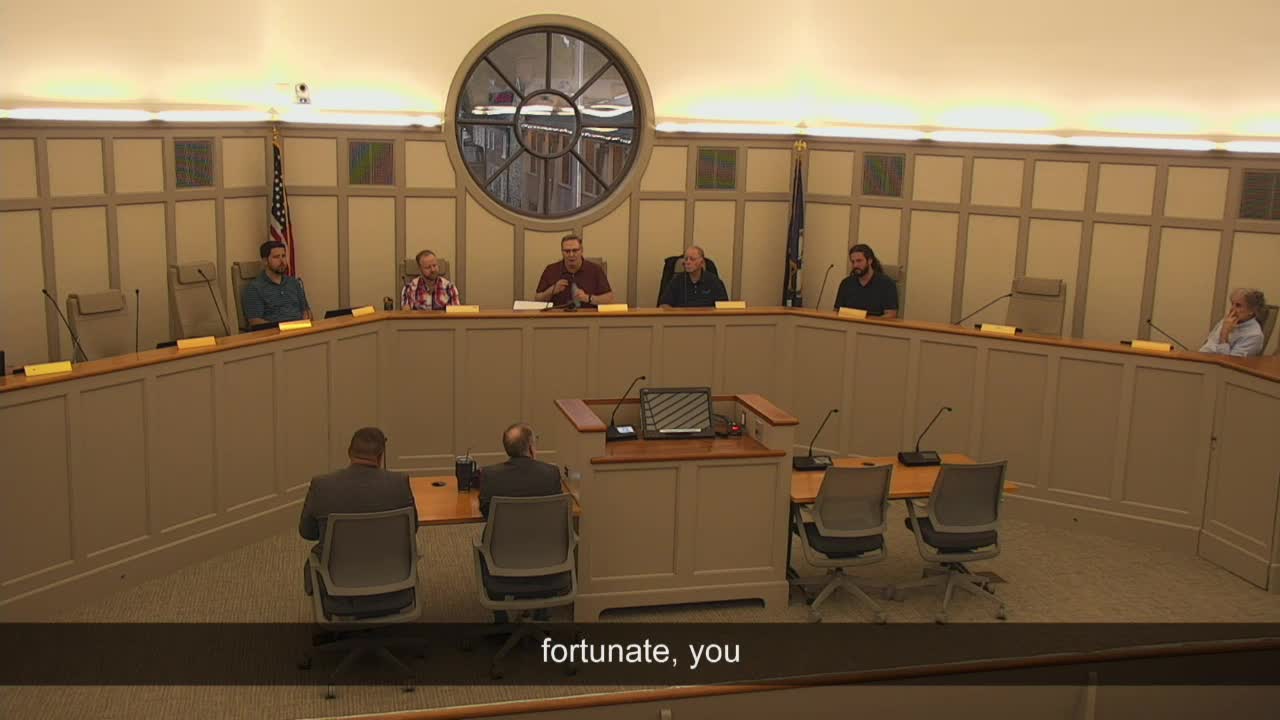
At a meeting of the Town of Leesburg Technology Communications Commission, commissioners received an update on the hiring process for an IT governance and security officer, ongoing operational engagement with the Cybersecurity and Infrastructure Security Agency (CISA), and the status of a draft artificial intelligence policy.
The update came from an IT staff member who told the commission the recruitment pool was unusually strong. “We started initially calling 53 down. That ended up swelling to about over 60 applicants,” the staff member said, and the field was reduced to nine after virtual interviews, then to three for in-person interviews and now two finalists who are scheduled to come in for interviews on July 11. The staff member said the town hopes to have someone working by July, or if not, by August.
The staff member described the in-person interview format: three rotating panels including (1) department heads, (2) commission leadership with finance and assistant town management, and (3) the town manager with the assistant town manager and the HR director. The presenter identified specific participants by name who will take part in interviews: Mr. Binkley (chairman of the commission), Kate Trask (assistant town manager) and Josh Diddowick (human resources director).
Separately, the presenter said Leesburg is “actively engaged with CISA right now” and is taking advantage of some of CISA’s operational services, though the presenter declined to discuss sensitive findings publicly. The presenter said that if any CISA results require a commission discussion, staff would bring those results to the commission and noted that some findings could require closed-session treatment.
On AI policy, the presenter said a draft policy is in the town’s internal review pipeline and has already passed legal review. “It's been under review. It's still in the pipeline going through the town process,” the presenter said, and staff plan to gather departmental input before presenting it to the commission for review. The presenter described a phased approach to AI adoption focused on governance and limited initial deployments — for example, administrative tasks that could free time for subject-matter experts — and said the town will avoid “bleeding edge” implementations until safety and policy are well established.
Commissioners discussed state-level AI legislation in broad terms. One commissioner noted that House and Senate versions differ and that reconciliation remains pending; another commissioner said, based on their review, the pending legislation would likely not affect the town’s intended uses because of how the bills address personally identifiable information (PII) and privacy laws. The presenter also summarized an academic sandbox study about insider-threat scenarios with AI and said that, despite the study’s provocative findings, Leesburg’s public-data-heavy operating environment reduces some of the risks associated with hidden, broad-reaching AI access to private communications.
The presenter emphasized governance and staff training, and said the town will begin with limited, controlled use-cases (for example, administrative assistants and targeted process-improvement work) and will not grant AI broad access to private personnel records or email systems.
The commission had no formal vote on hiring, CISA engagement or AI policy during the meeting; the session’s actions were procedural motions recorded separately.
Looking ahead, staff said they will return to the commission with the AI policy once it has cleared internal steps, and that the two finalist candidates will interview on July 11 with multiple panels.
Quotation attribution note: direct quotes in this article are attributed to an IT staff member who presented the update and to speakers identified in the transcript. Where a speaker’s full name was not given in the transcript, the article uses a generic role label.