Get Full Government Meeting Transcripts, Videos, & Alerts Forever!
Get email alerts on the Evidence Procedure topic
No spam. Unsubscribe anytime.
Committee hears AB 528 to limit duplication and removal of child sexual abuse material from secure evidence
Summary
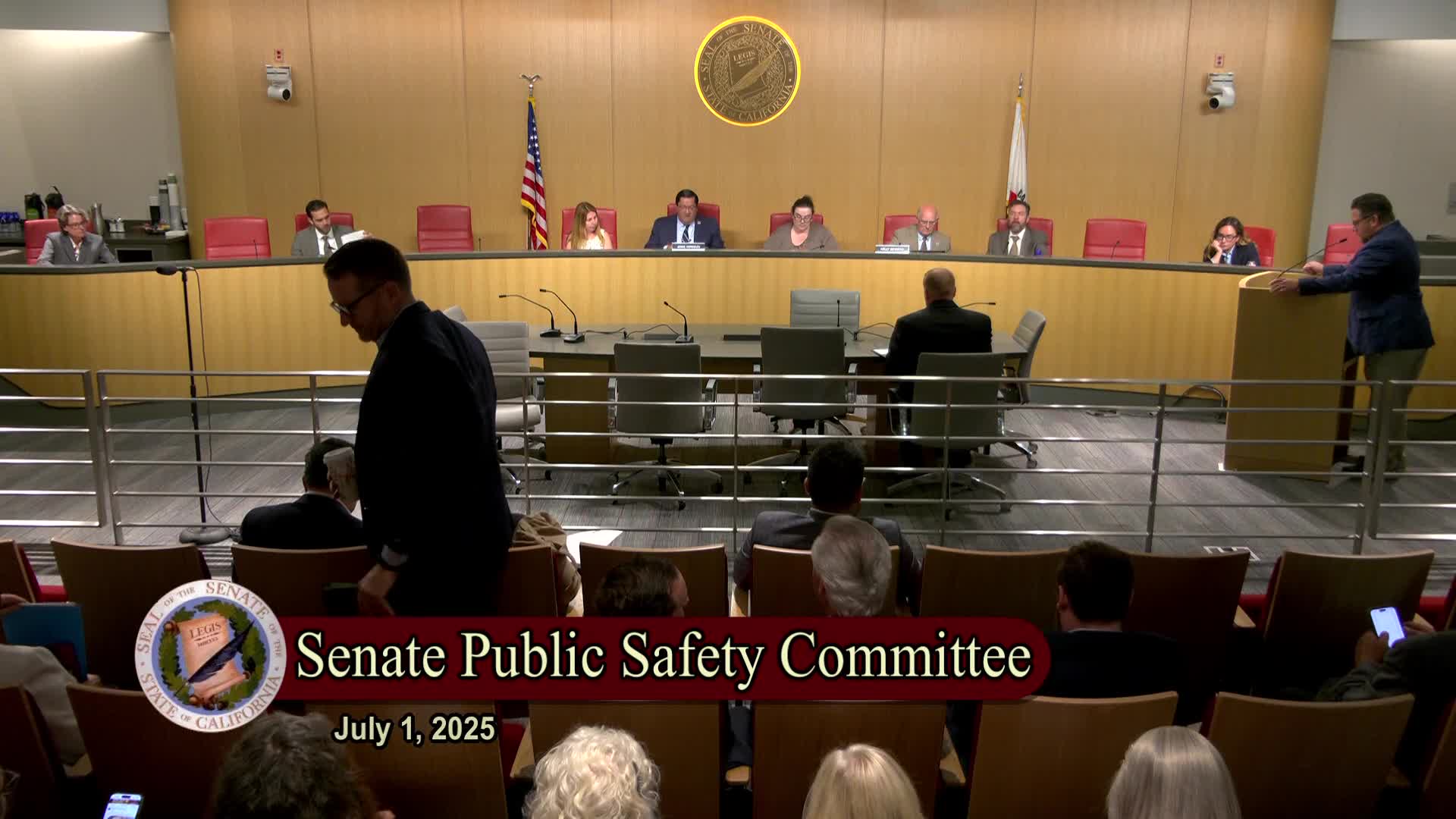
Assemblymember Semler Moore Alanis told the Senate Public Safety Committee that AB 528 would prohibit duplication and removal of child sexual abuse material (CSAM) from secure law‑enforcement or court custody, while preserving a defendant’s access to evidence under protective conditions.
Assemblymember Semler Moore Alanis presented AB 528 to the Senate Public Safety Committee, saying the bill aligns state practice with federal rules intended to limit distribution of child sexual abuse material (CSAM) in criminal proceedings.
The author said federal law generally prohibits duplication or removal of CSAM from secure locations, while some state court orders may allow judges to release copies to defense teams. She described high‑volume seizures (one recent Solano County seizure was described as "over 120 terabytes" of material) and argued storage and handling present a real risk of further distribution that can re‑traumatize victims.
Detective Casey Cooper of the Stanislaus County Sheriff's Office, who works on Internet crimes against children, described the emotional impact on victims and said investigators use secure viewing methods and software to try to prevent further dissemination. Corey Salzello of the California State Sheriffs' Association said sheriffs support the bill. Victim‑advocacy groups also testified in favor.
Opponents, including the California Public Defenders Association and the Statewide Association of Criminal Defense Lawyers, said the bill would make defense review of evidence unduly difficult. Alice Michael (CPDA) said current law already requires protections and protective orders and argued — based on her decade(s) of public defense practice — that restricting access would make it harder for counsel to review evidence in the limited windows they have during workdays and require costly transports of incarcerated clients for in‑person review.
Ignacio Hernandez, representing criminal defense lawyers statewide, warned the bill tracks an outdated federal statute and could conflict with case law requiring judges to ensure defense access to evidence necessary for preparation. He urged more precise drafting and safeguards to ensure constitutional discovery rights.
Committee members asked whether the bill would prevent necessary defense review and whether law enforcement could accommodate after‑hours access; author and supporters said agencies are willing to make accommodations and work with defense counsel but emphasized limiting distribution and duplication of CSAM is a protection for victims.
No committee vote was taken; the item was heard as part of a subcommittee session without quorum.