Lifetime Citizen Portal Access — AI Briefings, Alerts & Unlimited Follows
Seville Platform for Action launched, outlines new tools to tackle debt and finance the 2030 agenda
Loading...
Summary
At the Seville launch of the Seville Platform for Action, a speaker announced a package of initiatives — including a World Bank debt-swap hub, a debt‑pause alliance and a borrowers forum — aimed at channeling public and private finance to help developing countries meet the 2030 Agenda, which the speaker said needs about $4 trillion a year.
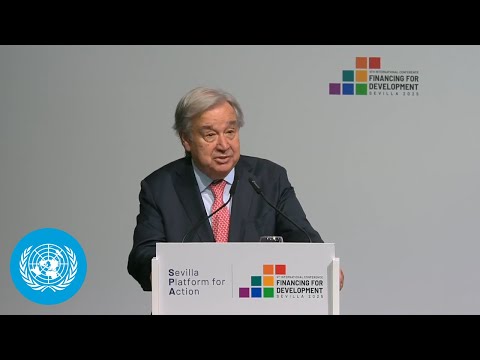
At the launching of the Seville Platform for Action in Seville, a speaker urged governments, the private sector and international institutions to adopt new financing tools to revive progress on the Sustainable Development Goals, saying developing countries need roughly $4,000,000,000,000 a year to deliver on the 2030 Agenda.
The speaker said the Seville Platform — and a related Civilian Commitment document — set out more than 130 specific initiatives to mobilize finance and address systemic debt risks. “Our road map to a better future, the sustainable development goals is in danger,” the speaker said, adding that two‑thirds of SDG targets “are not progressing fast enough or at all.”
The platform includes proposals the speaker described as actionable now: a global hub for debt swaps at the World Bank intended to relieve liquidity constraints and lower borrowing costs; a debt‑pause alliance to assist countries in crisis; a global coalition to scale up prearranged disaster finance; a blended‑finance platform to draw in private capital; a new tool for multilateral development banks to manage currency risks; and a commission to study the future of development cooperation.
The speaker also said an expert group on debt, appointed in December, is announcing 11 “immediately actionable” proposals and proposed establishing a borrowers forum to help countries coordinate debt management and restructuring. The speaker said they look forward to working with member states, including the G20, to implement the forum.
The launch framed the platform as an action‑oriented response to what the speaker called a global development crisis driven by limited fiscal space, slowing growth, heavy debt burdens and growing systemic risks. The speaker said the platform aims to channel both public and private finance to areas of greatest need and to overhaul the world’s approach to debt so borrowing supports sustainable development.
The address closed with a call for broad participation from governments, private‑sector partners, international institutions and civil society, and thanks to the Spanish hosts. “And above all, it proves that progress and change are possible if we work together,” the speaker said.
Details about governance, financing commitments, timelines and which initiatives will proceed first were not specified in the remarks.