Get Full Government Meeting Transcripts, Videos, & Alerts Forever!
Get email alerts on the Sewer Rate Adoption topic
No spam. Unsubscribe anytime.
Ione council adopts sewer rate study under Prop 218, sets first-year residential charge at $60
Summary
After a public hearing under California’s Proposition 218, the Ione City Council adopted a five‑year sewer rate study and set the first-year equivalent residential unit monthly charge at $60; the decision follows public concern about affordability, protest-process clarity and reserve needs.
The Ione City Council on a unanimous voice vote adopted a five‑year sewer rate schedule developed by consultant Willdan Financial Services and set the first‑year monthly equivalent residential unit charge at $60 (an increase of $19.30 from current rates). Consultant Chris Fisher summarized the study during a public hearing and said the city’s existing rates, last changed in 2004, no longer produce sufficient revenue to meet operating costs, capital projects and debt-service coverage.
Fisher told the council the study used a five‑year revenue sufficiency analysis, a cost‑of‑service allocation and a capital improvement project list. He said the city faces nearly $22.9 million in sewer capital needs over the next five years, including treatment-plant, collection-system and rehabilitation projects, and that without rate increases the city’s operating reserves and debt-service coverage would fall below policy targets within a few years. "The revenues are not enough to meet the expenditures," Fisher said during his presentation.
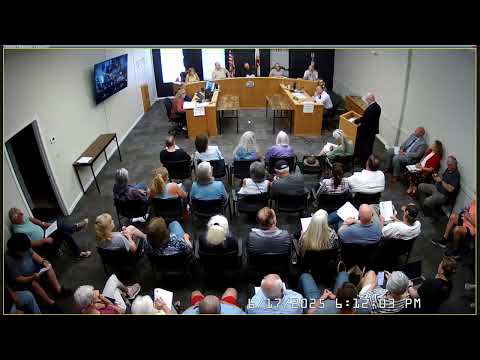
The city mailed 3,431 notices representing 2,441 properties as required by Proposition 218; the clerk reported 58 written protests received before the hearing was opened. Fisher and staff explained the Prop 218 tabulation method: one protest per parcel counts toward the majority‑protest threshold of 1,221 parcels. After public comment and council discussion, a councilmember moved to adopt the rate study and implement an initial monthly ERU charge of $60 for the coming fiscal year; the motion was seconded and carried by unanimous vote of members present.
Residents and several speakers urged more modest or phased increases and raised process concerns. Multiple residents said the projected five‑year increases — which some calculated as about 190% in total — would be unaffordable for people on fixed incomes and argued the city should adopt smaller increases and revisit the schedule sooner. Several speakers also said the mailed notice language and the absence of a separate ballot form made the protest process confusing; staff and the consultant responded that Proposition 218 prescribes a written‑protest procedure for utility rates and does not require a returned ballot (a different process applies to assessments).
Council members said rates had been held down for two decades in part because development and new hookups kept average revenues higher; they also discussed alternatives such as approving smaller increases now and re‑evaluating in two to three years. The council approved the consulting recommendation to adopt the rate study as the maximum schedule for each of the next five years and to set the FY26 (next fiscal year) charge at $60 for an ERU. Staff and the consultant reiterated that the council may implement amounts up to those maximums in later years but is not required to adopt the full increases in future years.
Action: The council adopted the rate study under the Proposition 218 public‑hearing process and set the first‑year ERU monthly charge at $60; vote was recorded as unanimous by the members present.
Ending: Staff said it will tabulate and finalize protests in writing, implement the FY26 rate for next year and return to council as required for future years’ implementation and any further adjustments.