Get Full Government Meeting Transcripts, Videos, & Alerts Forever!
Get email alerts on the Community Benefits Ecced topic
No spam. Unsubscribe anytime.
Council delays vote on East Cambridge zoning and $20 million community benefits after weeks of nonprofit dispute
Summary
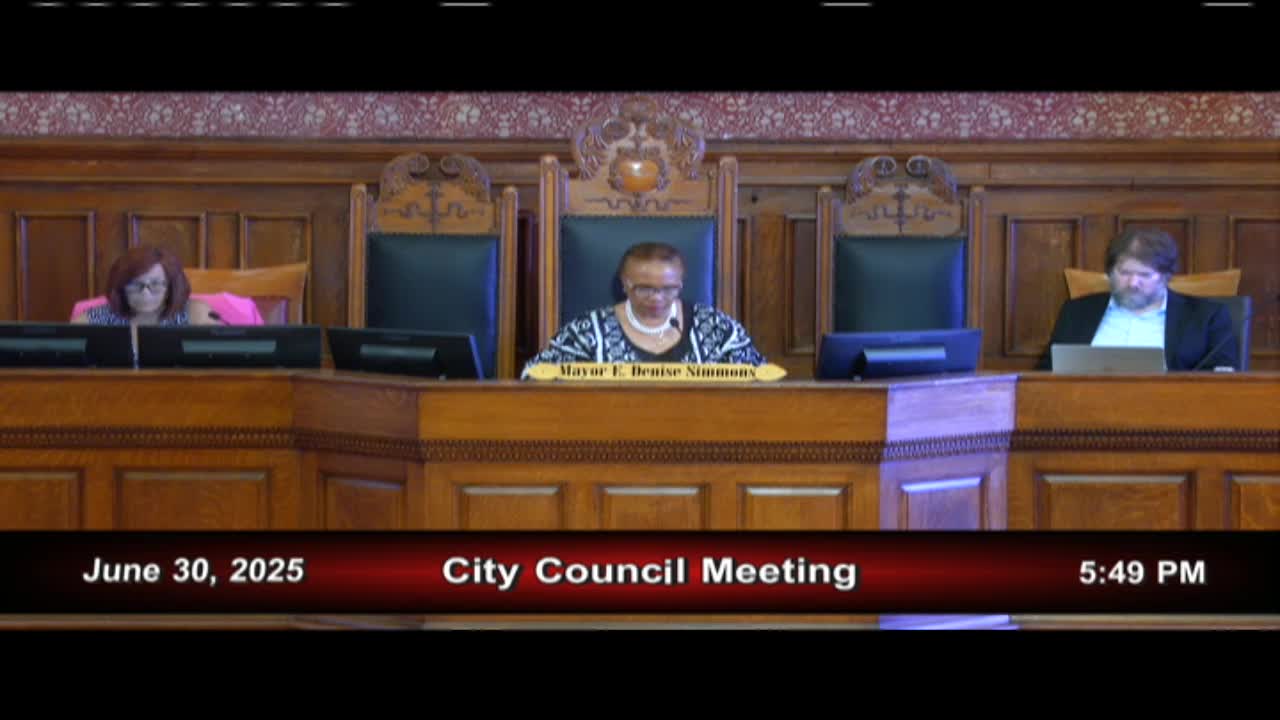
The Cambridge City Council on June 30 did not ordain a zoning amendment tied to the proposed redevelopment at 320 Charles Street and a plan to direct about $20 million in development mitigation to East End House, instead agreeing to continue the item so staff can review a final commitment letter from the developer.
The Cambridge City Council on June 30 did not ordain a zoning amendment tied to the proposed redevelopment at 320 Charles Street and a plan to direct about $20 million in development mitigation to East End House, instead agreeing to continue the item so staff can review a final commitment letter from the developer.
Why it matters: The zoning petition and the associated community-benefits package would rezone the Biomed Realty site in East Cambridge and reserve a substantial mitigation payment intended to support a new East End House facility. The measure has divided Cambridge’s nonprofit sector and residents: dozens of speakers urged the council to keep the full $20 million in East Cambridge for East End House, while others called the selection process opaque and asked for a broader, citywide competition for community benefits.
Council and staff decision City Manager Yan (Ian/Yan per staff memo) Wong told the council the zoning amendment and its commitment letter were not ready for ordination because “we do not have a finalized draft of the commitment letter,” and staff had not completed legal and funding reviews. City Solicitor Franz Bayer told the council the city needed more time to negotiate unresolved funding and contractual terms and that more than 48 hours would likely be required to complete that work. The city therefore did not take a final vote and moved the item to the council’s summer meeting in early August for further review.
What supporters said Dozens of longtime East Cambridge residents and nonprofit leaders urged the council to keep the funds concentrated in the neighborhood most affected by the project. Denise Watson, senior director of early childhood education at East End House, described the organization’s services and reach: “What makes East End House so special is how much it offers and who it reaches. It’s the only place I know that support people of every stage of life.” Several speakers said East End House provides child care, youth programs, senior services and a food pantry to thousands of residents and argued a new building would preserve that capacity.
Several nonprofit leaders who oppose reallocating the funds away from East End House called it a once-in-a-generation opportunity for East Cambridge. Joanne Nelson, an East Cambridge resident, told the council the neighborhood “overwhelmingly identified” East End House as the natural recipient and said, “The full $20,000,000 is essential to securing its future.”
What critics said Other nonprofit leaders and coalition representatives said the decision to route the full mitigation sum to one organization was made without a transparent, citywide process and would set a troubling precedent for future deals. Priscilla Samville, co-chair of Community Arts Center’s board, said: “Our concern is not with East End House itself... Our concern is with the process. A deal of this scale developed outside of the established systems meant to ensure transparency and fairness sets a troubling precedent.”
CEOC, the Cambridge Community Center, the Dance Complex, the Community Arts Center and other nonprofit leaders pressed the council to delay action and convene a broader advisory process so multiple nonprofits across Cambridge could apply for capital support. The Cambridge Community Center said it and dozens of other organizations had not been meaningfully consulted about the reallocation of mitigation money and asked that the council use the delay to “rebuild trust.”
Small-dollar specifics and claims from testimony - The draft agreement under discussion would direct about $20,000,000 in mitigation to East End House if the zoning is adopted as proposed; speakers also referenced a prior $9,000,000 benefit previously pledged to the organization. - CEOC said a later amendment proposed $500,000 to it for direct assistance; CEOC’s director told the council the organization last year distributed $87,856 in rent-arrearage and small cash grants to East Cambridge residents and served 944 East Cambridge residents. - Several nonprofit leaders said hundreds of staff and thousands of participants across multiple organizations would be affected by how the funds were allocated.
Council and staff next steps City staff told the council they had received a revised commitment letter from the developer but had not completed legal review, nor had the parties finalized contingency language about what would happen to mitigation funds if East End House could not or chose not to accept them. The council agreed to keep the item on the agenda for an August meeting to allow those contractual and funding questions to be answered and for further consultation among the developer, East End House and other nonprofit stakeholders.
Why the public fight drew attention Speakers described this as a test of whether mitigation dollars from large commercial projects should be concentrated in neighborhoods most directly affected by development or be distributed through an open, citywide competitive process. State Rep. Mike Connolly, whose district includes East Cambridge, urged the council to “lift each other up” and recognized nonprofit leaders’ frustration while saying he supported seeing the East End House secure long-term funding.
What this does not decide Councilors and staff emphasized the zoning petition’s ordination rests on a completed commitment letter and that no ordinance was adopted on June 30. Any final action at a later meeting will require the council to consider the letter’s terms and any supplemental language the city negotiates with the developer.
Community context and engagement Public comment on the item filled well over an hour and drew a cross-section of East Cambridge residents, nonprofit directors, program staff and long-term participants. The volume and intensity of testimony — with speakers on both sides of the question — were a major driver behind the council’s decision to delay ordination, city officials said.
Ending note Councilors asked staff and the developer to continue negotiating and asked both sides of the nonprofit debate to attempt further discussions before the next meeting. The item remains under unfinished business; the council will take it up again at its next business meeting in early August unless parties reach a pre-meeting settlement that resolves outstanding legal or funding terms.