Get Full Government Meeting Transcripts, Videos, & Alerts Forever!
Get email alerts on the Education Funding topic
No spam. Unsubscribe anytime.
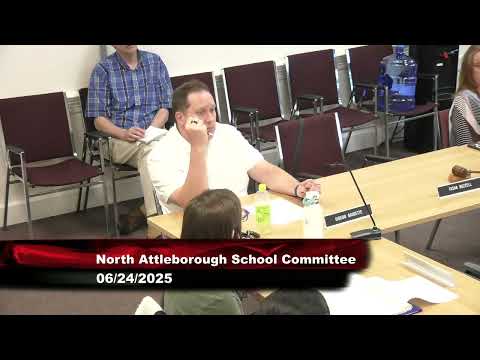
North Attleborough School Committee motion to object to town’s handling of Chapter 70 funds fails
Summary
Committee members debated whether the town is misinterpreting state Chapter 70 education funds and a symbolic motion to formally object failed in a recorded vote; members cited $911,246 in Chapter 70-related funds received by the town since 2019 that the schools did not directly receive.
At a recent North Attleborough School Committee meeting, members debated whether the town is misinterpreting and reassigning parts of the state Chapter 70 education allotment and a motion to register a formal objection failed in a symbolic vote.
Committee members said the town has retained Chapter 70-related dollars that the schools expected to flow to operating budgets. "In since 2019 after the override ... the town has received $911,246 in chapter 70 funds that we have not seen as the schools," Speaker 1, a member of the North Attleborough School Committee, said. Speaker 1 said that, in their view, the town has treated Chapter 70 as a slice of a larger pie and redirected some of those funds into capital or other town accounts rather than expanding school operating budgets.
The issue arose during discussion of the school budget request. "Wouldn't that be a violation of chapter 70 funds as they are given to towns, districts, municipalities as and from the Department of Elementary and Secondary Education to be used for very specific things within the municipalities?" Speaker 2, a member of the committee, asked. Speaker 1 responded, "I'm not saying that it's illegal. I'm saying that I think they're misinterpreting the statute. They think that they're in compliance." Speaker 1 also said the town provides more than required in some years, and described a town suggestion to draw down school revenue accounts to bridge a structural deficit as creating risk because some funds were already encumbered for specific uses.
Committee members discussed the practical effects of reassigning funds. Speaker 1 used an example: if $100 is available and $35 is already encumbered, the town's accounting that treats the full $100 as available would leave the schools with less usable cash and could create a shortfall. The member said the town had earlier recommended using available revenue accounts to fund positions, then folding those positions into base budgets, leaving no reserve in future years.
Members characterized the motion that came to a vote as largely symbolic. Speaker 3 clarified the practical effect of a yes vote: "A yes vote, we still get the funds that we're getting. A no vote is not a goose egg, we still get the funds that we're getting. So it might be a symbolic ... vote." When the chair called the voice vote, Speaker 1 said, "All those in favor, say aye." After a vocal objection from at least one member the chair said, "So it fails," and the meeting record shows the motion did not pass.
No formal legal determination was announced at the meeting. Committee members noted the superintendent had "conveyed that message" (that the town believes it is in compliance with statute), and one member asked why the school attorney had not been involved if the committee sought a legal challenge. The committee did not direct staff at the meeting to pursue litigation; the motion on the floor was described in discussion as symbolic and the formal vote failed.
The dispute centers on interpretation and accounting practices rather than an admitted statutory violation. The committee raised the $911,246 figure as the amount of Chapter 70-related funds that have been received by the town, rather than passed directly through to school operating accounts, since 2019 excluding a project-specific disbursement. Committee members also criticized a town accounting approach that they said did not account for encumbrances when assessing available school revenue.
The committee did not adopt further formal action at the meeting. Members left the disagreement unresolved for future discussion; no additional votes or directives to pursue legal review were recorded in the transcript excerpt.