Get Full Government Meeting Transcripts, Videos, & Alerts Forever!
Get email alerts on the Zoning Code Update topic
No spam. Unsubscribe anytime.
Plan Commission advances zoning code rewrite, creates RN‑1 through RN‑4 residential categories
Summary
The Waukesha Plan Commission on June 25 reviewed a revised draft of district and use standards that collapses nine residential zones into four new Residential Neighborhood districts (RN‑1 through RN‑4), changing which housing types and lot standards would be permitted across the city.
The Waukesha Plan Commission on June 25 reviewed a revised draft of the city's zoning district and use standards that would replace nine existing residential districts with four new Residential Neighborhood districts labeled RN‑1 through RN‑4.
Under the draft presented by staff, RN‑1 would cover larger suburban single‑unit lots, RN‑2 would cover smaller single‑unit lots and some duplexes, RN‑3 would cover central‑city smaller lots and low‑scale multifamily up to four units, and RN‑4 would encompass larger multifamily and mixed‑pattern areas. Staff said the change was intended to simplify the code and reduce the number of existing legal nonconforming situations.
The proposal matters because it changes how properties are regulated for setbacks, lot coverage and allowed housing types; the code change would make many longstanding residential uses conforming in place rather than nonconforming, while allowing a broader range of housing types in some districts.
Charlie (staff member) said the new district names were simplified after feedback on the earlier descriptive names, and that the draft also moves child day‑care homes to accessory status in residential districts and standardizes drive‑through stacking rules across uses. He told commissioners the RN‑1 district would be single‑unit only except for accessory dwelling units (ADUs) and cottage courts on lots over one acre and that RN‑2 would remove some duplex allowances previously included in that district.
Several commissioners asked technical and mapping questions about specific blocks and nonconforming parcels. Commissioner R. G. Keller asked whether supplemental standards cover uses such as college residence halls and rectories; staff said dormitory/residence hall standards exist and rectories would be handled through existing rooming‑house or special‑use pathways. Commissioner Molson and others praised the extended timing for code enforcement and the clearer language.
A city resident who identified herself as Lisa of 434 Madison Street raised concerns earlier in the meeting about a draft map that shows an area north of Madison Street changing to an RN‑4 designation; she said that change would affect about 40 affordable single‑family houses near Qdoba and Albert Street and feared conversion to higher‑density development. Charlie and staff later noted the area in question is currently zoned RM‑3 and said single‑family and duplex uses would remain permitted under the RN designations; staff invited commissioners to flag any blocks they think should be mapped differently.
Commissioners discussed practical impacts: the RN‑4 district is intentionally the most flexible to reflect a mix of single‑family, duplex and larger multifamily lots near the central city; inclusion in RN‑4 would not automatically permit redevelopment without required approvals. Staff emphasized the map and draft are intended to reflect the existing built environment, minimize nonconformities and align the code with on‑the‑ground parcels rather than to mandate redevelopment.
Commissioners asked whether ADUs would be allowed; staff confirmed ADUs would be permitted in RN‑1 through RN‑4. Commissioners also discussed limits on requiring cooling in rooming houses (a separate agenda item) and noted state code currently governs required heat and typically does not mandate air conditioning.
Next steps: staff said subsequent draft sections (development standards, natural resource protection, sign and subdivision rules) are in progress and expected later this summer. Commissioners did not adopt a final zoning map at the June 25 meeting and were invited to submit specific map change requests to staff.
The commission did not vote to adopt the zoning code changes at this meeting; the session was a review of the revised draft and a direction to continue edits and public outreach.
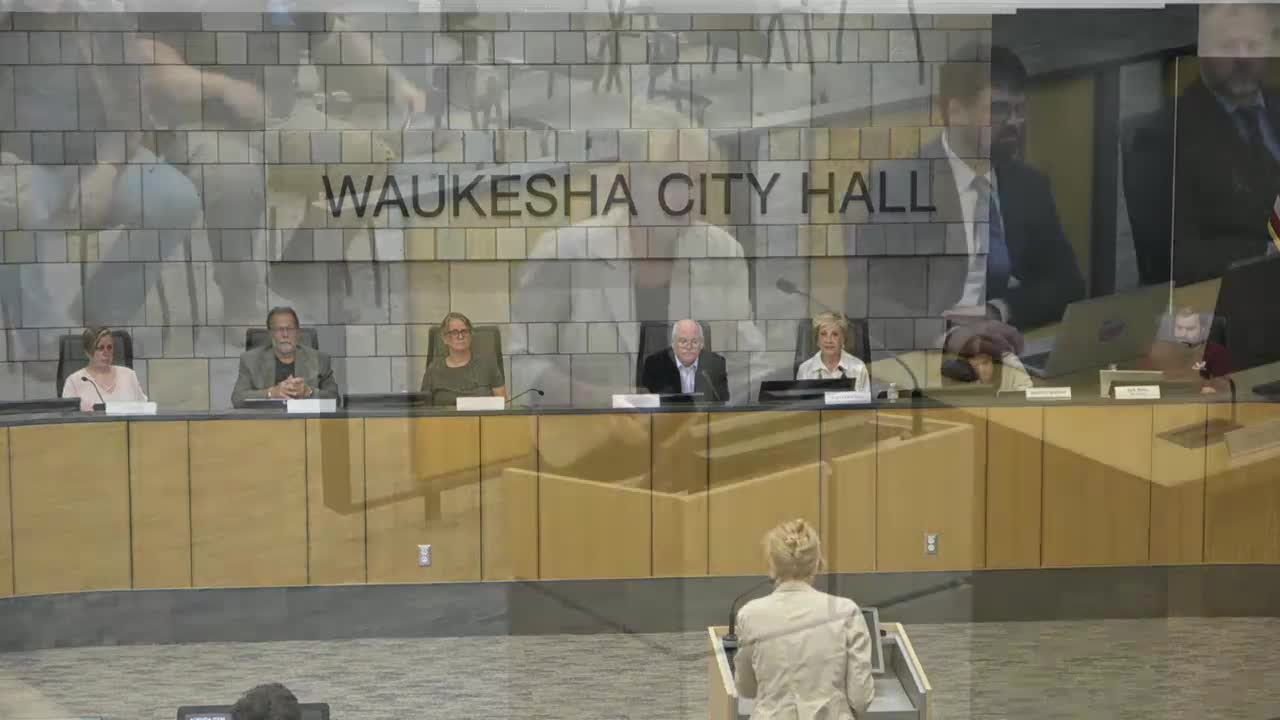
Lisa (resident) raised her concerns during the public comment period and the RN‑4 mapping question was responded to during the staff presentation and subsequent discussion. Charlie (staff member) and multiple Plan Commissioners provided the presentation and answers during the agenda item.