Get Full Government Meeting Transcripts, Videos, & Alerts Forever!
Get email alerts on the Land Use Zoning topic
No spam. Unsubscribe anytime.
Council approves Union Square arts-and-innovation overlay, backed by neighborhood community benefits agreement
Summary
The council unanimously ordained an overlay zoning amendment for Union Square that the planning department and neighborhood groups negotiated; the overlay is paired with a community benefits agreement and a project labor agreement the developer and neighborhood council negotiated.
The Somerville City Council on Wednesday enrolled and ordained a new "Arts and Innovation" sub-area of the master-planned development overlay district for Union Square and unanimously approved related zoning amendments.
The change (item 25-0131) passed 11-0 after several weeks of hearings in the council's Land Use Committee. Councilors and staff emphasized the overlay's role in keeping decisions about design, height, parking and public benefits under continuing city review rather than locking a single development plan into law.
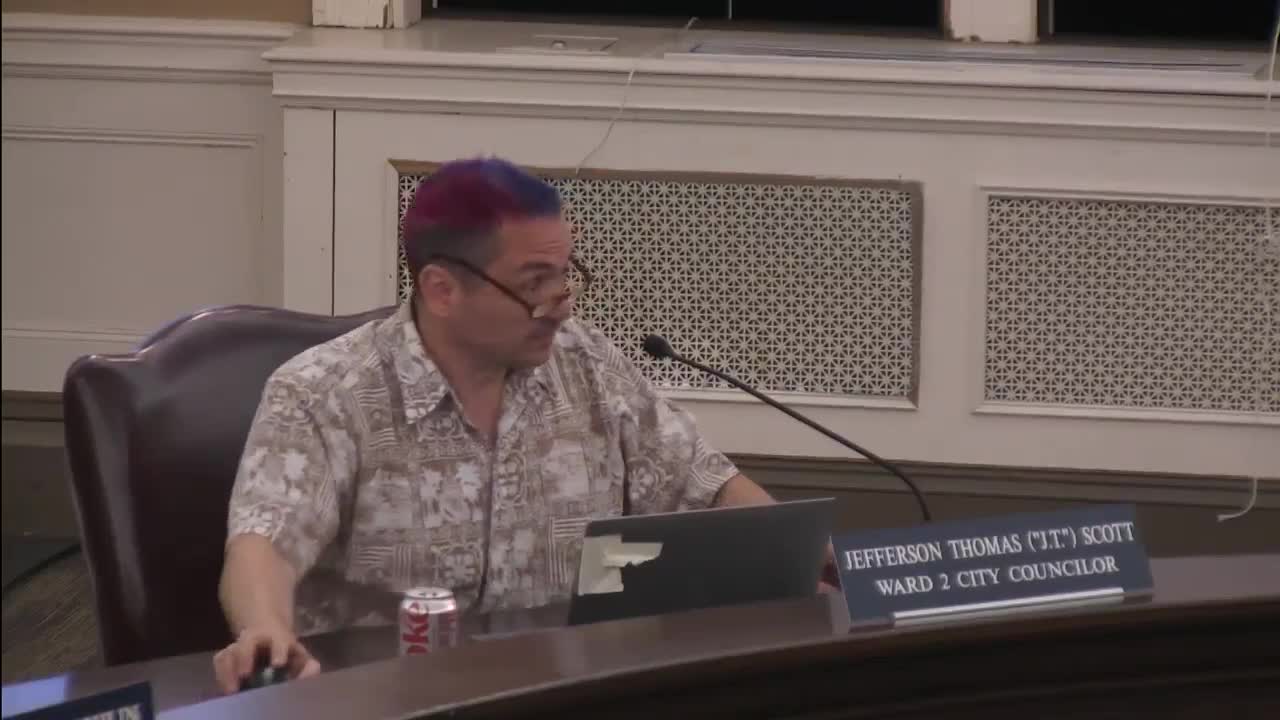
Councilor Scott, who served on the Land Use Committee during the deliberations, summarized the months-long process and said the ordinance arrived only after multiple rounds of revisions and community outreach. "If there were concerns that were raised that I really could not answer, I would vote no," Scott said. He credited a negotiated community benefits agreement (CBA) and a project labor agreement (PLA) with producing tangible commitments from the developer Rafi/Raffi Properties'including a project labor agreement for union trades, dedicated art space, youth programming and targeted contributions to local nonprofits.
Supporters said the overlay strengthens municipal oversight during subsequent permitting and allows the city to require residential space rather than leave that component optional. Councilor Wilson noted changes to minimize traffic impacts, including a low parking ratio, a phased approach to building parking, a mobility-management plan, and proposed shuttle service to improve transit connections.
Opponents and some neighboring residents raised questions about construction impacts, traffic and the neighborhood council's internal vote on the CBA; councilors said those concerns would be addressed through plan-level hearings and by an independent monitoring and oversight approach the council encouraged.
The ordinance and map amendments affecting articles 8 and 12 were enrolled and ordained on voice and roll-call votes recorded in the transcript (11-0). After ordainment the council also passed companion text amendments to the zoning code to create a research-and-development district and to revise rules for arts and creative enterprise uses across the city.
Why it matters: The overlay and the negotiated benefits mark a notable example of municipal zoning paired with a neighborhood-driven CBA and a PLA. If the development is built, the CBA and PLA promise local jobs, artist space and formal monitoring provisions the council and neighborhood leaders say will be enforceable through later approvals.
What to watch: Implementation will depend on future site-plan approvals, monitoring of construction-phase traffic mitigation and the developer's and neighborhood council's follow-through on the CBA and PLA.