Get Full Government Meeting Transcripts, Videos, & Alerts Forever!
Get email alerts on the Housing Affordability topic
No spam. Unsubscribe anytime.
Leadership DeKalb alumni present "housing-first" community service project urging targeted, multi-source funding
Summary
Leadership DeKalb presented its class project on affordable housing and 'Housing First' approaches, highlighting case studies (including Glynn County) and urging local pilot projects, private fundraising and wraparound services for DeKalb County.
Leadership DeKalb presented the results of its community-service focus groups on June 26, urging county leaders to consider housing-first strategies and multiple funding streams to address homelessness and affordable-housing shortages.
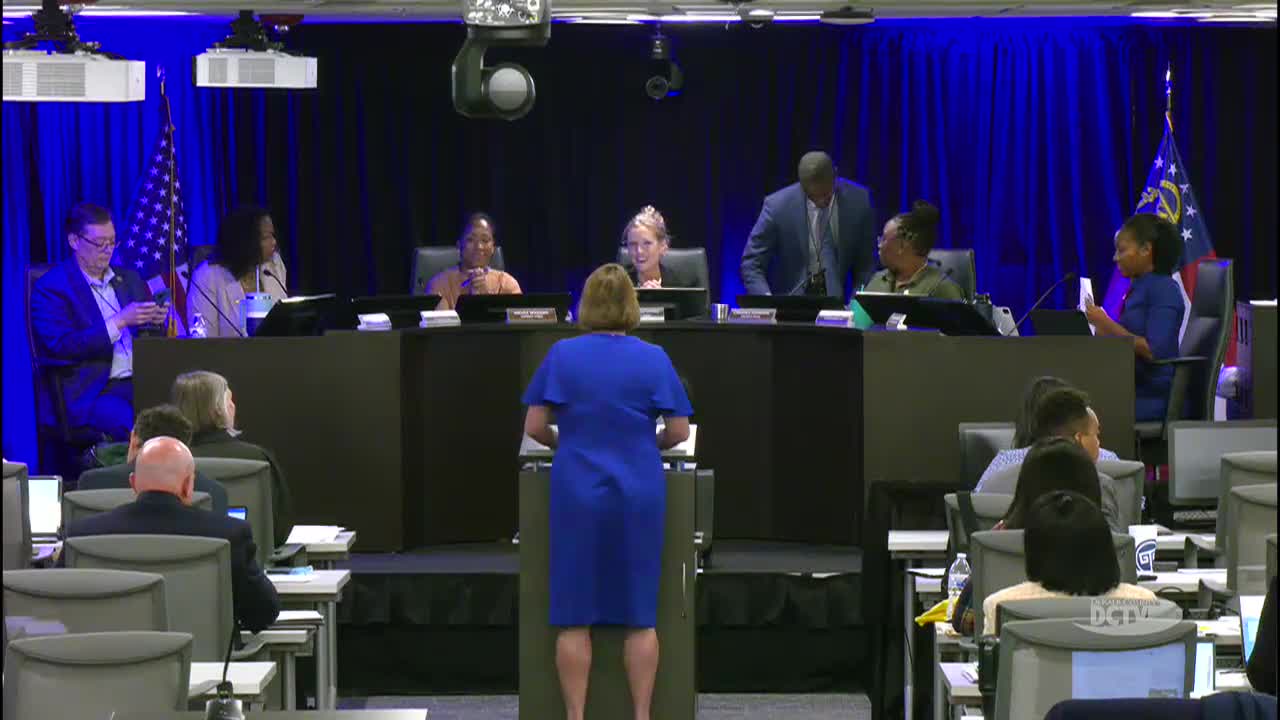
Sharra Sanders, executive director of Leadership DeKalb, described organizational changes and growth, then introduced a class focus group that researched affordable-housing models and presented recommendations. "Strong, informed, connected leaders make DeKalb stronger," Sanders said, noting the nonprofit's request for continued county support as it expands programming and alumni engagement.
Representatives from the class — Kelly Anderson and Nicole Horn — presented a research-based overview and recommended prioritizing housing-first pilots that provide permanent housing with wraparound services. Horn summarized local affordability data and the problem the class sought to address: "In DeKalb County, 53% of our DeKalb County citizens are housing burdened," she said, citing the county's high rate of residents spending a large share of income on housing and utilities.
The team's field survey of national examples found multiple financing approaches and consistent emphasis on wraparound supports — health care access, job services and case management — to increase housing stability and reduce costly emergency services. The Glynn County example, highlighted by the presenters, used private donations and federal and state funds to finance a small permanent-housing community with intensive supports; presenters said the Glynn model emphasized community safety and gate-controlled sites in initial rollouts.
Several commissioners praised the program and asked how Leadership DeKalb planned to support implementation. Sanders said the organization's immediate role is awareness, alumni engagement and helping frame questions for county consultants and planners. "Our goal was to give you some additional things, additional context and things to ask the consultants," she said.
Commissioners asked for follow-ups on comparability and feasibility. Commissioner Ladina Bolton proposed a site visit to Glynn County to study their program; presenters agreed they'd provide more detailed case-study notes and contacts. Sanders also asked the board for continued sponsorship as Leadership DeKalb faces fundraising challenges and increasing program demand.
The board did not take formal action on the presentation. Commissioners requested the full Emory housing-affordability study and supplemental materials from Leadership DeKalb, including deeper case-study details and potential local pilot suggestions.