Get Full Government Meeting Transcripts, Videos, & Alerts Forever!
Get email alerts on the City Budget topic
No spam. Unsubscribe anytime.
San Benito reviews preliminary budget; officials weigh 1¢–2¢ tax cut, raises and new positions
Summary
City officials reviewed a preliminary budget at a workshop, discussing maintaining the current tax rate, a proposed minimum-wage increase to $12.85, a $1,200 one‑time salary adjustment for employees who pass probation, five new general‑fund positions and use of unassigned funds to balance the draft budget.
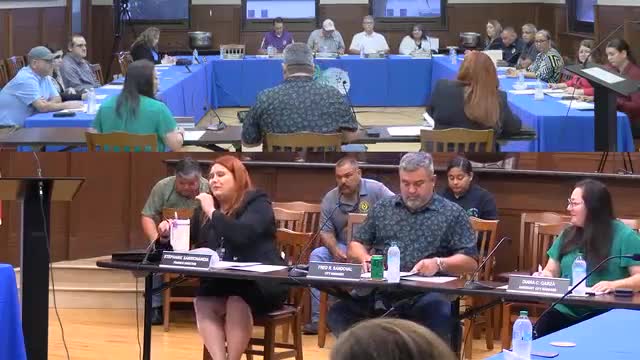
SAN BENITO — At a budget workshop, San Benito city officials reviewed a draft fiscal 2025–26 budget, discussing preliminary property‑tax projections, proposed pay adjustments for low‑wage employees, several new positions and assumptions for contracts and service costs.
The finance director, Stephanie, told the commission the packet uses preliminary taxable values provided by Cameron County and that each one‑cent change in the tax rate would change revenue by about $64,289 under the collection assumptions in the packet. “This is really preliminary of what we expect based on the numbers that we could collect at this time of the year,” Stephanie said, noting certified values were not yet available.
City administrators framed the workshop as an early look at spending priorities and tradeoffs. They laid out two parallel priorities: modest increases to help low‑paid and entry‑level employees, and measures to manage long‑term operating costs and debt. The packet assumes a conservative 95 percent collection rate for budgeting purposes while staff ran calculations at a 96.7 percent retention figure for some projections.
Why it matters: property taxes, sales taxes and franchise fees are the city’s principal operating revenues. Decisions at the workshop could affect the tax rate and department budgets the commission will consider in coming weeks. Officials also discussed options to use unassigned fund balances to smooth the budget and considered longer‑term debt restructuring to free capacity for capital needs.
Key budget items and assumptions
- Tax rate and values: Staff presented preliminary taxable value figures from Cameron County and said the certified roll is still pending. Staff used a working assumption that each cent of the tax rate yields roughly $64,289 under the collection scenarios presented. A projected increase in property tax revenue of roughly $1 million year‑over‑year appeared in the packet under the preliminary values and assumptions; staff emphasized the figure is not final.
- Collection rate used for budgeting: 95 percent (city budget assumption). Staff also referenced a historical/retention figure of 96.70 percent used for some calculations.
- Employee pay and benefits: The packet proposes raising the minimum hourly wage for city entry‑level employees from about $11.24 to $12.85 and budgets the city to continue paying 100 percent of employee health‑insurance premiums under the plan assumptions. Staff recommended a one‑time salary adjustment of $1,200 for employees who have completed their probationary period (six months), rather than a across‑the‑board 3 percent increase, to target lower‑paid employees while limiting overtime calculations.
- New and reorganized positions: The draft adds five general‑fund positions the packet highlights: a historian position attached to cultural arts, a library aide, an animal‑control working supervisor, and two communications specialists. Staff also noted two additional positions in the water fund. Total authorized positions across the city are shown rising to about 265 from the current active‑employee level reported at about 226, with utility vacancies concentrated in water/wastewater operations.
- Contracts and operating costs: The draft budgets include an assumed annual CPI adjustment for the city’s solid‑waste contractor (Republic Services), which the contract allows up to 8 percent. Staff also flagged potential legislative changes affecting franchise fees and homestead exemptions; those items may change revenue projections when state actions are finalized.
- One‑time and reserve funding: The packet shows planned use of unassigned fund balance as an additional financing source (staff referenced an amount used historically to balance budgets). Staff said they would seek to minimize use of reserves where possible but included the figure so commissioners could see tradeoffs.
Discussion and next steps
Commissioners pressed staff for follow‑up information on several items: a department‑by‑department illustration of what a one‑cent and two‑cent tax reduction would require in spending cuts; details on the health‑insurance fund balance and procurement timeline for insurance proposals; contract details and anticipated CPI effects from Republic Services; and the finalized certified taxable values from Cameron County. Staff committed to return with updated certified values, more granular departmental scenarios for a 1¢ reduction and health‑plan detail at the next workshop.
No formal votes were taken at the workshop; the session was advisory and preparatory for upcoming budget decisions.
Quotes
“This is really preliminary of what we expect based on the numbers that we could collect at this time of the year,” Stephanie, the finance director, said while presenting the packet.
“As your administrator…we can wrap our minds around this and pledge it for it accordingly, and we’re going to be right where we need to be,” the city administrator said while summarizing the staff recommendation for a targeted salary adjustment rather than a full 3 percent across‑the‑board increase.
What’s next
Staff will return with certified property values from Cameron County, department‑level budget scenarios showing the effect of a 1¢ tax reduction, updated health‑fund balances and contract cost details for Republic Services. The commission will consider formal budget actions, tax‑rate decisions and any ordinance or adoption steps after those follow‑up items are presented.