Get Full Government Meeting Transcripts, Videos, & Alerts Forever!
Get email alerts on the Public Health topic
No spam. Unsubscribe anytime.
DeKalb Public Health presents 'Health of DeKalb 2025', highlights disparities and staffing, funding shortfalls
Summary
Dr. V, DeKalb Public Health director, presented Health of DeKalb 2025 on June 26, citing cardiovascular disease as the county's top cause of death, rising premature deaths tied to homicide and motor-vehicle crashes, significant racial disparities and persistent staffing and funding shortfalls as she readied to depart the post.
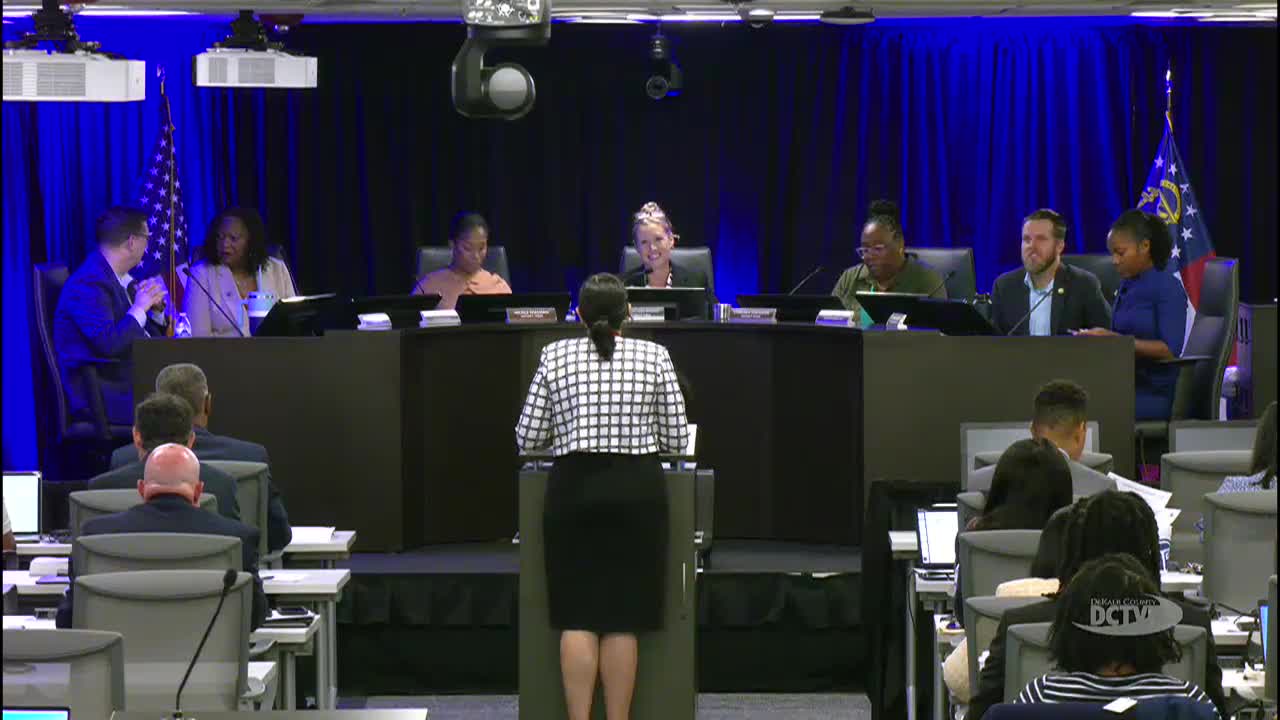
Dr. V, director of DeKalb Public Health, delivered the department's new Health of DeKalb 2025 report on June 26, telling the Board of Commissioners the county faces persistent health disparities, funding constraints and workforce challenges as she prepares to leave the post in July. "We have health disparities that exist in our county. The social determinants of health play a significant role in this," Dr. V said during the Committee of the Whole presentation.
The six-year report (2018–2023) shows major cardiovascular disease as the county's leading cause of death at 189 per 100,000, followed by cancers at 132 per 100,000. The presentation mapped higher cardiovascular and hospitalization rates in specific areas of DeKalb and noted those rates are highest among Black or African American residents and males. Dr. V said external causes ranked highest among premature deaths (years of potential life lost), with homicide, accidental poisoning and motor vehicle crashes the top contributors.
The report also called attention to infectious-disease patterns and special populations. DeKalb consistently had higher rates of newly diagnosed HIV than the rest of Georgia (data through 2022), and the county's mpox cases from 2022–23 accounted for about 20% of Georgia's cases, the presenter said. DeKalb resettles more refugees than any other Georgia county; the public-health clinic screened 7,114 new arrivals over six years and found 78% had at least one health concern, mostly dental or oral issues.
Presenting data on maternal and child health, Dr. V said low birth-weight rates and the burden of fetal and infant deaths were higher among Black residents. She reported 28 maternal deaths from 2018–2021 with 72% among Black women, and said methodological changes limit direct trend comparisons across the full period.
Speakers on the commission pressed for clarity on causes and local responses. Commissioner Marita Davis Johnson asked about accidental poisonings; Dr. V replied, "Most of that includes alcohol and inhalants, but doesn't include other substances like opioids." Commissioner Nicole Messiah asked where opioid-overdose data would appear; Dr. V said opioid overdose appears in a dedicated chapter of the printed report and that the department would provide that to commissioners.
Commissioners raised operational concerns about the county's public-health facilities and staffing. Dr. V described a funding mix that relies heavily on state grant and aid: about 56% of the department's budget is state grant and aid (including federal pass-through funds), 14% is county support, 3% direct federal funding, and roughly 9% comes from fees. She said about 39% of the workforce is federally funded and that the department receives limited, targeted grants for chronic disease prevention and maternal-child programs — funding that often pays for only one or a few positions.
On clinic infrastructure, Dr. V told commissioners the Clifton Springs and East DeKalb health centers need major renovations — outdated exam tables, HVAC problems and cramped pharmacy space — and she warned that a new nearby Grady primary-care clinic could draw both patients and staff. "I did have discussions with Grady about their choice of that particular location," she said, noting Clifton Springs serves uninsured and underinsured patients and that competition for staff with higher salaries is a concern.
Dr. V urged commissioners to consider a "health in all policies" approach — an idea she said is used in other U.S. jurisdictions and internationally — so that decisions on housing, transportation and development account for health impacts. "When you all are approving things like a new housing development, think about the impact that it will have on the health of our residents," she said.
The presentation closed with recommendations and operational needs: increased and more flexible funding, more vaccine refrigerators and pharmacy space, increased access to naloxone and fentanyl test strips in high-overdose zip codes, and stronger partnerships with community-based organizations. Dr. Lynn Paxton, identified as the incoming interim district health director, was introduced to the board at the end of the presentation.
Commissioners thanked Dr. V for her service and asked the department to provide additional breakdowns (including county-to-county comparisons for diabetes, cardiovascular disease and homicide) and maps or data on opioid-overdose hot spots. Dr. V said she would provide requested materials and noted some data sources are limited to 2022 or earlier for specific measures.
The board did not take formal action on the presentation; commissioners directed staff follow-ups and requested additional materials for upcoming committee work and budget discussions.