
Oldham County fiscal court tables 150‑day moratorium after hours of public comment and legal questions
Get AI-powered insights, summaries, and transcripts
Sign Up Free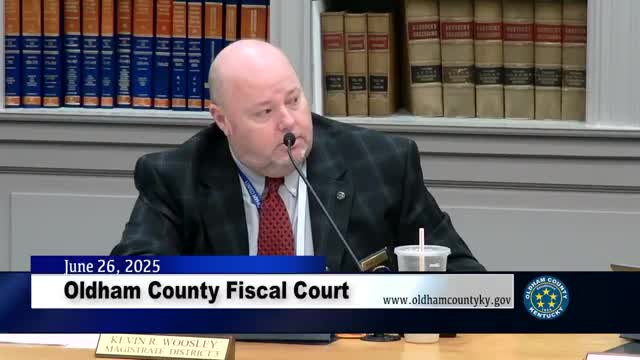
Summary
After more than five hours of public comment focused on proposed data centers, the Oldham County Fiscal Court opened a public hearing on a proposed 150‑day moratorium but voted to table final action to allow further legal review.
Oldham County Fiscal Court opened a public hearing and lengthy discussion Tuesday on a proposed ordinance to impose a 150‑day moratorium on the review and approval of data centers and related private‑utility facilities, but the court tabled the measure to allow more legal review and to give magistrates time to consider changes.
Supporters of the moratorium, who filled the courtroom and paused other public comment to attend the hearing, told the court they want time to write definitions and regulations for data centers before any new development is approved. Opponents and some magistrates raised questions about whether the moratorium could legally cover applications already filed and about the county’s exposure to litigation and uninsured damages.
The ordinance under consideration would have imposed a 150‑day pause on the acceptance, processing and approval of “applications related to the establishment, development or expansion of data centers of any size, all private utilities, all private utility buildings, and all data storage facilities” inside Oldham County. Magistrate Kevin Hounds moved for adoption and the item drew amendments and extended debate on whether the text should say “ordained” instead of “resolved,” whether previously filed applications should be excluded, and whether specific telecommunications or broadband expansions should be carved out.
Why it matters: Residents and civic groups said a pause is necessary to develop county rules that address noise, water and power use, building setbacks and reclamation. Some people urged no carve‑outs for any applicant; others — including county staff and the county attorney — warned that excluding existing applications from the moratorium could risk litigation and uninsured liability for the county.
What happened at the hearing: More than three dozen residents took the podium during the afternoon and evening sessions. Speakers included scientists and public‑health experts who urged rigorous human‑health risk assessment and residents who said they feared noise, light, traffic, water use and long‑term land abandonment. Several residents and speakers asked the court to treat the currently filed Western Hospitality Partners application the same as any new application. Others, including some magistrates and the county attorney, said state law and prior legal advice could limit the county’s ability to make the moratorium retroactive to pending applications.
Magistrates debated technical wording and a set of amendments on the record. After discussion the court voted to table the ordinance and reconvene at 2:00 p.m. on Tuesday to receive a further legal opinion and continue deliberations. The court recorded the tabling action by roll call and set the item for reconsideration; no final adoption was made.
During the hearing the county attorney told the court he had consulted outside counsel and an opinion previously provided indicated accepted (pending) applications may continue under existing law; other speakers cited a separate legal memorandum they said supported a retroactive moratorium. The court directed the county attorney to review the differing analyses and report back.
Context and next steps: The moratorium was proposed after fast‑moving public interest and recent applications for large data‑center projects drew public comment and appeals to the Board of Adjustments. The court’s action to table does not adopt any ordinance; it pauses action only to allow additional legal review and to let magistrates consider revised language. The next scheduled session on the moratorium is Tuesday at 2:00 p.m., when magistrates said they expect to have an updated legal recommendation and to decide whether to adopt the ordinance or present a revised version to planning staff for formal rulemaking.
At the hearing magistrates and the judge repeatedly emphasized they were trying to balance the county’s legal exposure with residents’ calls for regulation and transparency. The judge asked staff to make public any meeting records and audio within legal constraints.