Get Full Government Meeting Transcripts, Videos, & Alerts Forever!
Get email alerts on the Short Term Rentals topic
No spam. Unsubscribe anytime.
Hocking County consultant outlines draft short‑term rental rules focusing on safety, access and tax collection
Summary
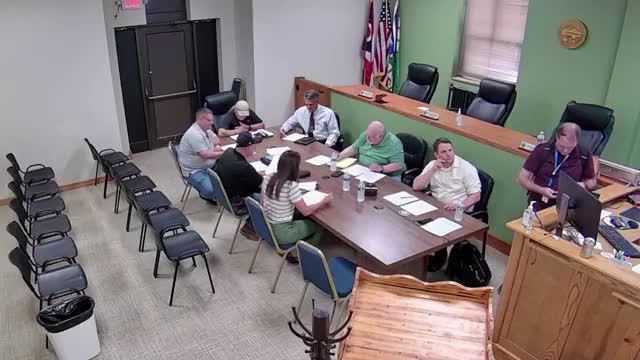
At a recent Hocking County meeting, consultant David Barrett of American StructurePoint presented a draft regulatory package for short‑term rentals emphasizing safety, emergency access and tax collection.
At a recent Hocking County meeting, consultant David Barrett of American StructurePoint presented a draft regulatory package for short‑term rentals that the zoning group will use to craft an ordinance. Barrett said the package focuses on a short‑term rental permit, impact fees and site standards and emphasized that the draft will prioritize safety and clarity for emergency responders.
“The devil’s in the details,” Barrett told the commission, summarizing the project’s approach. He said the fees under consideration “are not meant to be any way to make up any loss of revenue … The fees will be put in place … only to cover our expenses.”
Barrett outlined several specific permit requirements under consideration: a 24‑hour local contact who lives in Hocking County; clear addressing and a simple site plan showing the location of individual units (for example, cabins labeled A, B, C) so dispatchers and first responders can find buildings; occupancy limits tied to sleeping capacity; and a requirement that existing decks, balconies and similar elevated structures be certified as safe by a licensed professional (for existing structures) before a permit is issued. Barrett said that certification would be the owner’s responsibility and that it would typically be a one‑time inspection unless the structure is rebuilt.
The consultant also proposed a platform requirement to improve tax collection, meaning platforms that facilitate rentals would be required to collect and remit applicable local taxes. Barrett said that approach is intended to streamline enforcement, not to eliminate local or independent providers, and cited how many short‑term rental platforms already collect taxes in other jurisdictions.
On enforcement and nuisance control, Barrett recommended adopting a county‑wide noise and nuisance ordinance separate from the short‑term rental permit to avoid legal defenses that could arise if nuisance limits applied only to rentals. He described using decibel thresholds measured at property lines and time‑of‑day restrictions as common features in other local ordinances and noted one example used by Columbus, Ohio, in which repeated emergency calls can trigger administrative suspension of a permit.
Emergency access and driveway standards were a recurring theme. Barrett said the commission needs technical input from fire and EMS providers to define a minimum, objective driveway standard—width, grade, turning radius and cleared overhead space—so that emergency vehicles can reach rental properties. He said some rural sites in the county are not currently accessible to standard emergency apparatus and that, under the draft approach, units that emergency responders cannot physically reach should not receive a short‑term rental permit.
The draft also contemplates impact fees for public infrastructure upgrades (roads, water, sewer) where a commercial use clearly triggers a public cost; Barrett distinguished those publicly maintained impacts from privately maintained driveways, which would remain the owner’s responsibility.
Staff and commissioners agreed on a schedule of follow‑up technical meetings: fire and EMS providers, the county auditor, the mapping office, 9‑1‑1/dispatch and the county attorney’s office. Barrett and staff said they will collect the technical data and return with a more complete draft for review by commissioners before a single public open‑house meeting and subsequent formal zoning and county commission review.
Scott (staff) summarized outside examples and research noted in the meeting: he said Sevier County, Tennessee, requires a $250 annual permit fee and an annual inspection; Barrett and staff said Charleston County, South Carolina, and other jurisdictions were used as research comparators. Barrett described a Columbus rule used in some ordinances as suspending a permit after multiple emergency calls within a 12‑month period as one enforcement model the commission might adapt.
No ordinance or fee level was adopted at the meeting; the zoning group voted earlier in the session to approve the minutes and the meeting agenda and set dates for the next round of technical meetings. Barrett said he will provide the meeting presentation to county staff for distribution to stakeholders.
What’s next: county staff and American StructurePoint will gather technical standards from fire/EMS and mapping, the county attorney will review enforcement language (including eviction/evacuation distinctions raised by owners and sheriff’s deputies), and commissioners will review the next draft prior to an open house and formal adoption process.
Ending — logistical notes: staff and Barrett said they expect to schedule the technical follow‑ups in mid‑July and then return with a full draft for the zoning commission and county commission to review before a single public open‑house session.