Get Full Government Meeting Transcripts, Videos, & Alerts Forever!
Get email alerts on the Retail Fraud topic
No spam. Unsubscribe anytime.
Michigan lawmakers, retailers back bills to expand penalties for gift‑card tampering
Summary
Representatives Harris and Steckloff and retail groups testified to the House Regulatory Reform Committee in favor of House Bills 4598 and 4599 to expand penalties for organized gift‑card fraud; no committee vote was taken on the bills during the session.
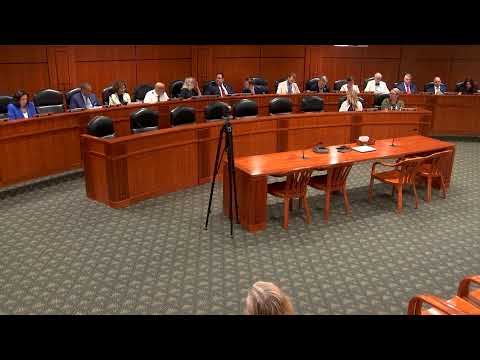
Representatives from the Michigan House and retail industry told the House Regulatory Reform Committee that organized tampering and fraud involving gift cards has grown more sophisticated and that new penalties are needed to help prosecutors and retailers hold rings of fraudsters accountable.
Representative Harris, sponsor of House Bills 4598 and 4599, told the committee that criminals “are stealing large quantities of inactive gift cards from stores” and then obtain activation information so unsuspecting customers purchase cards that later have their balances drained. Harris said the bills would amend the Organized Retail Crime Act to broaden penalties when actions are done “knowingly and with intent to defraud,” including acquiring possession of a gift card or redemption information, altering or tampering with a card or redemption information, or obtaining value with such information.
The bills’ supporters described the scheme as organized and often run by rings, not lone actors. “This is a planned out conspiratorial type crime,” Harris said, adding the expanded language would let prosecutors pursue organized retail crime charges against people running those operations.
Representative Steckloff, a co‑sponsor, said gift‑card fraud is “not a trivial inconvenience. It's growing crime.” Steckloff cited Federal Trade Commission figures presented to the committee that she summarized as Americans losing $217,000,000 to gift‑card scams in 2023 and an additional roughly $100,000,000 reported by mid‑2024. Steckloff also noted Attorney General Dana Nessel's office has pursued enforcement and education efforts.
Drew Beardsley of the Michigan Retailers Association said retailers have increased education and security measures, but fraudsters adapt as technology changes. “We need clear and decisive language to address gift card fraud, and we believe these bills do just that,” Beardsley said.
Committee members asked about prevention. Representative Wozniak asked whether anything could be done “on the front end to prevent the action altogether.” Harris and Beardsley pointed to consumer and retailer education, registration of cards, watching for tampering on packaging and scratch‑off PIN areas, and tailored store security practices; Harris cautioned that retailers should not be burdened by unduly laborious procedures. Representative Regas asked whether stolen or tampered cards are returned to the original store; Beardsley said the cards can be placed back in any retail store.
Committee staff read in written support from several industry groups and retailers, including the Gift Card Fraud Prevention Alliance, International Council of Shopping Centers, Home Depot, Walgreens, Meijer and a submission from the Michigan Attorney General's office. The committee did not take a vote on House Bills 4598 and 4599 during this meeting; the chair said the committee will return to votes on those bills when more members are present.
Why it matters: Committee sponsors told members gift‑card tampering has targeted seniors and other vulnerable consumers, translates to losses for retailers, and can be conducted by organized rings. The bills would extend organized‑retail‑crime penalties to cover specific gift‑card tampering conduct and clarify restitution and prosecution options.
What the bills would do (as described to the committee): The sponsors said the bills would amend the Organized Retail Crime Act to (1) make acquiring possession of a gift card or redemption information with intent to defraud a predicate offense, (2) criminalize altering or tampering with a gift card or its redemption information with intent to defraud, and (3) criminalize obtaining money, goods or services using gift cards or redemption information obtained in violation of the statute. The transcript did not include full statutory text; committee members and witnesses framed the changes as providing prosecutors clearer statutes and stiffer penalties for organized rings.
Next steps: No committee vote was recorded on these bills at this meeting; the chair indicated the committee intends to vote when it reconvenes with additional members present.