Get Full Government Meeting Transcripts, Videos, & Alerts Forever!
Get email alerts on the History Presentation topic
No spam. Unsubscribe anytime.
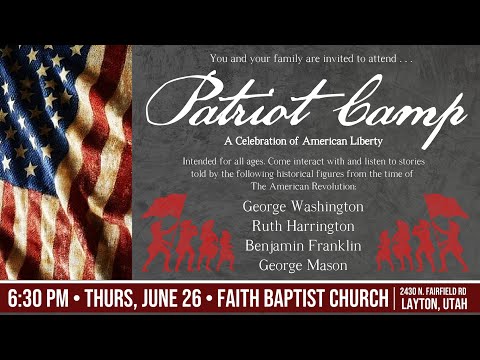
George Mason reenactor highlights Virginia Declaration of Rights and Bill of Rights role
Summary
A presenter portraying George Mason described Mason's contributions to the Virginia Declaration of Rights, drafting of state constitutions and advocacy for a bill of rights during the Constitutional Convention.
A presenter portraying George Mason told a Layton audience that Mason's Virginia Declaration of Rights influenced later American founding documents and that he campaigned successfully for safeguards such as a bill of rights.
The presenter introduced himself onstage as George Mason and asked, "How many of you are familiar with George Mason? I'm the founding father that nobody remembers, but that's okay." He then described selling land to George Washington, helping organize the Ohio Company and drafting what he called the Virginia Declaration of Rights. (Presenter portraying George Mason.)
Why it matters: the Virginia Declaration of Rights is widely cited by historians as influential in state and national constitutions. The reenactor emphasized Mason's objections to leaving rights unenumerated and said he fought for a bill of rights during the framing of the U.S. Constitution.
The presenter said he wrote the Virginia Declaration of Rights and that its articles later influenced the preamble and grievance language of the Declaration of Independence and that the bill of rights later secured protections such as freedom of the press and religion. He described historical disagreements over the Constitution's original wording and recalled his refusal to sign the final document because it lacked an explicit bill of rights: "If it's not in there, the government doesn't have it. It belongs to the people. Not good enough. Freedom of press, freedom of religion, etcetera. We needed it." (Presenter portraying George Mason.)
The talk mixed biographical anecdotes with broader constitutional history and noted Mason's opposition to aspects of slavery's treatment in early drafts; the reenactor described the controversy around what he called Jefferson's "slavery clause" and the votes of several states at the time.
Ending: The presenter closed by connecting Mason's state-level work to later national protections and urged the audience to recall that the Constitution and related documents required citizens' vigilance to maintain their rights.