Get Full Government Meeting Transcripts, Videos, & Alerts Forever!
Get email alerts on the Vision 0 Action Plan topic
No spam. Unsubscribe anytime.
Indianapolis Vision 0 task force unveils draft action plan, opens public comment July 1
Summary
The Vision 0 Task Force reviewed a draft action plan built on crash data, maps and broad public outreach and said the draft will be posted for public comment beginning July 1; members emphasized that implementation will require phased funding and interdepartmental coordination.
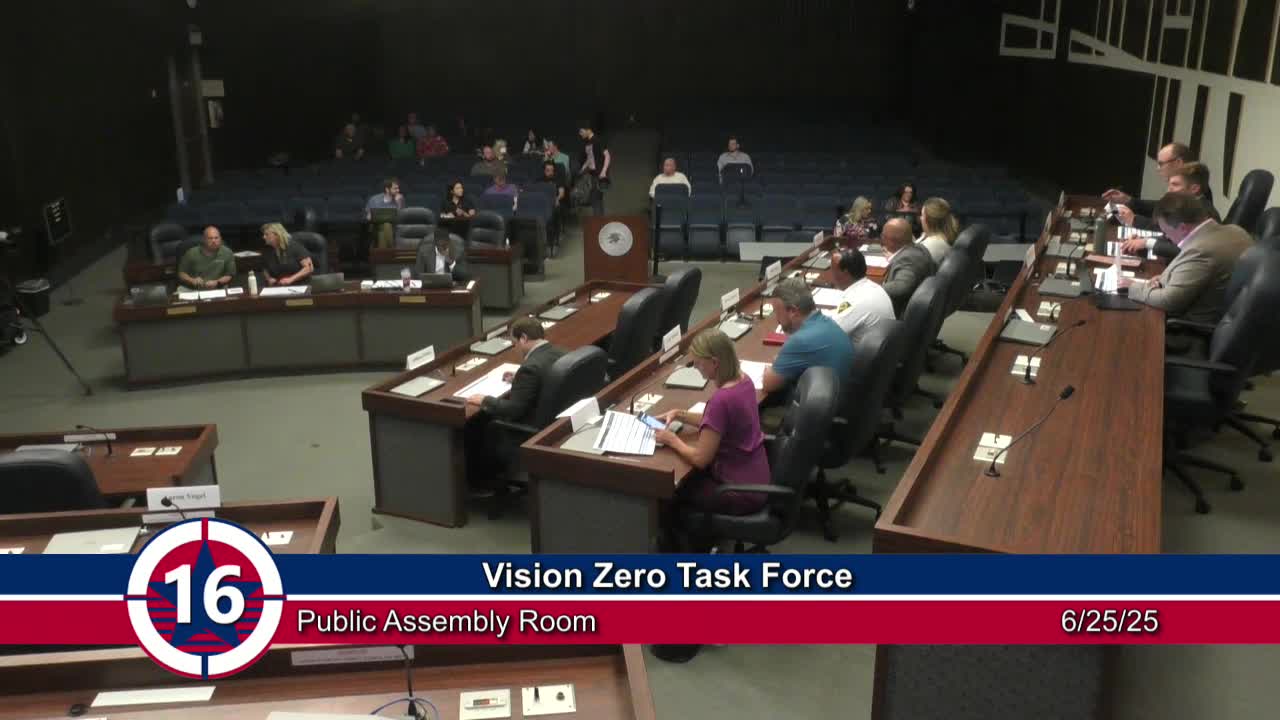
The Vision 0 Task Force in Indianapolis reviewed a draft action plan and data-driven strategies aimed at eliminating roadway fatalities and serious injuries by 2035 and said the draft will be posted for public comment beginning July 1.
John Barth, City-County Councilor representing District 7 and chair of the Vision 0 Task Force, said the ordinance sets a deadline: “the ordinance does require for us to adopt the action plan by 7 1.” He and other members said the draft will be posted online for public review and a formal adoption vote will follow after the comment period.
Why it matters: The draft pairs mapped crash and equity data with community input gathered at dozens of pop-up events and online surveys. Task force members said the plan is intended as a multi-year, living document to guide engineering, enforcement, education and post-crash care decisions and to help departments align project selection with safety priorities.
Data and public input: Consultants presented an interactive map-based analysis that identifies a “high injury network” and a “high risk network.” The high injury network covers about 5% of city streets—roughly 200 miles—and accounts for about 43% of the city’s fatal and serious crashes, the presentation said. The high risk network layers roadway characteristics such as speed limit, number of lanes and the presence of sidewalks or bike facilities to identify corridors likely to see serious crashes.
Health by Design led community outreach for the task force, running 19 in-person pop-ups (one in every township) and distributing surveys online and at seven additional events. Consultants reported roughly 286 in-person participants, 339 online respondents and more than 600 total survey takers; about 490 respondents placed nearly 1,500 pins or comments on the public map. Commonly reported safety concerns were poor pavement, distracted driving, missing ADA-compliant sidewalks and unsafe pedestrian crossings. When asked to prioritize where limited funds should go, respondents most often selected pedestrian infrastructure, traffic calming, intersection improvements, bike lanes and enforcement.
Plan structure and near-term steps: Maria Cantrell of Burgess & Niple summarized the draft action matrix as approximately 25 strategies supported by about 75 action items. Each action item lists at least one lead agency and a general timeframe: short term (about 1 year), medium term (2–5 years) and long term (greater than 5 years). The draft posted online is a working document; a fuller narrative with methodology, additional maps and explanatory materials is expected in the fall.
Leandre, introduced to the task force as the city’s new Vision 0 administrator, described the plan as “a living, breathing document,” using a Ferris wheel analogy to stress iteration and annual updates as new ideas and technologies emerge. He said the draft action matrix is available now and that an online public-comment form will open on July 1.
Key strategies highlighted in the presentation include: - Safe roads: prioritize safety-focused changes at high-activity transit stops and on the high injury/high risk networks; develop a quick-build pilot program to test lower-cost interventions; and prioritize capital projects using the safety network and public input. - Safe speeds: create a citywide proactive speed-management program using FHWA best practices, targeted enforcement on high injury/high risk corridors, and coordination with EMS and post-crash care. - Safe people: launch a Vision 0 awareness campaign, multilingual materials, neighborhood education programs, and policy changes in traffic court to limit deferrals for high-speed or repeat distracted-driving citations. - Post-crash care and safe vehicles: improve coordination with public health and EMS to protect survivability and first responders, and update city fleet policies for vehicle safety, collision reporting and operator training.
Funding and implementation concerns: Several members emphasized that adopting the plan is only the first step. Abby Hansen, City Controller, warned that implementing many action items will require phased funding and prioritization amid fiscal uncertainty related to recent state-level property tax changes. John Barth noted an existing, recent $500,000 allocation tied to the fatal crash review team as an example of how council funding can translate recommendations into projects. Leandre and department staff said they are actively exploring federal and state grant opportunities and internal capital programming changes to align projects with Vision 0 priorities.
Task force reaction and next steps: Councilors and outside partners praised the public-engagement approach, with Health by Design and its pop-ups singled out for reaching people “where they are.” Members agreed to begin implementation of near-term actions where feasible, to post the draft for public comment beginning July 1, and to reconvene once this year to consider formal adoption after public input and further refinements. Consultants said a more fully documented action plan will be completed in the fall.
No formal votes were recorded during the meeting; presenters and members focused on review, public engagement and funding pathways going forward.