Get Full Government Meeting Transcripts, Videos, & Alerts Forever!
Get email alerts on the Public Funding topic
No spam. Unsubscribe anytime.
Bill would raise fairgrounds funding formula to 2% of gross receipts, supporters say
Summary
AB 258 would increase the share of taxable gross receipts from fairgrounds devoted to the fairs network to 2%, with backers saying current funding falls well short of prior levels; the committee voted unanimously to advance the bill.
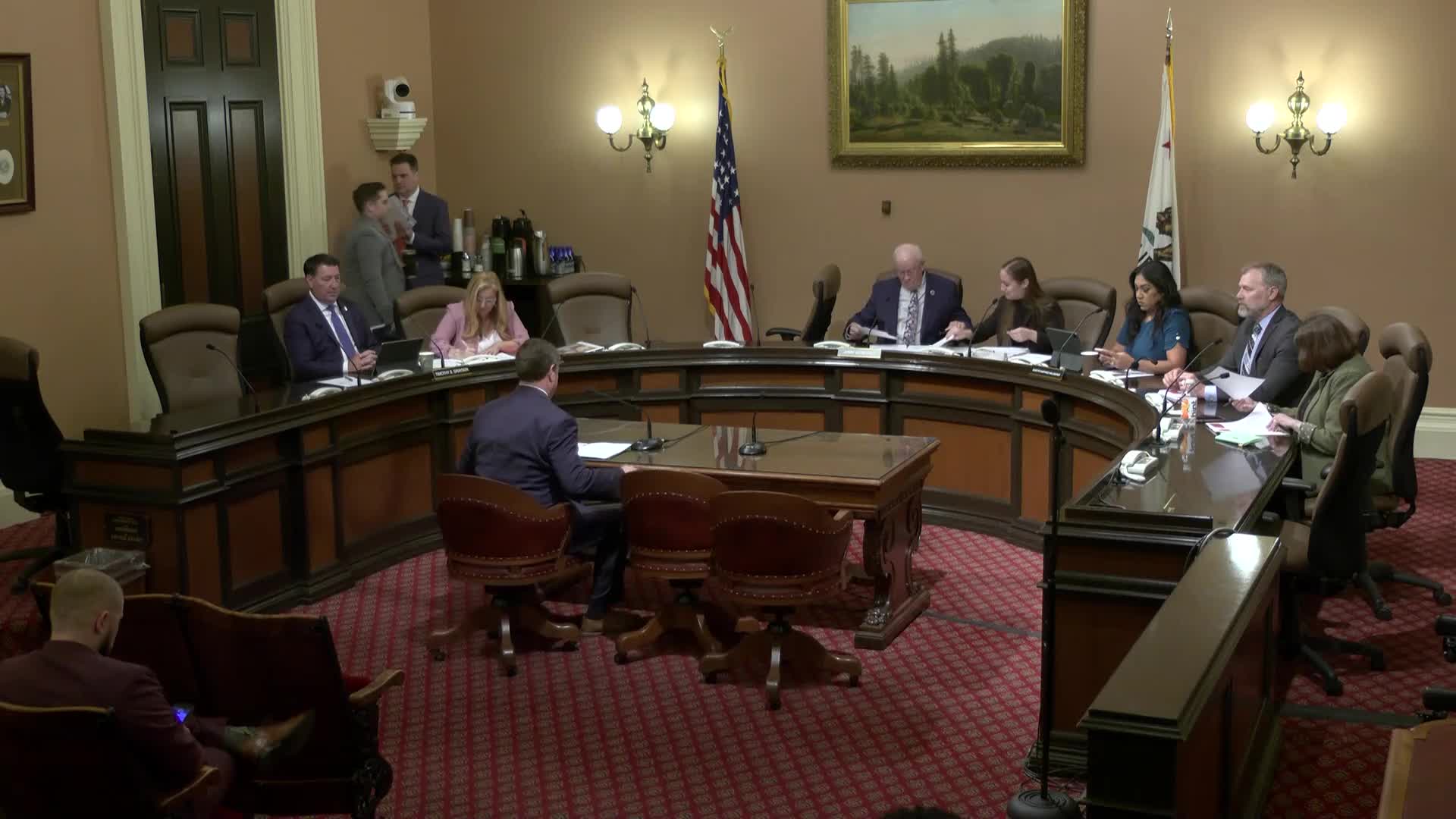
Assemblymember Connolly presented AB 258 to increase funding for the California fairs network by setting the governor's annual budget allocation to 2% of the gross receipts of taxable sales made at fairgrounds.
Connolly and witnesses said fairgrounds serve as community infrastructure—hosting cultural events and acting as staging areas during emergencies such as wildfire evacuations and pandemic response—and that funding has not kept pace with needs. Connolly said the 2017 law (AB 1499) set a smaller share of gross receipts than the legacy continuous appropriation of roughly $32 million that had supported fairs before 2011–12. He and witnesses said the current year allocation is about $4.7 million to be split among more than 70 fairs.
Norm Towne of the Western Fairs Association and other supporters said fairgrounds have a backlog of deferred maintenance and safety upgrades; Towne cited a Department of Food and Agriculture estimate of a roughly $250 million backlog of repairs and fire/life safety issues at California fairgrounds. Supporters said the change would restore more stable funding and that the legislature would retain appropriation authority under Connolly's proposal.
Committee members spoke in favor and asked whether fairgrounds receive reimbursement when used for emergency response. Witnesses said reimbursement from state emergency services was rare and FEMA reimbursement had not always covered costs. The committee voted 5–0 to pass AB 258 to the committee on appropriations.
The bill proceeds to the next committee; supporters said the measure aims to bolster fairs' ability to serve communities during emergencies and for ongoing cultural and agricultural activities.