Get Full Government Meeting Transcripts, Videos, & Alerts Forever!
Get email alerts on the Automated Decision Systems topic
No spam. Unsubscribe anytime.
Panel advances SB 7 to require notice and human oversight when employers use automated decision systems in discipline and termination
Summary
The committee advanced SB 7, which would require employers to notify workers and applicants before using automated decision‑making systems for employment decisions and to ensure a human is involved in discipline and termination decisions; the measure was re‑referred to the Committee on Privacy and Consumer Protection.
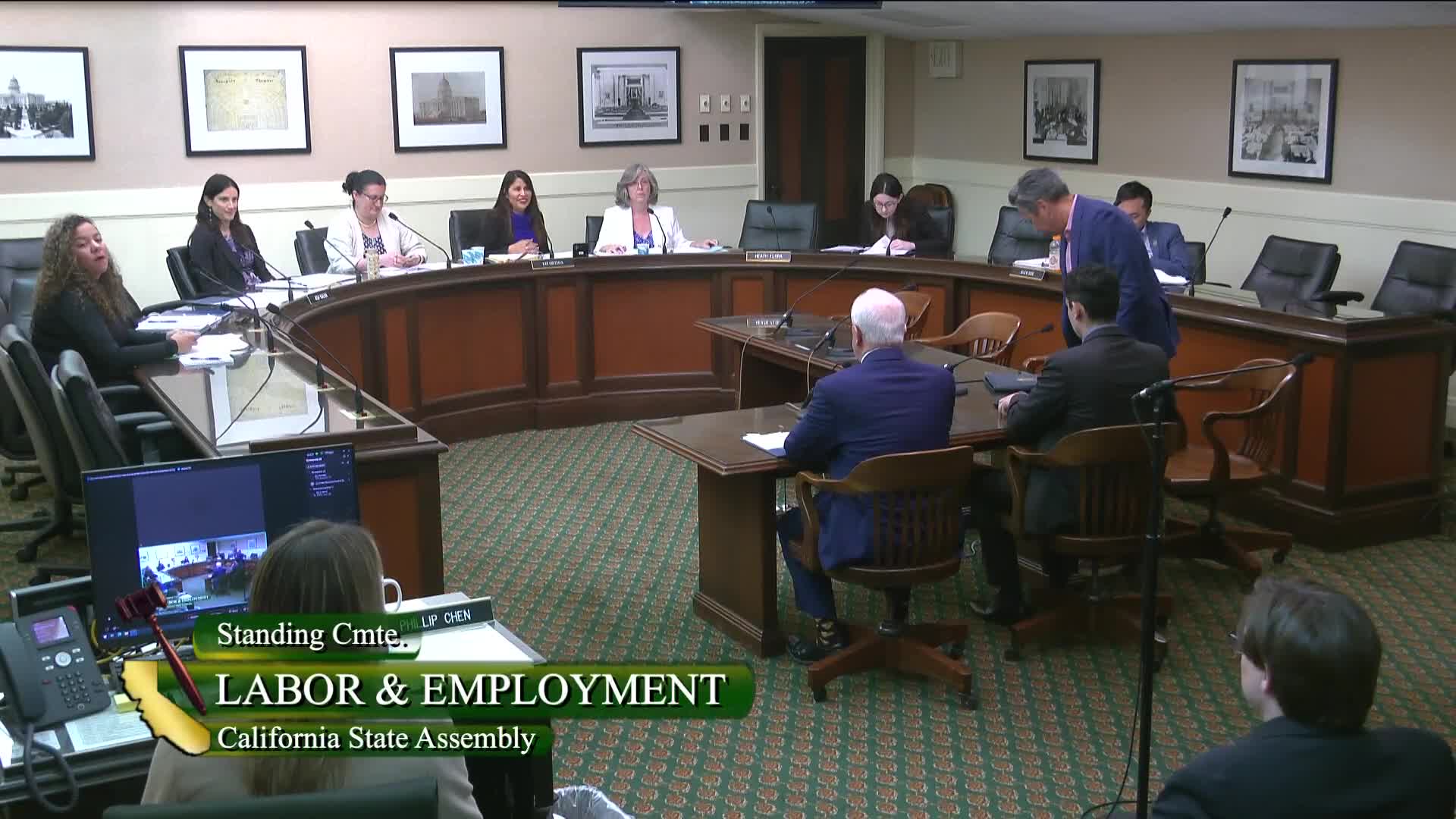
Sen. McNerney presented SB 7 and the Assembly committee voted to pass the bill and re‑refer it to the Committee on Privacy and Consumer Protection.
The bill—narrowed in recent amendments—would require employers to notify applicants and workers before using automated decision‑making systems (ADS) for employment decisions, ensure meaningful human oversight for discipline and termination, and bar ADS tools from predicting a worker’s future behavior to justify adverse employment actions. McNerney told the committee she had removed vendors who distribute ADS from the bill’s coverage and narrowed the scope to discipline and termination decisions.
Witnesses representing labor unions and worker advocates strongly supported SB 7. Yvonne Fernandez of the California Federation of Labor Unions said ADS can replace human judgment and impose "life‑altering decisions" on workers; labor witnesses argued for transparency and human review. Shane Guzman, representing several unions, said ADS can affect workers' housing and wellbeing when used to terminate employees and urged an "aye" vote.
Opponents included the Society for Human Resource Management, the California Chamber of Commerce and other business groups. Their testimony raised concerns that the bill’s definition of ADS and employment‑related decisions remains broad, that small businesses might not have information about third‑party ADS vendors, and that some uses of ADS (for task allocation or safety monitoring) could generate voluminous notice obligations or practical burdens.
Committee members voted to advance SB 7. The secretary recorded a 5-0 vote; the motion passed and the bill was re‑referred to the Committee on Privacy and Consumer Protection.