Mercer County district leaders urge voters to weigh impacts of Amendment 2 voucher proposal
Loading...
Summary
District staff outlined five concerns about a proposed state constitutional amendment (Amendment 2) that would allow the legislature to provide tax-funded scholarships for private and religious education; staff presented county-level projections and urged community education ahead of the November vote.
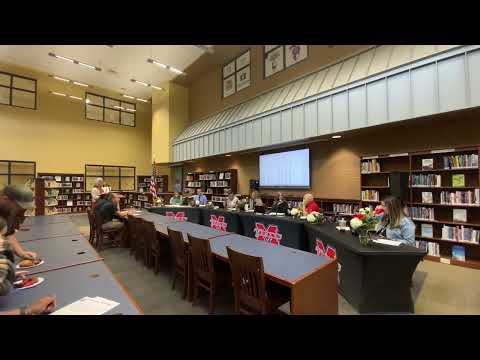
District staff used the board meeting to explain Amendment 2 — a proposed change to the state constitution that would allow the General Assembly to provide financial support for students attending schools outside the "system of common schools" — and to outline potential impacts for Mercer County Schools.
The presenter explained the ballot language would let the General Assembly enact laws authorizing public tax dollars to flow to private, religious, home and charter schools. The presenter identified five concerns: lack of financial and performance accountability for private schools, selective enrollment practices that could exclude low-income or special-needs students, potential tuition inflation that could offset voucher value, the existence of House Bill 563 as an existing school-choice mechanism, and diversion of public funds that the presenter said could weaken public school services.
The presenter cited a county-level estimate prepared for the district that, the presenter said, would reduce Mercer County Schools' funding by 15 percent, eliminate roughly 44 educator positions and remove about $34,000,000 in funding for the district. The presenter attributed these figures to county-level modeling provided to the board during the meeting and framed them as reasons rural counties without private schools could be disproportionately affected.
Board members and staff discussed how the amendment's language uses the word "notwithstanding," a term the presenter said would allow the General Assembly to act regardless of existing constitutional language. The presenter said the district's role was to educate the community about the amendment's potential effects and that the district may distribute the five-point information summary but not campaign for a ballot position.
No formal board action was taken on the amendment during the meeting. Staff emphasized the goal of providing informational materials to help voters decide before the November election.