Get Full Government Meeting Transcripts, Videos, & Alerts Forever!
Get email alerts on the Youth And Recruitment Programs topic
No spam. Unsubscribe anytime.
Black Firefighters Association reports growth in youth academy and City EMT program; outlines recruitment, training and mental-health work
Summary
The San Francisco Black Firefighters Association updated the commission on its youth academy, City EMT partnership results and member development programs, highlighting 160–170 members, a 34-week youth curriculum and City EMT outcomes.
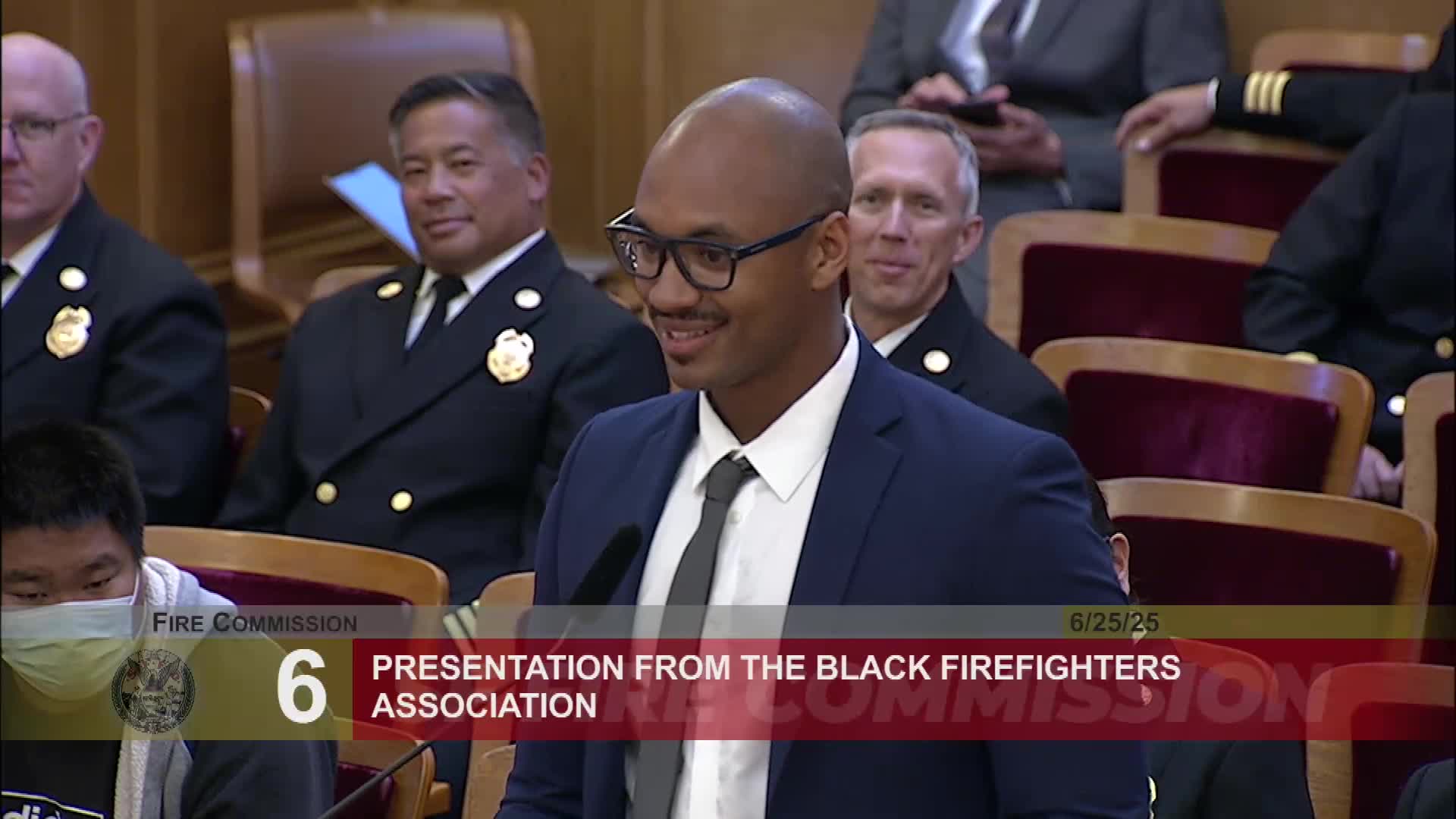
Representatives of the San Francisco Black Firefighters Association briefed the Fire Commission on June 25 about membership development, the San Francisco Fire Youth Academy and the City EMT training program.
Antoine Davis, president of the Black Firefighters Association (BFA), said the group has about 160–170 active members and presented the association’s efforts in recruitment, youth mentorship, and operational readiness. Daniel Williams, youth academy administrator, described a 34-week mentorship curriculum for San Francisco high-school students that meets Saturdays and focuses on life skills, fire and EMS modules, CPR certification, college-preparation support and workforce exposure. Williams said the program expanded from a projected 20 cadets to 27 for the recent cohort and that nine seniors graduated, with about half receiving college scholarships and two receiving full scholarships (one to UC Berkeley for engineering and one to Benedict College for nursing).
The association also summarized City EMT outcomes from 2021–2024: 686 applicants, 142 total graduates, an 84–87 percent graduation/EMT pass rate and 49 participants completing a partnered internship program that provided on-the-job hours. Captain John Smith and executive-at-large Nicholas Thurston described continuing recruitment workouts and community outreach held in public parks and at career events to prepare applicants physically and for interviews.
BFA leaders highlighted investments in member mental health: a network of culturally competent therapists and coordination with the department’s behavioral health unit and employee assistance program to provide short-term (1–6 session) bridge care and referrals for longer-term treatment when needed.
Commissioners praised the volunteer-run programs and asked about eligibility and outreach; presenters confirmed the youth academy requires San Francisco school enrollment or a San Francisco address and said applications will reopen in July with plans to split the program into fall and spring cohorts to reach more youth.
The commission did not take formal action on the presentation; the BFA said it will return with more data next month.