Staff outlines Denton annexation law, ETJ and municipal‑services process in informational session
Loading...
Summary
Planning staff reviewed state annexation rules, Denton’s extraterritorial jurisdiction and the municipal services agreement process, including non‑annexation agreements and the steps to bring property into city limits.
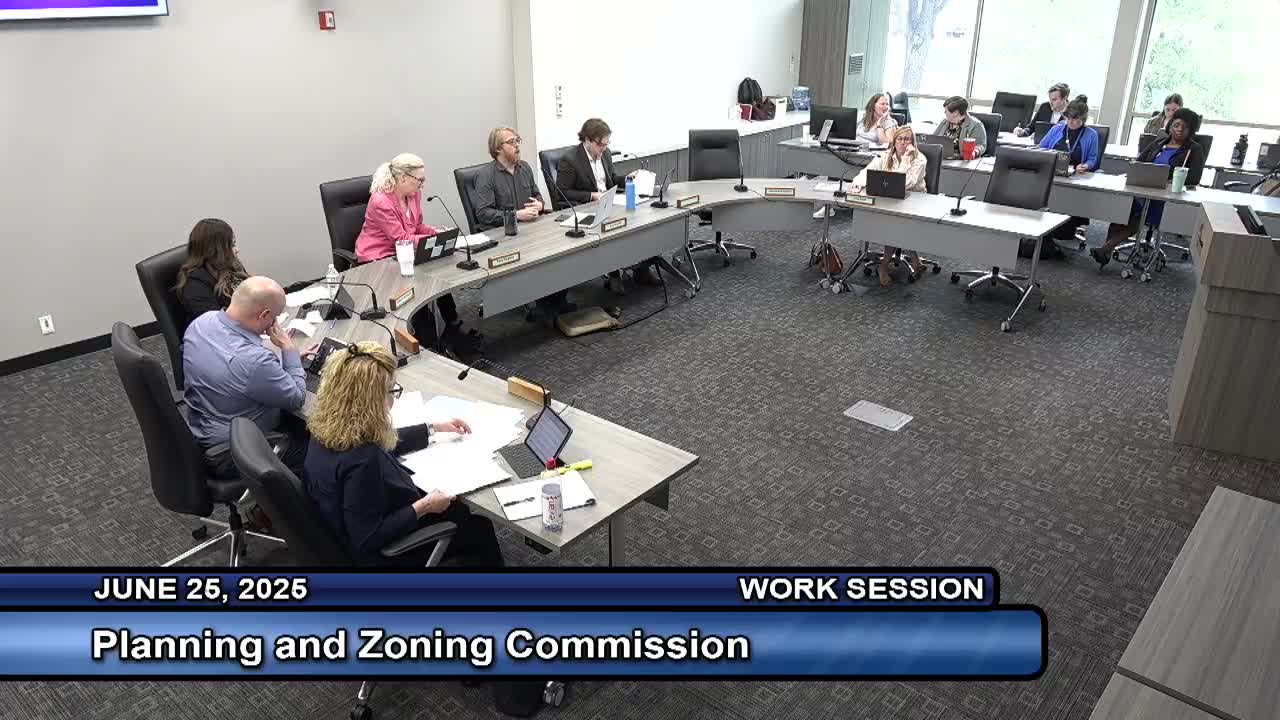
City of Denton planning staff reviewed state and local annexation procedures during a work session, walking commissioners through extraterritorial jurisdiction (ETJ) rules, non‑annexation agreements and the municipal services agreement process that precedes most voluntary annexations.
Angie Mangler, Development Review Manager, told the commission that because Denton’s population exceeds 100,000, the city’s ETJ extends five miles from the city limits. She reviewed ETJ Division 1 and Division 2 differences: in Division 1 the city may apply certain subdivision standards and civil plan review for infrastructure ties, while Division 2 development is governed primarily by Denton County and state law.
Mangler summarized key legal limits and obligations under the Texas Local Government Code. "Property that is annexed into the city does have to be a minimum 1,000 feet in width," she said, and a city can annex at most 10% of its land area in a single year. She described Denton’s municipal services agreement (MSA) as the first formal step in an annexation, noting the MSA negotiates services (streets, water, wastewater, police, fire) and sets an annexation schedule.
Mangler also explained the city’s historical use of non‑annexation agreements (NAAs). She said Denton offered NAAs to some property owners between 2010 and 2016; the initial agreements were valid through August 2020 and owners were offered extensions that are now valid through August 2040. NAAs generally require the property remain in agricultural or single‑family uses (minimum five‑acre parcels for subdivision under an NAA), and the city still reviews development applications and building permits for those properties.
Process and timing highlights - MSA and city-council readings: After negotiating an MSA, council holds a public hearing, then a first reading of the annexation ordinance. The ordinance is then published (Mangler cited the Denton Record‑Chronicle) and state/local rules require a roughly 30‑day waiting period after publication before council may act on the second reading. - Placeholder zoning: Annexed properties are assigned a placeholder zoning (labeled "Rural Residential" in Denton) upon annexation; the placeholder is then subject to subsequent zoning and development procedures.
Why it matters: Commissioners said they wanted clarity about service timelines and how NAAs will be handled when they expire. Commissioner Riggs asked whether MSAs specify when services must be extended; Mangler replied the city's standard MSAs do not prescribe a fixed timeline for extending physical infrastructure such as water or sewer. Commissioners also noted that extensions granted in 2020 were council decisions and that, at NAA expiration, the city has discretion to offer another NAA or proceed with annexation.
Next steps: Mangler offered to walk the commission through a step‑by‑step example (from a farm under NAA to annexation and rezoning) and answered procedural questions about how placeholder zoning and MSAs operate. No formal action or vote was taken; the presentation was informational and intended to prepare commissioners for future annexation and development reviews.