Get Full Government Meeting Transcripts, Videos, & Alerts Forever!
Get email alerts on the Federal Relations Immigration topic
No spam. Unsubscribe anytime.
County attorney says San Miguel County ‘has never declared’ sanctuary status; commissioners opt to monitor DHS list
Summary
County attorney and commissioners discussed the Department of Homeland Security’s (DHS) list of so‑called sanctuary jurisdictions and agreed to monitor developments rather than take immediate legal action; staff said San Miguel County has not enacted policies to obstruct federal immigration enforcement and no federal notice has been received.
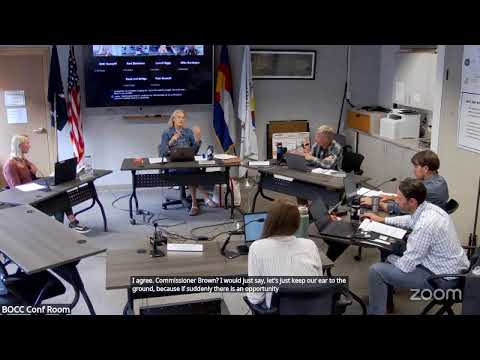
San Miguel County’s attorney briefed commissioners June 25 on a recently published and then removed Department of Homeland Security (DHS) “sanctuary” list that included the county; commissioners agreed to monitor the situation and take action only if the county receives formal notice or adverse federal action.
Maura Fahey, San Miguel County’s attorney, told the board that the DHS list was compiled under presidential Executive Order 14287 and that the list’s criteria were not clearly defined on its face. “San Miguel County has never declared or designated itself as a sanctuary jurisdiction,” Fahey said, noting the county has not received a formal notice from DHS identifying specific policies or actions that would place it on the list.
Fahey reviewed how Colorado law limits local enforcement of federal immigration law (for example, prohibiting local authorities from holding an inmate for ICE beyond their lawful release absent proper judicial process). She said the sheriff’s office operates “within the confines of state law,” and that sheriff Dan Koval indicated the department does not assist ICE as a matter of general practice but will provide information or support where state law and officer safety permit.
Fahey and staff described examples of other Colorado counties that sought removal from the DHS listing; Weld County, she said, engaged federal and state representatives and issued a media statement asserting it had not received formal notice of violations. Fahey advised the commissioners that the practical consequences of appearing on the list could include suspension or review of federal funding, but that, to date, none of the jurisdictions named had reported receiving a formal enforcement notice tied to the list.
Commissioners asked whether federal funding to county partners (nonprofits, service providers) could be affected; staff said the effects are unclear until DHS or another federal agency issues a formal notification or takes action. Commissioners directed staff to “keep an ear to the ground” and to be prepared to respond if notice is received. No formal motion to pursue removal was made during the meeting.
Ending: The board asked county staff and the county attorney to monitor any DHS or federal correspondence and to update the board if the county receives formal notice or evidence that federal funding has been affected.