Get Full Government Meeting Transcripts, Videos, & Alerts Forever!
Get email alerts on the Economic Development topic
No spam. Unsubscribe anytime.
Councilor proposes setting aside cannabis revenue for impacted neighborhoods; Finance Committee asks treasurer and law to report back
Summary
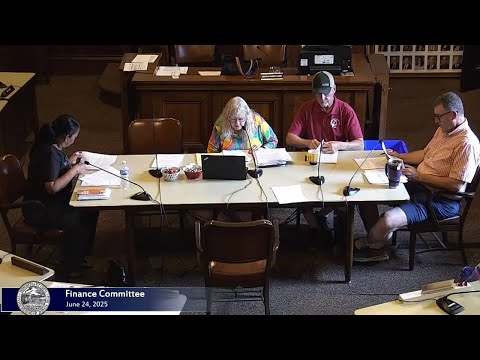
Councilor Israel Rivera filed an order to set aside a percentage of cannabis tax revenue for capital improvements in neighborhoods that host cannabis businesses; the Finance Committee agreed to table the order and asked the treasurer, tax collector and law department to report on current revenue and enforcement of host-community conditions.
Councilor Israel Rivera asked the Finance Committee on June 23 to consider directing a portion of locally collected cannabis revenue — he suggested 5% as a conversation starter — to capital improvements in the neighborhoods that host licensed cannabis facilities (primarily Wards 1 and 2).
Purpose and context
Councilor Rivera said the goal is to ensure that neighborhoods hosting cannabis operations receive predictable local benefits for community improvements (sidewalks, parks, signage, or code enforcement). Supporters noted that host-community agreements and special permits carry conditions — for example, hiring commitments and odor control — but they said monitoring and follow-through have been inconsistent. Councilor Sullivan and others noted that the city previously used “community impact” funds for monitoring compliance and that some obligations in host-community agreements may not be adequately enforced.
Committee action
The Finance Committee did not adopt a set percentage. Instead, committee members asked the treasurer’s office, tax collector and legal counsel to prepare background information: how much cannabis revenue the city currently receives, the status of any contested “impact fund” balances, whether the Cannabis Control Commission enforces special-permit conditions locally (inspections/odor control), and how host-community hiring commitments are monitored. The committee planned to reconvene with that data in a future Finance meeting (targeted for August) and to invite the appropriate city staff and the law department to provide drafts of possible implementing language.
Ending
Councilors said they want a transparent process for determining whether revenues should be set aside for host neighborhoods, how much would be feasible, and what compliance and monitoring structures would be required.