Get Full Government Meeting Transcripts, Videos, & Alerts Forever!
Get email alerts on the Land Use Zoning topic
No spam. Unsubscribe anytime.
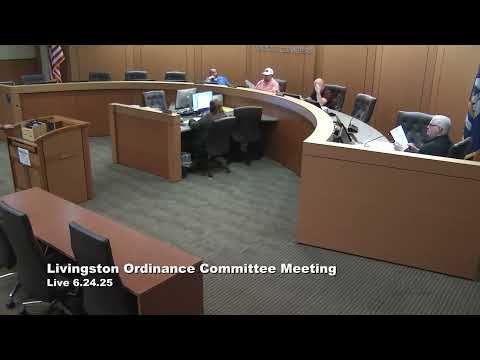
Ordinance committee debates requiring concept plans, PUDs for rezone requests
Summary
Members and planning officials debated a proposed requirement that rezone requests include a concept plan or development agreement (PUD), with participants weighing master plan alignment, legal enforceability and how to avoid politicizing land‑use decisions.
Livingston Parish ordinance committee members, planning commissioners and members of the public discussed whether the parish should require a Planned Unit Development (PUD) concept plan or development agreement when landowners request rezoning.
Marty, the parish’s land‑use attorney, described the PUD/concept plan approach used in other parishes as a way to require property owners to disclose intended uses when seeking a rezone: “what are you doing with the property? Why do you need us to go from ag to R‑1 or R‑2?” He said a PUD or development agreement forces an applicant to declare intentions before the council votes on rezoning and that the council could draft an ordinance to require such plans for certain rezoning requests.
Several council members and planning officials raised practical questions and concerns. One council member asked how a landowner seeking a simple rezoning from residential to agricultural would comply if they were not developing — would a letter of intent suffice? Marty and other speakers said that for rezones to a less‑restrictive zoning (for example, R‑2 to agriculture) a concept plan or PUD may not be necessary and a simple statement of intent could be adequate. The attorney said the parish could tailor the ordinance to trigger concept‑plan requirements only for certain changes (for example, larger projects or changes to higher‑intensity zoning).
Planning staff, master‑plan committee members and a professional land surveyor who identified himself as Ralph Burgess urged caution but generally supported adding a concept step. Burgess, who said he chairs the master‑planning committee, explained typical practice: some rezones come with a resubdivision or preliminary plat and that attaching that information to the rezoning application provides planning and the council more context. Bridal Clemons (identified in the transcript as the P&Z member who researched other parishes) said he reviewed about 60 parishes and found that roughly 80% require a plan before approving a zoning change; many of those ordinances tie the rezoning decision to the master plan or a future land‑use map.
Attendees debated whether a concept plan would be binding after approval. The attorney and several others said that when a development agreement or PUD is approved and recorded it can bind future owners and set enforceable obligations; that structure, they said, typically comes with a package of documents, engineering approvals and council action. Others worried about forcing small property owners to spend thousands on detailed plans to obtain a zoning change and suggested exemptions for small, family‑scale requests. Committee members discussed alternatives: requiring only a one‑page statement of intent for small requests, mandating a concept plan for larger projects, and aligning any new requirement with the parish master plan and a defined future‑land‑use map to reduce ad hoc politics.
Marty agreed to draft a proposed ordinance and provide examples of concept plans and development agreements used elsewhere (he referenced Ascension Parish’s model). Committee members asked staff to provide drafts and examples ahead of the next ordinance committee meeting so the council can consider ordinance language concurrent with ongoing master‑plan work. No formal action or vote on an ordinance was recorded in the transcript.