Get Full Government Meeting Transcripts, Videos, & Alerts Forever!
Get email alerts on the Public Safety topic
No spam. Unsubscribe anytime.
Police describe seized-asset accounts, Main Street firehouse case remains in probate; chief says proceeds allocation rests with DA
Summary
Holyoke Police Chief updated the Finance Committee on procedures and balances for seized-asset accounts, described the Main Street firehouse matter as complex and pending in probate, and said distribution decisions rest with the district attorney’s office.
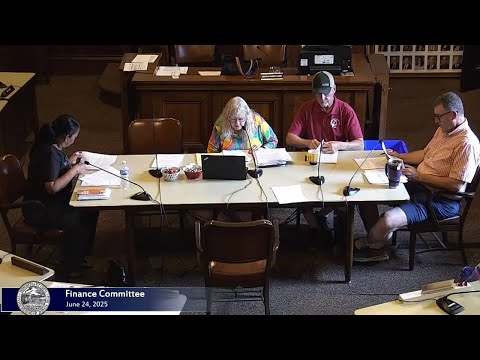
The Holyoke Police chief briefed the Finance Committee on how cash and other seized assets are handled and gave a status update on a high-profile Main Street firehouse case during the committee’s June 23 meeting.
How civil and criminal forfeitures are handled
The chief said when officers seize cash during a criminal investigation the department places it into an account that remains with the agency until a case concludes. In state cases that conclude with forfeiture the district attorney typically apportions proceeds among participating agencies; in federal cases the U.S. government’s process applies and Holyoke receives a portion that reflects departmental participation and “man hours” on the task force, the chief told the committee.
Main Street property and probate
Committee members raised a widely reported case involving a Main Street property (previously described on local media as a former firehouse) that yielded a substantial asset pool. The chief said the matter is legally complicated because the defendant died before criminal adjudication; the DA’s office referred portions of the matter to probate court and proceedings remain pending. He warned that probate and asset-resolution processes are often slow and that any distribution of proceeds depends on the DA’s decisions and the probate outcome.
Account balances and permitted uses
The chief told the committee the department maintains separate federal and state seized-asset accounts; he reported approximate balances in those accounts (figures given at the meeting) and said strict rules govern permissible uses. He described common uses for forfeiture funds in other jurisdictions — training, investigative equipment, overtime tied to the investigation, and occasional vehicle or technology purchases — but said the department must follow federal or state restrictions when spending forfeiture proceeds. Committee members asked for a historical accounting; the chief said he will schedule follow-up meetings with federal partners and obtain a line-by-line accounting of recent expenditures.
Ending
Councilors requested and received a commitment from the chief to provide more detail on account activity and to coordinate with the district attorney’s office; the committee voted that the order related to cash-seizure procedures had been complied with for the record.