Get email alerts on the Harm Reduction Drop In Center topic
No spam. Unsubscribe anytime.
Dane County panel discusses draft RFP for harm-reduction drop-in center; feasibility study due July 15
Summary
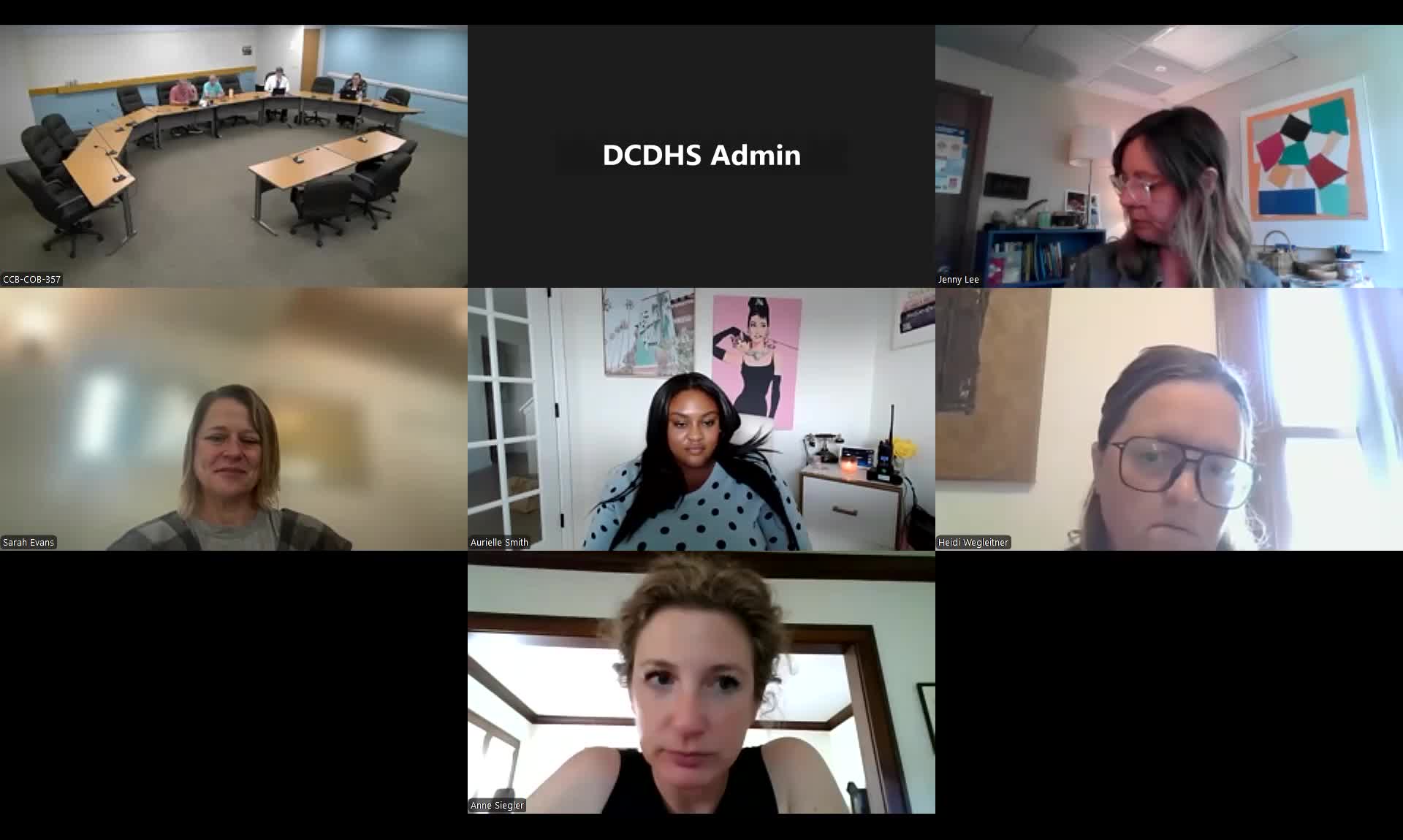
Dane County health officials and consultants on June 23 discussed a draft request for proposals for a harm-reduction drop-in center and how findings from an overdose prevention-center feasibility study due July 15 should inform the RFP.
Dane County health officials and consultants on June 23 discussed a draft request for proposals for a harm-reduction drop-in center and how findings from an overdose prevention-center feasibility study due July 15 should inform the RFP.
The committee’s discussion centered on which services to require, how to evaluate applicants, and the practical challenge of securing a physical facility. Ariel (director, Dane County Public Health) said the county aims to publish the RFP in September and “ideally, September 1 is what we're aiming for,” but noted the feasibility study’s findings could be incorporated into the final RFP language.
Why this matters: The county has a separate, pending Board resolution about restoring funding for a harm-reduction center from $425,000 to $800,000. The county also previously approved a $100,000 resolution to fund a study of an overdose prevention center. County staff and outside consultants said the services and client groups served by a drop-in center and an overdose prevention center overlap substantially, though an overdose prevention center would permit supervised consumption while a drop-in center would not.
Committee input and consultants’ view Ariel opened the discussion by asking committee members to identify ‘‘specific visions...and any very strong opinions...on requirements of a selected vendor,’’ including services such as syringe-services programming. Anne (consultant on the feasibility study) told the committee that the feasibility work ‘‘overlaps’’ with the RFP process and said the draft list of services the co-chairs circulated was “right on” as a starting point.
Sarah (consultant) described site and funding models elsewhere, including recent experiences in Minneapolis and New York City where organizations either purchased buildings with private grants or entered long-term leases to secure space. Anne described the local Minnesota experience: buying a building with foundation funds and requiring months of renovations before opening.
Space and timing concerns Several supervisors and staff stressed that having an appropriate, accessible site is likely the biggest hurdle for bidders. Supervisor Heidi Wagner and others urged the county to clarify whether the RFP will require bidders to already hold suitable space or whether applicants could request funding or county assistance to secure space. Ariel and public-health staff said RFP questions could be structured to capture whether applicants have space, plan to secure space, or would need capital support.
Ariel said the feasibility study is due to public health on July 15; staff are discussing public release timing to avoid confusing the public about whether an RFP would seek an overdose prevention center (OPC) versus a drop-in center. Todd Campbell (county supervisor) and others said the study's findings were unlikely to change the basic services list but would help refine legal and operational details such as drug-checking legality and site design.
Public comment and moral framing Jocelyn Campbell, a public commenter, urged the committee to fund the drop-in center, saying harm-reduction programs ‘‘save lives’’ and provide ‘‘compassion and understanding’’ to people who use drugs. The committee also heard from other community members who asked that the county balance provider capacity, space availability and community relations.
Next steps Committee members broadly supported continuing the discussion; several suggested a short follow-up before the RFP is finalized and recommended running the draft RFP by the full committee or posting drafts and FAQs for public feedback. Ariel and public-health staff said they would continue drafting and can incorporate committee feedback, with a target to issue an RFP around September 1 if logistics with county finance can be resolved.
Ending note No formal county action (vote) on RFP language or funding levels occurred at the June 23 meeting. Committee members agreed to continue the conversation and to revisit RFP specifics at a later meeting in proximity to the feasibility-study results.
AI generated
The text on this page is AI generated. Summaries, highlights, analysis, and video transcripts are all produced from the original source material.
AI can make mistakes, so if you spot one, and we will fix it for everyone.
Note: the source content is unaltered by us. Any content source we link to, be it a video, an audio recording, or a document, is presented exactly as its publisher released it. That publisher is usually a government body, sometimes an individual official or another organisation.