Get Full Government Meeting Transcripts, Videos, & Alerts Forever!
Get email alerts on the Budget topic
No spam. Unsubscribe anytime.
Laredo ISD trustees review three pay models, budget shortfall estimates ahead of adoption vote
Summary
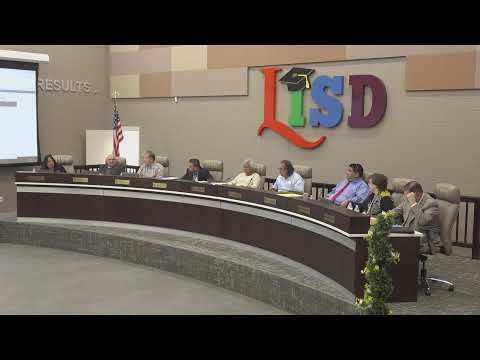
Laredo Independent School District officials presented a salary study and three general-pay options and reviewed the district—s fund-balance position at a board workshop on June 23, 2025, laying out trade-offs trustees must weigh before a budget adoption vote.
Laredo Independent School District officials presented a salary study and three general-pay models and reviewed the district—s fund-balance position at a board workshop on June 23, 2025, laying out trade-offs trustees must weigh before a budget adoption vote scheduled at the regular meeting.
Representatives from the district—s human resources office, TASB and the finance office told trustees they had developed three general-pay options (2 percent, 3 percent and 3.5 percent) and restructured pay ranges to align midpoints with market data. Presenters said House Bill 2 (HB2) teacher-retention allotments would cover a large portion of the teacher increases but that other pay groups would rely on local revenue or one-time reserves.
Why it matters: the board—s policy requires a general-fund reserve equal to two months of operating costs (about $42 million), while the district—s unassigned fund balance is about $62.7 million. Staff warned trustees that approving larger pay increases without offsetting savings or additional revenue would reduce reserves and could require drawing on fund balance in future years.
What presenters told the board Miss Rogelio of Human Resources reviewed proposed teacher and non-teacher schedules and examples of administrative and professional pay changes. She said staff produced three cost models after incorporating trustee direction: approximately $12.44 million (2 percent), $12.8 million (3 percent) and about $13.0 million (3.5 percent) in total recurring payroll impact across the district as modeled with the new pay structures and minimums. She and TASB consultant Luz Cadena said HB2 teacher-retention funding is estimated at about $6.3 million and an additional HB2 allotment for support staff retention was modeled at approximately $721,001.25.
Cadena (TASB) described the market-based methodology used to rebuild pay structures and set midpoints. She said the district—s current starting teacher pay was about $5,000 (about 9%) below the local market median and that other pay groups' midpoints ranged from roughly 77% to 90% of market depending on the group. Cadena told trustees the goal is to center midpoints within about 9–10% of market: "we would want to pay to be centered within 9 to 10% of the market rate," she said.
Finance director Miss Ayala summarized how each pay model affects the projected budget. She said the district currently expects an unassigned fund balance of roughly $62.7 million, a board policy target of roughly $42 million (two months), and a designated one-time set-aside of about $8.8 million. Under staff—s closing-model assumptions, Ayala said the 3.5 percent model produced an estimated deficit of roughly $11.0 million; after applying the $8.8 million set-aside the district would have about $3.6 million available to roll into next year but would face additional pressure if deficits persist or insurance costs increase. Ayala and trustees discussed a separately flagged potential rise in health-insurance costs (staff testimony referenced a possible $7.7 million exposure) and the need to monitor utilization and plan design.
Selected policy and funding details mentioned in the presentations - House Bill 2 (HB2) teacher-retention allotment: staff estimated the HB2 teacher portion at approximately $6.3 million and an HB2 support-staff allotment at about $721,001.25. Presenters said HB2 requirements drove parts of the teacher-schedule changes (for example, $2,500 increases for teachers in years 3 and 4 and $5,000 for teachers at year 5 and up). (presenters: Miss Rogelio, Luz Cadena) - Student allotment: staff modeled use of the $45-per-student allotment to fund some non-HB2 pay increases for early-career teachers and support staff. (presenters: Miss Cadena) - Board policy CE(LOCAL) (annual operating budget): the policy sets the two-month general-fund reserve target that staff used to judge fiscal risk. (presenter: Miss Ayala)
Other proposed changes and clarifications - Minimums and placement scales: staff proposed increasing several nonexempt minimums (for example, operation-support minimums from $9.50 to $12.00 per hour for some classifications; bus-driver starting pay modeled at $17.00 per hour from about $13.00; security/police starting from $17.71 to $23.18). Cadena and Rogelio explained the placement scale that spreads pay increases across years of service to reduce pay compression after raising starting rates. - Stipends: the human-resources presentation included a recommended increase in the bilingual/ESL stipend from $1,200 to $2,000 and adding additional stipends for teacher endorsements. Trustees also discussed a proposal to add a $500 elementary robotics stipend (estimated additional cost around $25,000 if applied districtwide to elementaries) and whether to review stipends more broadly. - Implementation mechanics: staff described additional targeted adjustments ("strategic adjustments") to bring employees who remain more than 10% below new midpoints closer to market and said IT had to prepare systems and codes to implement changes for nearly 4,000 employees.
Trustee concerns and questions Trustees asked specific operational questions about career pathways (how custodians, bus drivers and other nonteacher staff move between pay grades), the mechanics of the placement scale, and whether outside funding or longer-term restructuring options had been considered. Trustee Monica Rangel Garcia said, "It's not a secret that I've been pushing for the 3.5," and later emphasized interest in aggressive pursuit of alternative revenues and philanthropy. Trustee Rodolfo Morales pressed for clarity on the dollars: "If we approve the recommendation of 3.5... the deficit is 11,000,000 and change," he said, and asked how one-time set-asides and future savings would be used.
No formal action recorded The board did not take a formal vote at the workshop. Staff said the budget will return to the board at tomorrow's regular meeting for further action and that the board still has a subsequent meeting scheduled to adopt the final budget and later the tax rate after certified property values are received from the Webb County Appraisal District.
What comes next Staff recommended monitoring the plan during the year, identifying savings, and using allotments and one-time balances carefully so that increases are sustainable. Trustees asked staff to return with any final recommended language and the board indicated it may act at the next regular meeting. Several trustees urged exploring outside-the-box options to increase revenue and reduce long-term cost pressure (including targeted philanthropic fundraising and operational changes). The presenters and trustees stressed that any adoption of the larger pay model would need a plan to address the projected multi-year shortfall and insurance risks.
No votes were recorded at the workshop. The board will consider formal adoption at its regular meeting and a later meeting to adopt the tax rate after Webb County Appraisal District certified values are available.