Get Full Government Meeting Transcripts, Videos, & Alerts Forever!
Get email alerts on the Planning topic
No spam. Unsubscribe anytime.
Council adopts South Dallas‑Fair Park area plan after 4‑year task force process
Summary
The Dallas City Council adopted a community‑driven area plan for South Dallas and Fair Park after a multi‑year process. The plan sets land‑use guidance, design standards, housing and cultural preservation strategies and includes actions to identify historic markers and coordinate environmental remediation.
The Dallas City Council adopted the South Dallas‑Fair Park Area Plan on Wednesday, approving a community‑led blueprint that the city says will guide zoning, design and investment across a large portion of South Dallas.
The plan — the product of more than four years of work by a task force, city planning staff and neighborhood volunteers — outlines recommended land‑use changes, economic development strategies, design standards, housing goals and history and culture priorities for five area nodes including Second Avenue, the Malcolm X corridor, Elsie Faye Higgins Boulevard, the MLK DART station area and Queen City.
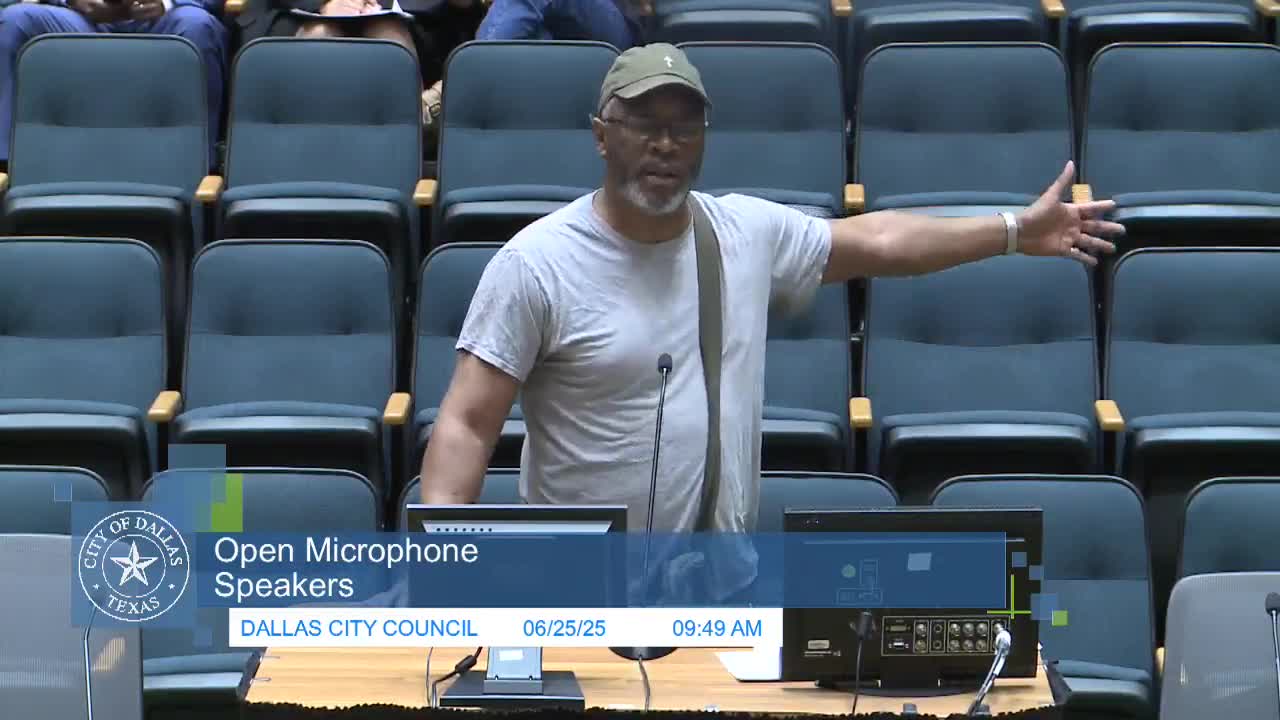
Task force members, community leaders and district residents who helped draft the plan spoke to the council in favor of adoption, telling elected officials the plan balances preservation of neighborhood character with new economic and housing opportunities. Several council members praised the task force and city planning staff for the prolonged community engagement.
Councilmember Adam Basil Dua, who sponsored the item, told the council the plan includes implementation steps and asked staff to add actions requested by the council: to identify locations for historic markers; to create an organization to coordinate implementation with the district office; and to proactively address environmental health issues including Brownfield assessment and remediation.
Deputy planning staff said the city will work with local stakeholders to phase implementation, coordinate funding, and prepare signage and storytelling for new designations. Staff also noted the plan includes specific recommendations for residential design standards intended to curb incompatible infill and preserve historic character, and for prioritizing commercial corridors for retail and services.
Council adopted the plan and councilmembers nationally noted its focus on equity, preservation and local economic opportunity.
The plan will now move to implementation by city departments and community partners; staff said they will return with timelines and proposed actions to the council.