Get Full Government Meeting Transcripts, Videos, & Alerts Forever!
Get email alerts on the School Budget topic
No spam. Unsubscribe anytime.
Lincoln Public Schools presents $559 million preliminary 2025–26 budget; proposes 7¢ levy drop, 1¢ building levy increase
Summary
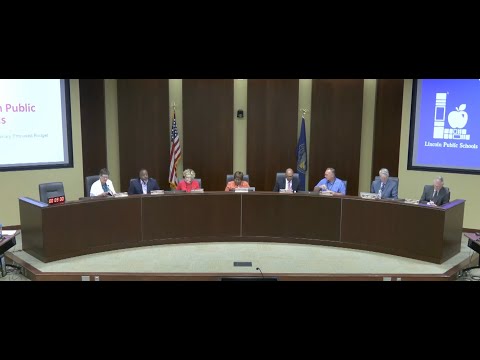
At a June 24 special work session, Lincoln Public Schools staff presented a preliminary $559 million budget for 2025–26 focused on the general fund, proposing a net 7¢ cut in the total levy while adding 1¢ for the building fund and asking the public for input through July 11.
Lincoln Public Schools staff presented the district’s preliminary 2025–26 budget at a special Board of Education work session on June 24, proposing roughly $559 million in total expenditures, about a $20 million increase from the previous year.
The presentation, given by Lincoln Public Schools presenter Dr. Standish, emphasized the general fund and the district’s budget process, including community engagement opportunities. "Good evening. We are excited to be here, for this point in the budget process," Dr. Standish said at the start of the presentation.
The district is proposing a preliminary package that would lower the school district’s total levy by roughly 7¢ while adding 1¢ to the building fund. Dr. Standish said the change still yields a net drop in the levy and reflected the district’s current revenue projections, including an estimated 7% growth in assessed valuation and an anticipated $10 million increase in state aid compared with last year. The district’s earlier large valuation increase contributed to a $32 million drop in state aid in a prior year, she said.
Why it matters: the budget funds personnel and programs that schools run daily. District staff told the board that roughly 90% of the budget is personnel, and monthly payroll runs about $25 million to $30 million. The proposal funds negotiated salary and benefit increases; negotiations produced packages ranging from 4.55% to 10% across employee groups, totaling about $18.5 million before a state retirement contribution change. Because Legislative Bill 645 reduced the employer contribution to the state retirement system by 2 percentage points this year, the net salary-and-benefit increase in the proposed budget is about $12.3 million, Dr. Standish said.
Key budget items and tradeoffs - Personnel and student supports: The district proposes to sustain and expand student supports tied to the strategic plan, including about $1.4 million for graduation-pathway supports (bilingual liaisons, support teachers, suicide-prevention "hope squads", expanded summer school) and nearly $1 million to add two early-childhood classrooms (four sections) and associated supports. - Counselors and federal funds: A $7.4 million federal school-based mental health grant that funded school counselors will end Dec. 31, 2025. The grant supported roughly 18 FTE at sites; the preliminary budget funds about 9 FTE (approximately half) so that "This will sustain the counselor positions for the 20 five-twenty 6 school year," Dr. Standish said. The district is appealing the federal decision and monitoring federal funding. - One-time maintenance: The district proposed $2,000,000 for one-time maintenance needs (roof repairs, parking-lot resurfacing, gym-floor refinishing, security upgrades, and other site-specific maintenance). - Staffing details: Proposals include added FTE for English-language learner enrollment growth, special-education para hours and speech-language services, some health technicians, a 0.5 FTE additional elementary director, and investments to sustain one counselor in every school if federal funds are reduced. - Facilities and building fund: The district proposes adding 1¢ to the building fund levy (it has not levied for building since 2019–20). The current building fund balance is about $7.8 million; the building fund pays for land acquisition and construction tied to student growth and facility needs.
Revenue, levy and timing Dr. Standish explained the interaction between assessed valuation and state equalization aid: when valuations climb, state aid can fall, and vice versa. The presentation estimated 7% growth in assessed valuation for the 2025–26 preliminary budget but stressed final certified numbers will not be available until Aug. 20. The district is proposing a drop in the total levy to about $1.04 per $100 of assessed valuation, a historic low for the district if the estimates hold.
Public engagement and next steps The district outlined a schedule of public engagement: a work session and board meeting with in-person public comment, three public forums (including a noon virtual forum and evening in-person forum June 25), an online input window opening after the meeting and closing July 11, and two public hearings before final adoption. Dr. Standish urged residents to offer feedback by mid-July for the board and finance committee to consider changes before the July work session and September deadlines.
Context and metrics Lincoln Public Schools staff noted a projected enrollment increase (a conservative estimate of about 135 K–12 students in cohort growth) and explained the district uses a three-year forecast and a staffing-profile process at each school to align staff to student needs. The proposed total expenditure budget for 2025–26 is about $559 million compared with about $539 million last year. The district reported per-pupil spending of about $16,000 for 2023–24 compared with a state average of about $17,200.
Board reaction and discussion Board members who commented thanked staff for the clarity of the presentation and noted the challenge of smoothing revenue "peaks and valleys" created by valuation and state-aid interactions. Mara Mumgaard, identified in the meeting as chair of the finance committee, said the board had already discussed many details in committee and encouraged community questions during the public input period.
What was not decided The June 24 presentation proposed levy and expenditure changes and invited public comment; the board did not adopt a final budget at this meeting. Final assessed valuation, potential county joint hearings (the so-called "pink postcard" joint public hearing if the district’s property tax request growth exceeds allowable growth) and final board action will occur later in the summer after certification of valuations.
Community resources All materials, recorded presentations, and the online input window were posted on the district website; Dr. Standish said the formal online input window will close July 11.
Ending The district presented the preliminary budget, invited public comment and scheduled multiple forums and an online comment window for the community to respond. Board action will follow certification of valuations in August and the formal public hearings and September deadlines.