
District presents spring data review: attendance and some achievement measures improved, SEL and behavior severity flagged as ongoing concerns
Get AI-powered insights, summaries, and transcripts
Sign Up Free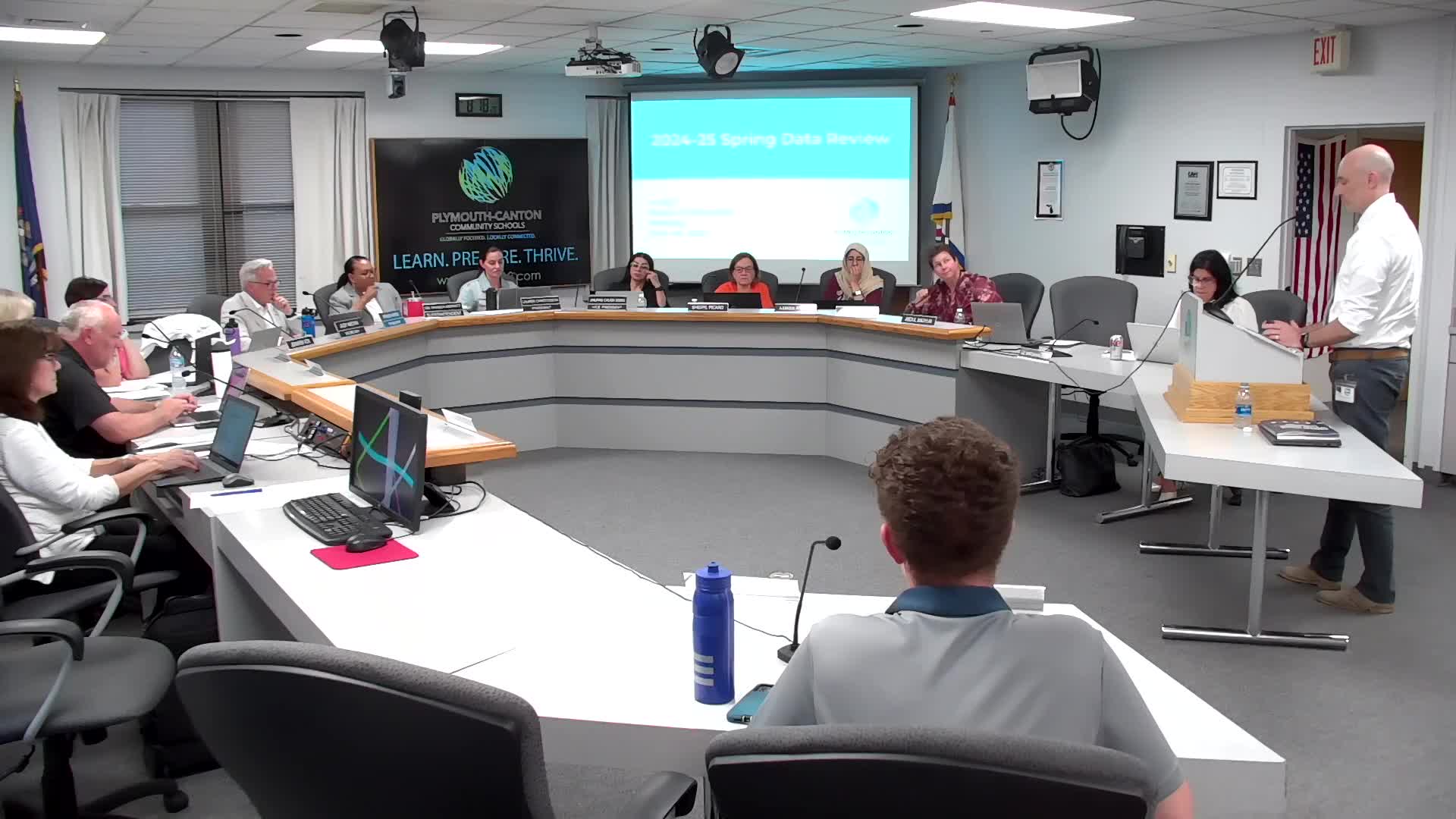
Summary
District staff presented a spring 2024–25 data review showing improved attendance and graduation and strong AP results, while social‑emotional learning, emotion regulation and the severity of some behavior incidents were identified as areas for continued focus.
Plymouth‑Canton Community Schools officials presented a high‑level spring data review highlighting areas of progress and concern across the district.
Jonathan Flukes, director of data, assessment, research and evaluation, led the presentation under the supervision of Superintendent Monica Merritt and Chief Academic and Innovation Officer Beth Veil. The presentation summarized outcomes on attendance, behavior incidents, social‑emotional learning (SEL) measures from the Panorama surveys, student achievement metrics including NWEA MAP and DIBELS, AP exam performance and graduation rates.
Key highlights presented by Flukes and other administrators included improved overall attendance and a reduction in chronic absenteeism across student groups. Semester course passing rates, AP exam outcomes and graduation rates also showed positive trends; Flukes said 88% of AP exam attempts earned scores of 3 or higher and that graduation rates have improved districtwide (details by school were shown in the board packet).
At the same time, staff told the board that although the overall number of behavior incidents decreased over the prior four years, incidents that resulted in suspension did not decline and in the meeting record were essentially unchanged compared with the prior year. Administrators and presenters emphasized that some behavior incidents continue to be severe, that emotion regulation and growth‑mindset measures remain priority areas, and that these challenges are consistent with statewide and national trends.
On early literacy, the district reported DIBELS results for K–5 showing reductions in the proportion of students classified as “at risk” or “some risk” in several early literacy measures from fall to spring in most grades; administrators said fourth grade showed an outlier trend to monitor as that cohort moves forward.
Flukes and the teaching and learning team described steps taken this year — professional development on evidence‑based practices, strengthened coaching models, tiered reading and math supports (including UFLI and Envision), and targeted multilingual‑learner strategies — and outlined continued priorities for 2025‑26: reduce chronic absenteeism, further develop differentiated instruction and tiered supports, continue SEL and behavior interventions, adjust multilingual learner service models at the secondary level, and sustain professional learning for staff.
Board members asked detailed questions about Panorama survey participation (noting low response rates in grades 9‑12 this spring), timing and administration of surveys, how to increase student participation, and how the district would prioritize and resource interventions. Administration said some survey timing and participation challenges are being addressed and that a more focused, coordinated professional‑learning plan for next year is already in development.
The presentation did not include a formal board vote; it was provided as an informational item and will inform instructional priorities and future budget and staffing decisions.