Lifetime Citizen Portal Access — AI Briefings, Alerts & Unlimited Follows
House subcommittee hearing spotlights child care shortage, bipartisan support for investment and local solutions
Loading...
Summary
The House Education and Labor subcommittee on early childhood held a hearing where witnesses and members described a nationwide shortage of child care seats, rising costs that push parents from the workforce, and workforce shortages among early educators, and urged a mix of federal support and locally tailored public‑private partnerships.
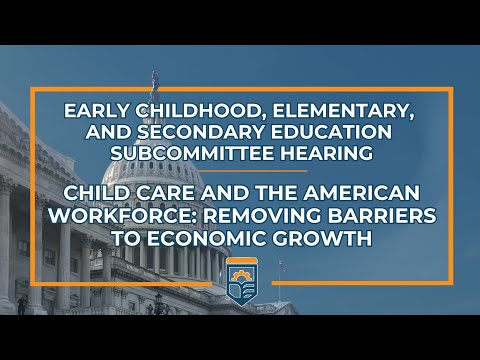
The House Education and Labor subcommittee on early childhood, elementary, and secondary education held a hearing where members and witnesses described a nationwide shortfall in child care supply, rising costs that force parents out of the workforce, and persistent shortages of early childhood workers.
The hearing opened with Chairman Kiley noting a quorum and framing child care as essential to parents' ability to work and to local economies. Ranking Member Bonamici said, "Childcare is early learning and social and emotional development. It sets kids up for success for the rest of their lives." Witnesses from policy, local government and provider organizations urged a mix of federal support and locally driven, public‑private partnerships.
Why it matters: Committee members and witnesses portrayed child care as infrastructure tied to workforce participation and economic output. Testimony described large economic losses tied to the shortage and urged reforms to federal programs, protections for the Head Start network and sustained investments to stabilize providers without narrowing parents' choices.
Most of the witnesses grounded testimony in similar themes: insufficient supply, unaffordable costs for many families, and low pay for the largely female early‑education workforce. Caitlin Codella Lowe, managing director of human capital at the Bipartisan Policy Center, said, "Child care is more than a family issue. It's a foundational component of our economic infrastructure." Dr. Ruth Friedman, a senior fellow at the Century Foundation and former director of the HHS Office of Child Care, testified that "parents can't find or afford the child care they need, and providers can't charge high enough fees to stay afloat." Celia Hartman Sims, president of the ABC Darien Group, emphasized parental trust in choosing providers and defended the mixed‑delivery model that includes centers, family child care homes and faith‑based providers.
Key figures and examples cited at the hearing - Cost and gap data: testimony cited Child Care Aware of America and other sources noting national and state costs: a 2024 analysis placed the national average price of care in the low five figures for some families and showed California among the highest cost states. The Bipartisan Policy Center and witnesses repeated commonly used estimates that families and the economy face billions in lost earnings and productivity because of child care breakdowns. - Local model: Todd Barton, mayor of Crawfordsville, Indiana, described a community coalition that built a $5 million Montgomery County Early Learning Center that opened with 124 new seats and, he said, increased local capacity by about 30 percent. Barton credited a mix of government, business and philanthropic funding and a local early learning director who supports providers. - Pandemic and federal funding: witnesses noted pandemic‑era infusions (stabilization grants and other relief) boosted funding dramatically but said those temporary funds did not solve structural affordability or workforce compensation problems. Dr. Friedman said the Child Care and Development Block Grant (CCDBG, also referred to as CCDF) is critical but not funded at a level to fully address nationwide supply and workforce shortfalls.
Areas of agreement and tension - Bipartisan concern: Members from both parties acknowledged the practical burdens families face and local economic harms from the shortage. Several Republican members emphasized parental choice and local flexibility; Democratic members stressed the need for more federal investment and higher wages for early educators. - Parental choice and mixed delivery: Multiple witnesses defended a mixed delivery system that preserves parents' ability to choose among center‑based, family‑based and faith‑affiliated care. Celia Hartman Sims said parents "will sacrifice time, convenience, and money to ensure their children are in quality safe environments," arguing that choice must be preserved in federal policy. - Federal rules and administrative capacity: Dr. Friedman and others warned that proposals to roll back the 2024 CCDF/CCDBG rule would weaken provider payment practices and reduce supply. Witnesses also raised concerns about recent federal staffing and regional office reductions that they said have hindered timely grant administration and technical assistance to local programs.
Policy options discussed - Maintain parental choice and mixed delivery while expanding supply through grants, contracts or capital investments targeted to build seats in underserved areas (examples offered included start‑up grants, family child care support networks and benefits for family providers). - Improve provider compensation to reduce turnover and boost supply; witnesses said many early educators cannot afford child care themselves and that low wages drive staff into other sectors. - Preserve and implement the 2024 CCDF rule changes that aim to stabilize provider payments, cap family co‑payments in states, and require some grants/contracts to expand supply in hard‑to‑serve communities; witnesses warned against repeal. - Support locally driven public‑private partnerships and give communities flexibility to braid federal, state, philanthropic and business funding, as the Montgomery County example illustrated.
What committee members requested or highlighted - Several members asked witnesses for concrete steps Congress could take that preserve parental choice while expanding supply, and for ideas to support family‑based providers and rural communities. Mayor Barton urged federal flexibility for local innovation and involvement of businesses in funding and governance.
Scope and limitations of hearing record - The hearing was a fact‑finding and oversight forum; no formal votes or committee actions were taken. Many figures cited (for example, local program costs, national averages, and economic impact estimates) were presented by witnesses with attributions given at the hearing; the committee record remains open for additional written statements.
Ending: Members from both parties closed by reiterating the economic and social importance of improving child care access and affordability. The hearing showcased areas of bipartisan agreement—parental choice, concern about workforce and supply gaps, and the role of local public‑private efforts—while also underscoring disagreement about the scale and means of additional federal investment.