Get Full Government Meeting Transcripts, Videos, & Alerts Forever!
Get email alerts on the Housing Policy topic
No spam. Unsubscribe anytime.
CHFA explains Build for CT workforce-housing loans to Shelton planning commission
Summary
Vin Bergen of the Connecticut Housing Finance Authority outlined the Build for CT program at a June 24, 2025, Shelton Planning and Zoning Commission special meeting, describing loan terms, affordability requirements, monitoring and interactions with local inclusionary zoning.
Vin Bergen, senior business development officer at the Connecticut Housing Finance Authority (CHFA), presented an overview of CHFA’s Build for CT workforce-housing program to the Shelton Planning and Zoning Commission during a virtual special meeting on June 24, 2025. The commission heard how the program offers subordinate, low-interest construction-to-permanent and permanent-only loans to make multifamily development more financially feasible while requiring a minimum share of units to be restricted at workforce income levels.
The presentation covered program origins, basic mechanics and municipal implications. Bergen said the program “originated back in 2023 as part of the biennium budget” and was created in partnership with the Connecticut Department of Housing to spur market-rate and workforce multifamily development statewide. He told commissioners CHFA has closed 20 loans to date and reported about $90,000,000 in funding that assisted development of roughly 2,700 apartment units, including about 700 units designated as workforce housing.
Bergen described loan structure and eligibility. Build for CT typically targets new construction, adaptive reuse or substantial rehabilitation of multifamily projects, and CHFA looks for developments of about 50 units or more so a 20% minimum results in roughly 10 restricted units. CHFA’s underwriting has included a loan allocation of $125,000 per qualified restricted unit. Construction terms may be up to 36 months with a permanent loan term of 20 years and a 40-year amortization on the permanent loan. CHFA’s subordinate loans generally carry interest rates of about 1%–3%, with the rate tier tied to how large a discount the restricted rents represent relative to a current appraisal of market rent: “The greater the discount, the lower the interest rate,” Bergen said.
Program conditions and municipal effects were a major focus. CHFA requires that affordability restrictions be recorded and enforced for a minimum compliance period of six years measured from final certificates of occupancy; Bergen summarized this as “the affordable restriction covenant requires ... a minimum period of 6 years from the issuance of the final certificate of occupancy.” Restrictions remain in place while CHFA’s loan is outstanding and CHFA performs annual monitoring. If a borrower repays CHFA’s loan after the compliance period or when the loan is otherwise satisfied, CHFA’s covenants can no longer be enforced by CHFA, and the units may revert to market rate. CHFA is subordinate to a project’s primary lender and typically requires recourse consistent with the first mortgage lender’s recourse terms.
Commission members and attendees pressed on how Build for CT interacts with local inclusionary zoning and Connecticut’s 8-30g affordable-housing framework. Bergen said CHFA will give credit toward a project’s CHFA-calculated restricted-unit count for up to 10% of units that a municipality already requires by local approval so long as those required restrictions produce rents that are meaningfully below market (CHFA commonly looks for about a 10% discount or more). For example, if a planning commission had already required 10% of a 100-unit project to be restricted, CHFA could give credit for up to 10 of those units and require a developer to add another 10 units restricted under Build for CT to reach CHFA’s 20% program minimum. Attorney Dominic Thomas asked whether Build for CT-only units count toward moratorium credit; Bergen replied that CHFA-credit units are counted while the restrictions remain in place but that municipalities’ longer-term restrictions (for example, 30–40 years imposed locally) remain the municipality’s responsibility to monitor.
Bergen also outlined typical underwriting limits: combined first- and subordinate-loan loan-to-value of about 80% and a minimum debt-service-coverage ratio on the combined loans of about 1.15. He described the program as a public–private partnership that requires a participating primary lender (often a local or regional bank) willing to close the first mortgage, share appraisals and environmental reports, and accept CHFA in a subordinate position. Bergen said CHFA covers its legal fees and receives a fee of 75 basis points.
Commissioners asked about longer restriction periods, foreclosure scenarios and whether towns could insist on longer monitoring. Bergen said CHFA has some flexibility to negotiate longer minimum restriction periods (for instance, 10 or more years) in specific cases, but enforcement after CHFA’s loan payoff is limited because CHFA would no longer have loan default remedies. He also noted that if the first mortgage forecloses and CHFA is wiped out, the CHFA restrictions would effectively be lost absent other municipal restrictions that remain recorded.
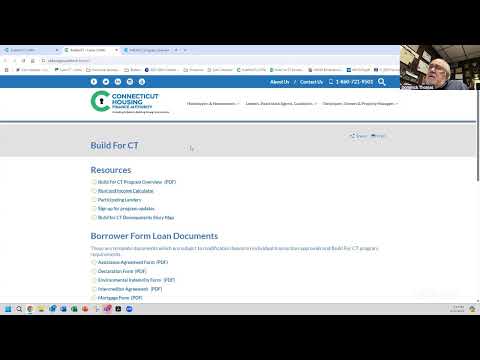
Bergen pointed commissioners to CHFA’s Build for CT website for a searchable map and a rent/income calculator that shows HUD-derived area median income (AMI) and example rents by town; he used Shelton as an example for AMI and rent calculations. He also noted that AMI designations shifted in the most recent HUD updates and that allowable AMI tiers under Build for CT range from 60% up to 120% depending on local market rents and whether the restricted rents represent a discount to market.
There were no formal votes or actions taken during the special meeting. CHFA offered to answer follow-up questions and to meet with town staff or the commission if Shelton developers seek Build for CT financing. Bergen also noted the program’s public materials and FAQs on the CHFA Build for CT webpage and the program’s “storytelling map” that lists closed loans and basic project details.
Shelton commissioners said they would discuss options with applicants and staff; CHFA requested that developers inform the town early if they intend to pursue Build for CT financing so the town and developer can negotiate acceptable restriction periods and monitoring arrangements.