Get Full Government Meeting Transcripts, Videos, & Alerts Forever!
Get email alerts on the Education Curriculum Science topic
No spam. Unsubscribe anytime.
East Penn board hears K–12 "STEALS" science curriculum rollout, approves new middle-school math pathway pilot
Summary
Teachers and administrators presented a K–12 science curriculum aligned to PennsylvaniaSTEALS standards and a new middle-level math course pathway. The presentation was informational; the board will consider formal approval at a future meeting.
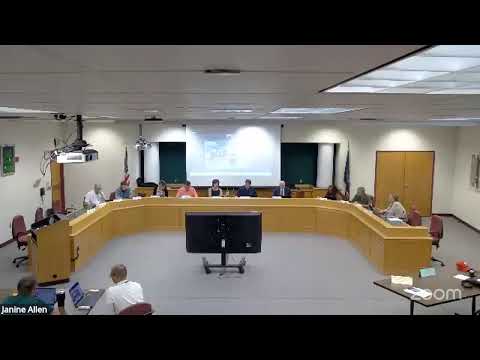
East Penn School District officials and a team of teachers presented proposed K912 science curriculum revisions and a new middle-level math pathway at the boardmeeting on June 23, 2025, describing instructional routines, materials and short-term assessment changes.
The proposal centers on the new STEALS standards(science, technology, engineering, environmental literacy and sustainability) and an inquiry-rich, three-dimensional approach intended to increase student discourse, hands-on learning and environmental literacy. Board members were told the presentation is informational only; the board will not vote on adoption tonight.
District staffers said the curriculum team of roughly 40 teachers wrote grade-level units and piloted them this year. Teacher Jen Rivera told the board she piloted units in fifth grade and that students liked the interactive elements. District supervisors said the team chose Core Knowledge materials as a primary resource for elementary grades and OpenSciEd for middle-school units; teachers streamlined the materials to keep recurring costs low and to reuse existing kit materials. The district also created common slide decks and e-books to standardize lessons across classrooms. "We created a fiscally responsible curriculum for both short term and long term that allows for minimal consumables to be repurchased annually," a presenter said.
Administrators described the STEALS approach as placing equal emphasis on: disciplinary core ideas (traditional content), science and engineering practices (modeling, analyzing data, designing), and cross-cutting concepts (cause and effect, patterns). The district will administer common performance tasks and formative checks tied to vocabulary and practices; state assessments will be given in fifth and eighth grades in 2026 (the fifth-grade PSSA returns next spring). "Each grade level has a common performance task," a supervisor said, and teachers will use those tasks and embedded checks for understanding as the primary measures of progress.
The board also received an update on middle-level math. District math leaders described two accelerated options for middle school math that the district has piloted: math Course 1 2 (a sixth-grade acceleration option introduced in 202425) and the proposed Course 2 3 pilot for 202526 (designed so students are prepared to take Algebra 1 in eighth grade if indicated by placement data). Dr. Thatcher, describing classroom practices, said Course 1 2 gives students a condensed exposure to seventh-grade content without skipping foundational sixth-grade topics, and Course 2 3 would pick up the second half of seventh-grade work and include all of eighth-grade content in a single progression. Screening and diagnostic data from the pilot year showed growth across cohorts, district staff said. Board members asked about placement and movement between pathways; staff emphasized continued flexibility: students may move in or out of accelerated tracks based on data and need.
Teachers and board members asked about classroom implementation, student feedback and digital literacy content. In response to a question about AI in the technology and engineering components, a presenter said AI is not explicitly covered in the STEALS standards but will be considered in district-wide digital literacy work and could be integrated as the curriculum evolves.
The presentation closed with board members praising the team and with the administration noting that the materials will be posted for board preview before any formal adoption vote. The curriculum team will return with an approval item at a future meeting after the board and public have time to review the full documents.
Next steps: the board will consider adoption at a later date after additional review and public posting of curriculum materials.