Get Full Government Meeting Transcripts, Videos, & Alerts Forever!
Get email alerts on the Outdoor Advertising topic
No spam. Unsubscribe anytime.
Michigan committee hears testimony on billboard permitting, vegetation rules and eminent-domain costs
Summary
State transportation staff, billboard industry representatives and lawmakers reviewed Michigan's billboard permitting rules, vegetation-management permits, permit fees and ongoing eminent-domain lawsuits tied to highway projects, and discussed whether more collaboration could reduce litigation costs.
Lansing — The House Subappropriations Committee on State and Local Transportation Budget heard two hours of testimony on outdoor advertising rules, fees and enforcement on measures that affect billboards along state highways, including vegetation-management permits and eminent-domain disputes tied to road projects.
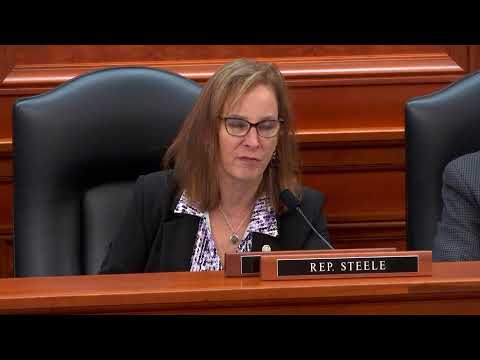
Representative Stephanie Steele, chair of the subappropriations committee, opened the June meeting and said the hearing would focus on “outdoor advertising, also known as billboards.” State Department of Transportation officials and representatives of the Outdoor Advertising Association of Michigan and member companies described how the permitting system works under federal and state law, and industry lawyers warned that condemnation of billboard sites along widening projects could cost the state millions.
Why it matters: Billboards on state trunk lines are regulated by a combination of federal law and Michigan statute. The permitting and vegetation-management processes determine whether a sign may be visible from the highway, who must pay for tree removal in the right of way and how the Michigan Transportation Fund is credited by permit fees. Witnesses told the committee the choices transportation officials make about visibility, replacement and compensation can trigger expensive legal disputes and affect small, local advertisers who buy billboard space.
What officials told lawmakers
Melissa Stafffeld, highway advertising specialist for the Michigan Department of Transportation (MDOT), gave an overview of the program, saying Michigan regulates roughly 11,700 miles of roads and currently issues permits by display face rather than by location. "We have 14,435 commercial sign permits," she said, adding that 582 of those are active digital permits. Stafffeld described statutory spacing rules (1,000 feet between billboards on freeways and interstates; 500 feet on non-freeway routes; 1,750 feet between digitals facing the same direction) and explained that permits are issued only for signs located on private property visible from state highways, not in the MDOT right of way.
MDOT officials said vegetation-management permits are required when billboard owners seek trimming or removal of trees that are within MDOT's right of way and that an arborist must inventory trees, propose work and suggest mitigation. Larry Doyle, MDOT development services division administrator, said MDOT received 316 vegetation-management applications in 2024 (255 issued) and 105 permits issued in 2025 year-to-date, with 2024 fees totaling about $148,000 and 2025 year-to-date fees about $113,000. Stafffeld said static-permit application fees are $100 and digital-permit fees are $300; conversions to digital carry a $200 application fee. She also told the committee the department collected just over $1 million in permit revenue in 2024 and roughly $759,000 year-to-date in 2025; revenues are credited to the State Trunk Line Fund.
Industry perspective and litigation over takings
Bill Jackson, contract executive director of the Outdoor Advertising Association of Michigan, described the 2006 statutory changes that capped the statewide number of billboards and created a system of interim permits that can be transferred or banked. "We said we won't get any bigger than we are today in 2006," Jackson told the panel, describing the cap as part of a regulatory tradeoff that allowed the industry to modernize locations and use digital technology.
Adam Berndt, a billboard attorney with Bodman PLC who said he has handled billboard cases for nearly 30 years, told the committee he is involved in multiple lawsuits in which MDOT has offered what he described as low valuations for signs taken during road projects. "We're fighting over issues ... and the department, the state, pays my attorney's fees" in certain outcomes, he said, estimating legal costs in his cases at roughly $75,000 per side so far and warning that dozens of condemnations could amount to multi‑million‑dollar exposures. Berndt said industry witnesses seek "relocation assistance" or the ability to reestablish signs at permissible locations rather than only receiving what defendants characterize as depreciated-structure valuations.
Committee questions and MDOT responses
Members asked MDOT and industry witnesses about how vegetation-appraisal values are calculated, whether small businesses receive help navigating permit and vegetation processes, and whether billboard advertising contributes to distracted driving or light pollution.
Bill Hamilton, the committee fiscal staff member, pointed members to statutory language that defines vegetation replacement cost and said permit revenues are credited to the State Trunk Line Fund. Stafffeld and Doyle said MDOT uses regional resource specialists and consultants to evaluate vegetation permits and that the applicant pays for the arborist report; mitigation — such as new plantings — can be proposed by the applicant and is considered during review.
On distracted driving, a trade association witness cited prior studies (Tantalla Associates and Virginia Tech) and said those studies placed billboards well below the top causes of distracted driving; he offered to provide the committee with copies of the research.
On cannabis advertising, Denise Bartholomew of Outfront Media said the industry has self-regulation and best-practice standards (including distance separations from sensitive properties such as schools and places of worship) implemented through trade association guidelines.
A procedural motion
Early in the meeting, Representative Matt Slaw moved to adopt the minutes of the committee's June 4 meeting. The motion prevailed by unanimous consent and was entered into the record.
Open questions and follow-up
Lawmakers pressed MDOT for figures on how much the state has spent defending eminent-domain or valuation litigation and whether the department could pursue more negotiated relocation or vegetation solutions to avoid court costs. MDOT staff said they could attempt to provide high-level spending figures but noted some litigation details are handled by the attorney general's office and may be subject to limitations while cases are pending. MDOT said condemnation is a last resort and that the agency involves the attorney general when pursuing takings.
Ending
Representative Steele closed the hearing after industry and MDOT witnesses finished testimony and committee members asked further questions. No legislative changes were adopted at the meeting; the committee took testimony and requested follow-up materials from MDOT and industry representatives.
Votes at a glance
- Motion to adopt minutes of the June 4 meeting (mover: Representative Matt Slaw). Outcome: adopted by unanimous consent.
Sources: Committee hearing transcript; testimony from MDOT officials (Melissa Stafffeld, Larry Doyle, Max Albrecht, Dee Parker), fiscal staff Bill Hamilton; industry witnesses Bill Jackson (Outdoor Advertising Association of Michigan), Adam Berndt (Bodman PLC), Denise Bartholomew (Outfront Media).